Sokcho (속초) in One Overnight: A Food-First Road Trip
Sokcho (속초) is a coastal city on the East Sea, about three hours from Seoul by car or express bus. Small enough to cover in a day, big enough to leave with a list of things you didn’t get to eat.
This trip had one agenda: try a dakgangjeong (Korean sweet & crispy fried chicken) stall other than the usual default, track down a proper bowl of gamja-ongsimi (potato dumpling soup), and finally eat Abai-style blood-sausage soup (아바이순대국).
We drove up using a Gcar rental with a weekday 24-hour free coupon. Public transit works just as well — express buses from Seoul run frequently and drop you close to the market area. Either way, you’re looking at about three hours.
Jungang Market (속초관광수산시장): Dakgangjeong Decisions
For parking, search 속초관광수산시장대형주차장 (Sokcho Tourist Fish Market Large Parking Lot) in your map app. Three floors, but even on a weekday evening, floors one and two were nearly full. Weekends will be harder. The alternative: the free Sokcho City Hall (속초시청) parking lot, a 5–10-minute walk from the market entrance.
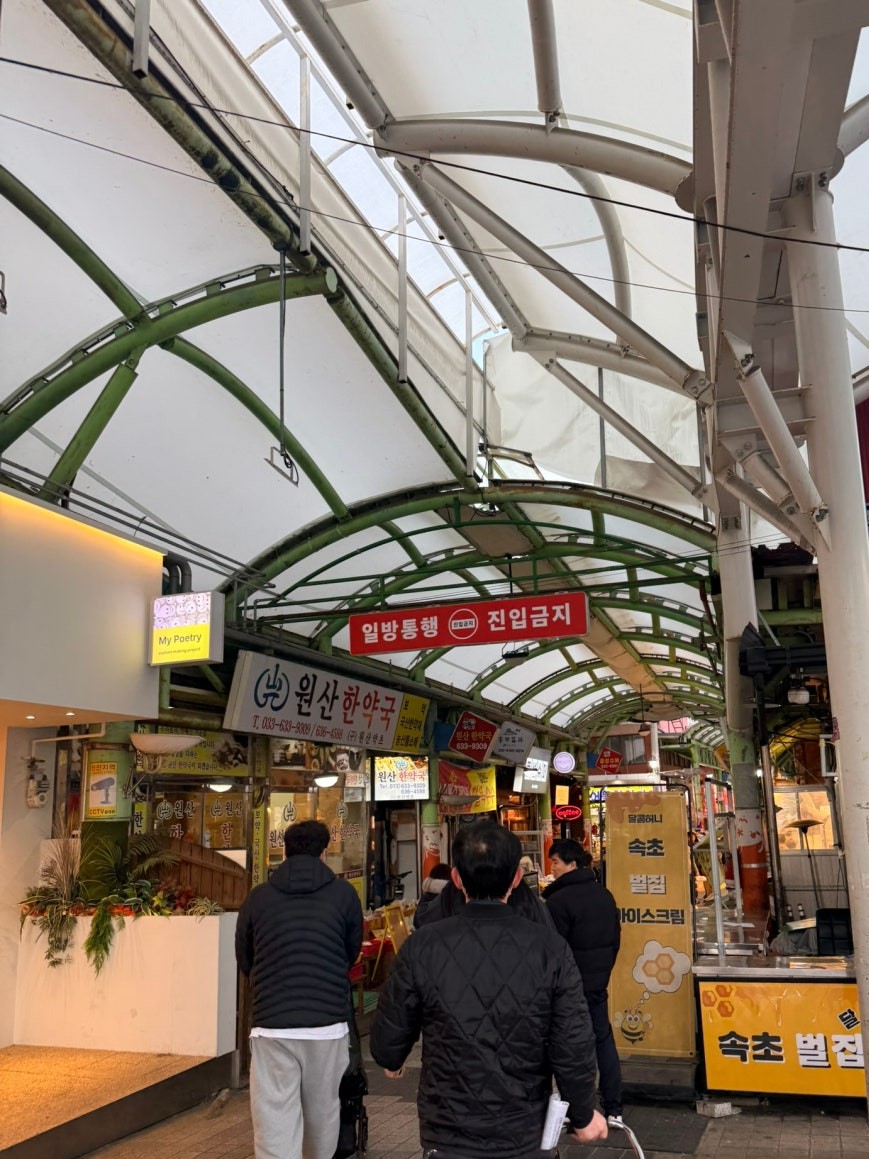
Once inside, the dakgangjeong (닭강정) scene has shifted from what most guides describe. Manseok Dakgangjeong (만석닭강정) — long the name everyone knew — had almost no queue. Jungang Dakgangjeong (중앙닭강정) had a serious crowd snaking out front. No interest in waiting, so we stopped at Yes Dakgangjeong (예스닭강정) — the yellow-sign stall right as you exit the main parking lot. They hand out samples. We tried, bought, and left.
One practical note: Yes Dakgangjeong does not validate parking. The bag went straight to the room. Fried chicken and beer at the accommodation — the only correct sequence.
The Room: Beachfront, ₩40,000, Waves Through the Door
Beachfront location, ₩40,000 on a weekday. The exterior has the feel of an older motel; the interior was renovated in 2025 and showed none of that age. Clean throughout.
Open the door. Hear the waves.
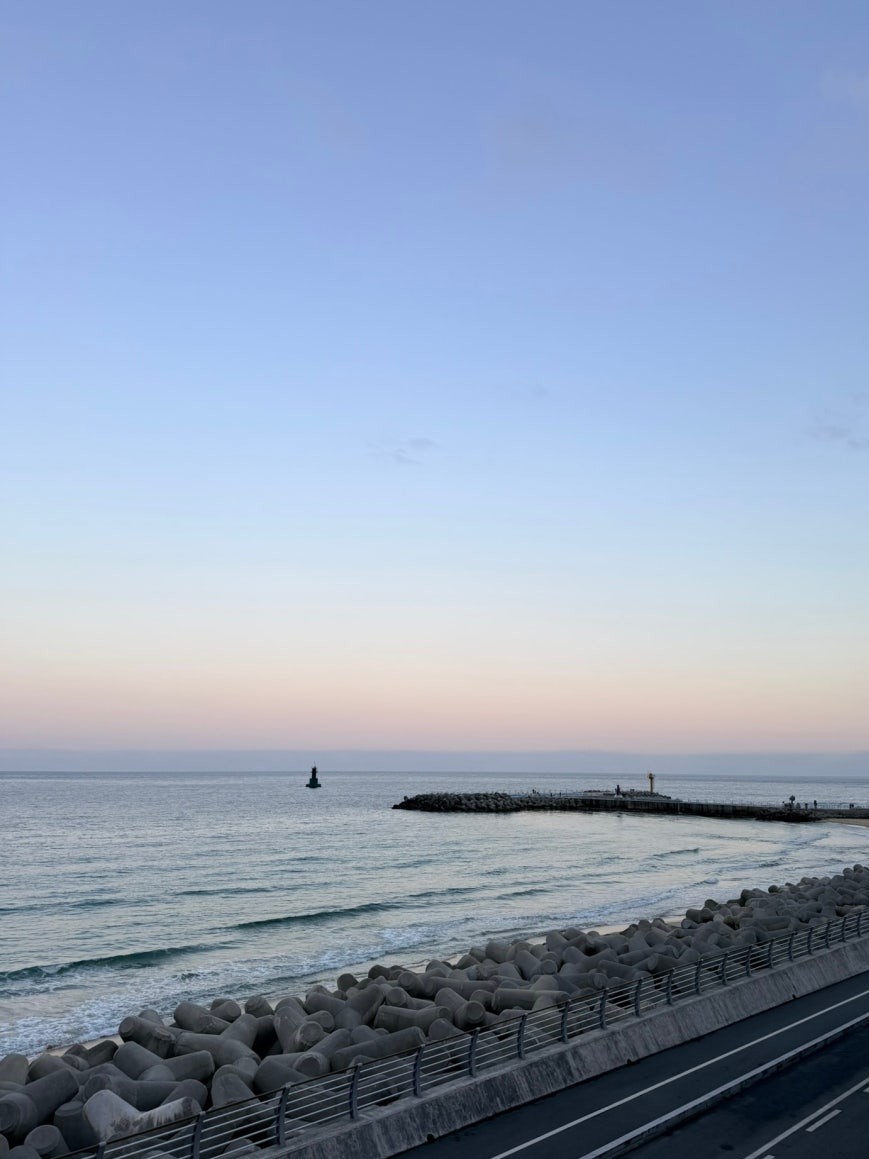
That view is why you make the three-hour drive.
Two practical notes before you book: Many restaurants in Sokcho close on Wednesdays — schedule around that. Most kitchens also call last orders around 7 p.m., earlier than you’d expect. Arrive at dinner time with a plan, not a question.
Abai Village (아바이마을): Dancheon Restaurant (단천식당)
Abai Village (아바이마을) has a free public parking lot — straightforward. The neighborhood itself is quiet; the reason to come is the restaurant.
We arrived at Dancheon Restaurant (단천식당) just as the kitchen was closing. The staff waved us in. Two things ordered:
- Pollack-sashimi cold noodles (명태회냉면) — raw pollack slices over thin noodles in cold broth
- Abai-style blood-sausage soup (아바이순대국) — the regional specialty, rich and dark, the opposite of Seoul’s clearer gukbap style
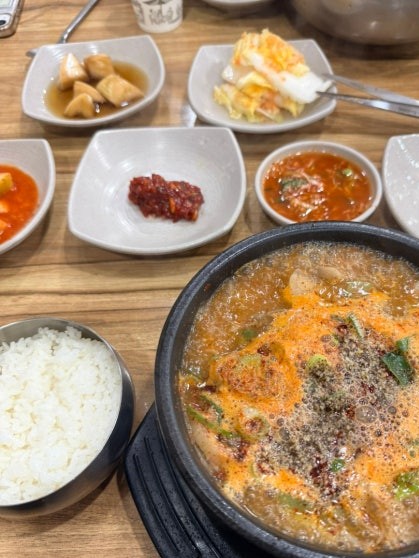
Because we came at closing, the kitchen sent extra pollack-sashimi as a courtesy. The soup was the heavier, deeply seasoned style — the kind that outranks every Seoul gukbap version tried before. The cold noodles balanced it cleanly.
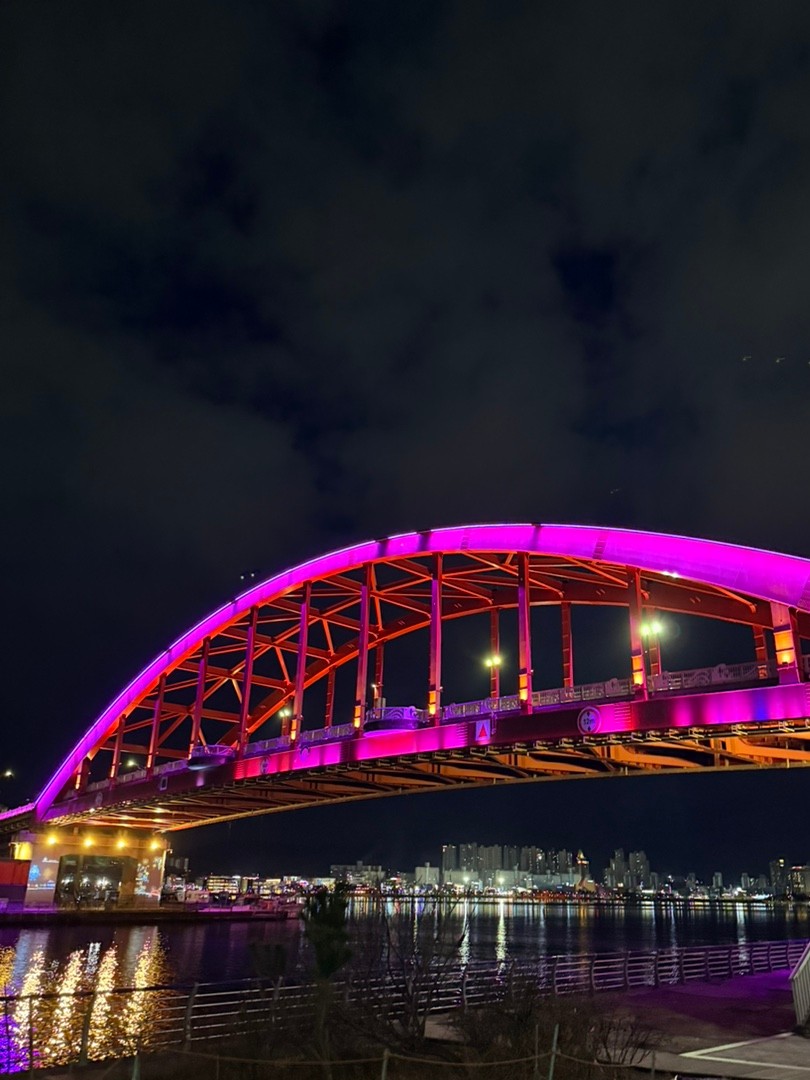
After dinner we walked around the village for a bit. Not much to see on foot, but the bridge nearby was worth stopping for.
Yeonggeumjeong (영금정) at Night
Yeonggeumjeong (영금정) is a traditional sea pavilion built east of Sokcho Lighthouse, extending over the rocky East Sea coastline. The name comes from an old observation: waves crashing against the rocks below sound like a geomungo (거문고), the classical Korean zither. "Spirit Zither Pavilion," roughly.
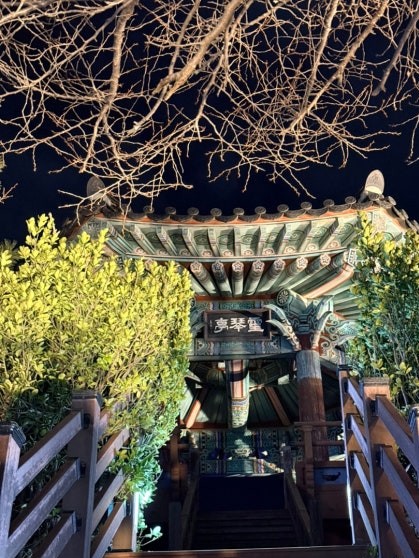
The stairs up are short. From the top: clear views of Sokcho Harbor (속초항) and, on good days, Seoraksan (설악산) in the distance. At night, both the pavilion and the approach walkway are fully lit.
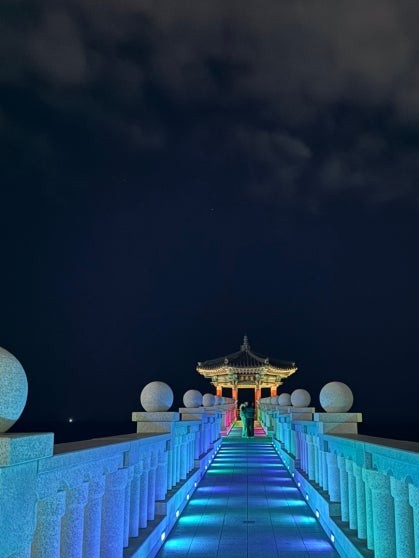
The Dongmyeonghang Fish Market (동명항 수산시장) sits just next to the pavilion — buy fresh seafood at the stalls, carry it up to the second floor, eat there. The climb is minimal.
From there, a short walk to Sokcho Beach (속초해수욕장).
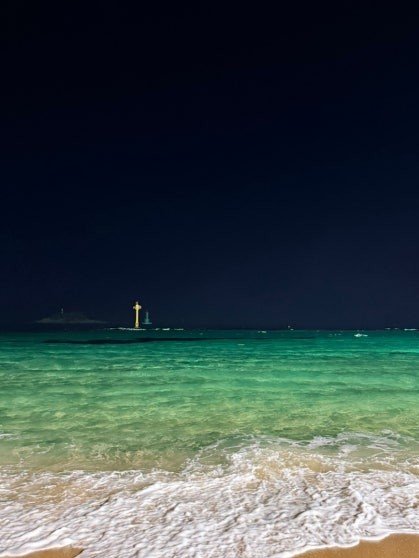
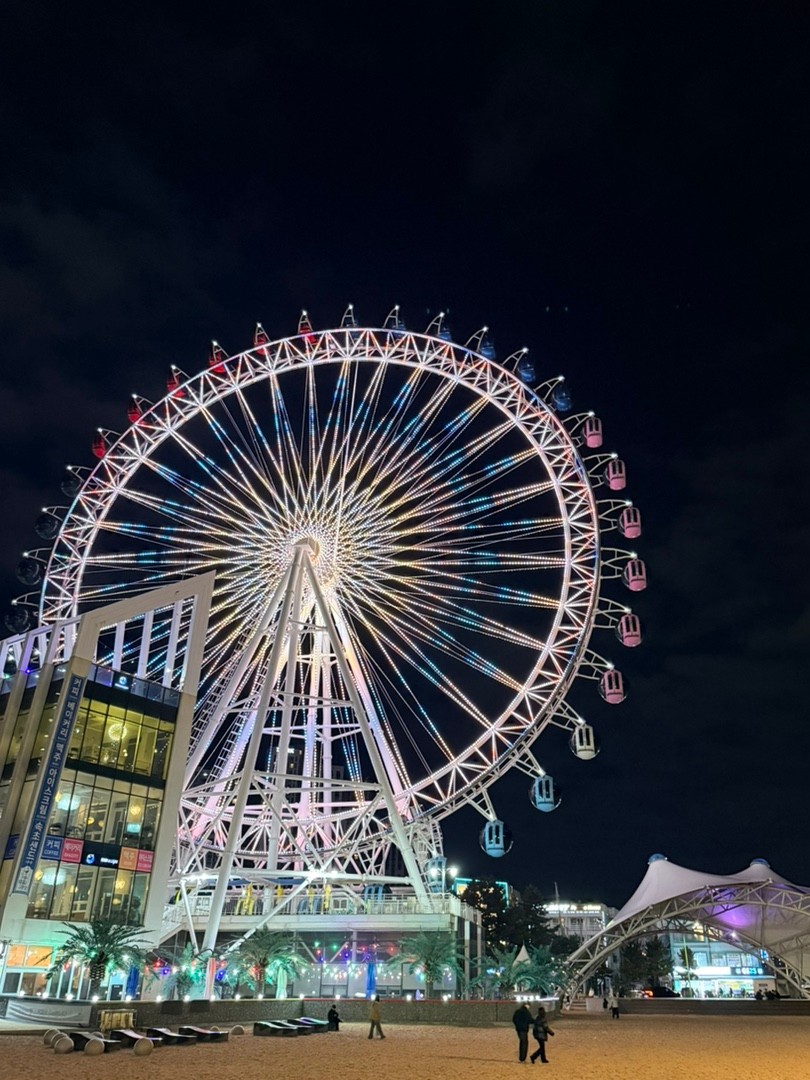
Winter night, but the water ran visibly green under the glow. The Sokcho Eye (속초아이) ferris wheel stands at the beachfront and is lit in rotating colors — visible from a distance you wouldn’t expect.
Day 2: Gamja-Ongsimi (감자옹심이)
The highlight of the trip — and the main reason for making it.
Gamja-ongsimi (감자옹심이) is a Gangwon-do (강원도) specialty: hand-torn potato dumplings cooked in a milky perilla-seed broth. The kitchen makes each bowl to order — the raw dough is torn directly as the ticket comes in. That’s what gives the texture its spring. Dense, chewy, nothing pre-made matches it.
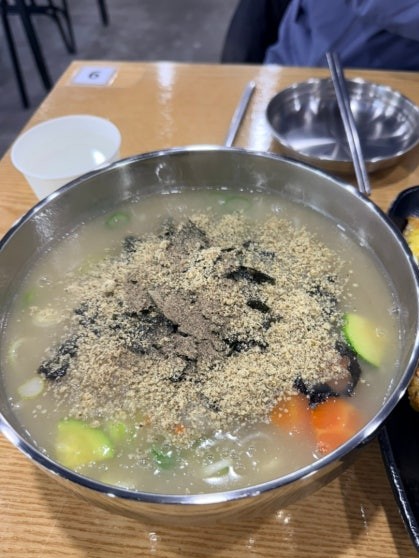
The closest comparison is perilla sujebi (들깨수제비), but the potato base makes it its own thing. Clear winner of the trip.
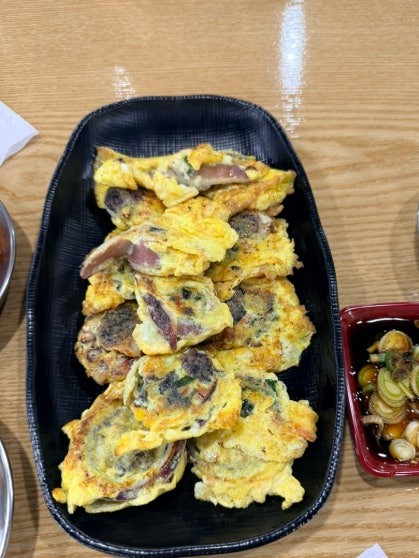
We also ordered squid sausage (오징어순대). Pricey and so-so — the Abai-style (아바이순대) from the night before is the better call if you’re only picking one.
Checked out with enough time to walk the beach one last time before returning the car. One night, four restaurants, one market run.
If you’ve done a food trip to Sokcho, what stayed with you — the dakgangjeong, the soup in Abai Village, the ongsimi? Leave a note below.