✈This post may contain affiliate links. If you book or buy through these links, I may earn a small commission — at no extra cost to you. I only recommend things I genuinely find useful for your Korea trip.
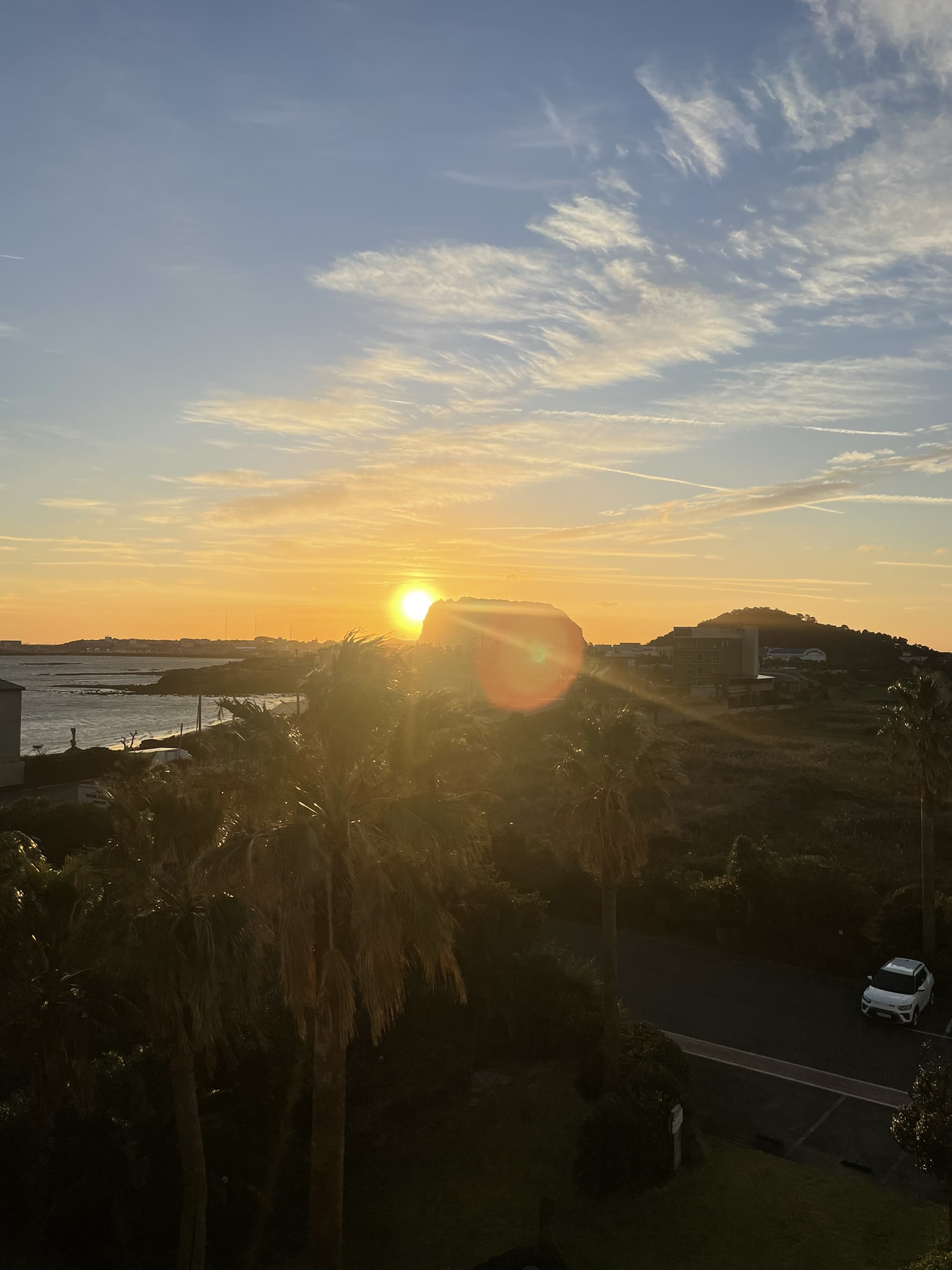
Seogwipo (서귀포), on Jeju Island’s south coast, sits at the foot of Hallasan’s southern slope where rainfall is heaviest on the island. The water drains off volcanic basalt and drops in three waterfalls within a few kilometers of each other. None of them require a car to reach.Seogwipo (서귀포) coast at sunrise
Two of the three — Jeongbang (정방폭포) and Cheonjiyeon (천지연폭포) — sit in central Seogwipo, walkable from each other and from most accommodation in the city center. The third, Cheonjeyeon (천제연폭포), is in the Jungmun (중문) resort district to the west, reachable by local bus. Total entrance cost for all three: around ₩6,000. A comfortable half-day.If you’re building out a broader trip, the three falls slot well into a Jeju family itinerary as a standalone morning block.
Waterfall 1: Jeongbang (정방폭포)
Start here. Jeongbang is the only waterfall in South Korea that falls directly onto the coast — the cliff drops and the water meets the sea at the base. The entrance sits on the southern edge of the city center, a short downhill walk from downtown Seogwipo toward the shoreline.The coastline below Seogwipo is all black basalt — low shelves and rock pools at sea level, the town and its volcanic geography visible from the shore. Jeongbang sits in that terrain. The cliff is abrupt: the land ends and the water follows.Entrance: around ₩2,000. Open 09:00–17:30. Arrive when it opens — the cliff face catches direct sunlight in the morning and tour groups arrive later.
Waterfall 2: Cheonjiyeon (천지연폭포)
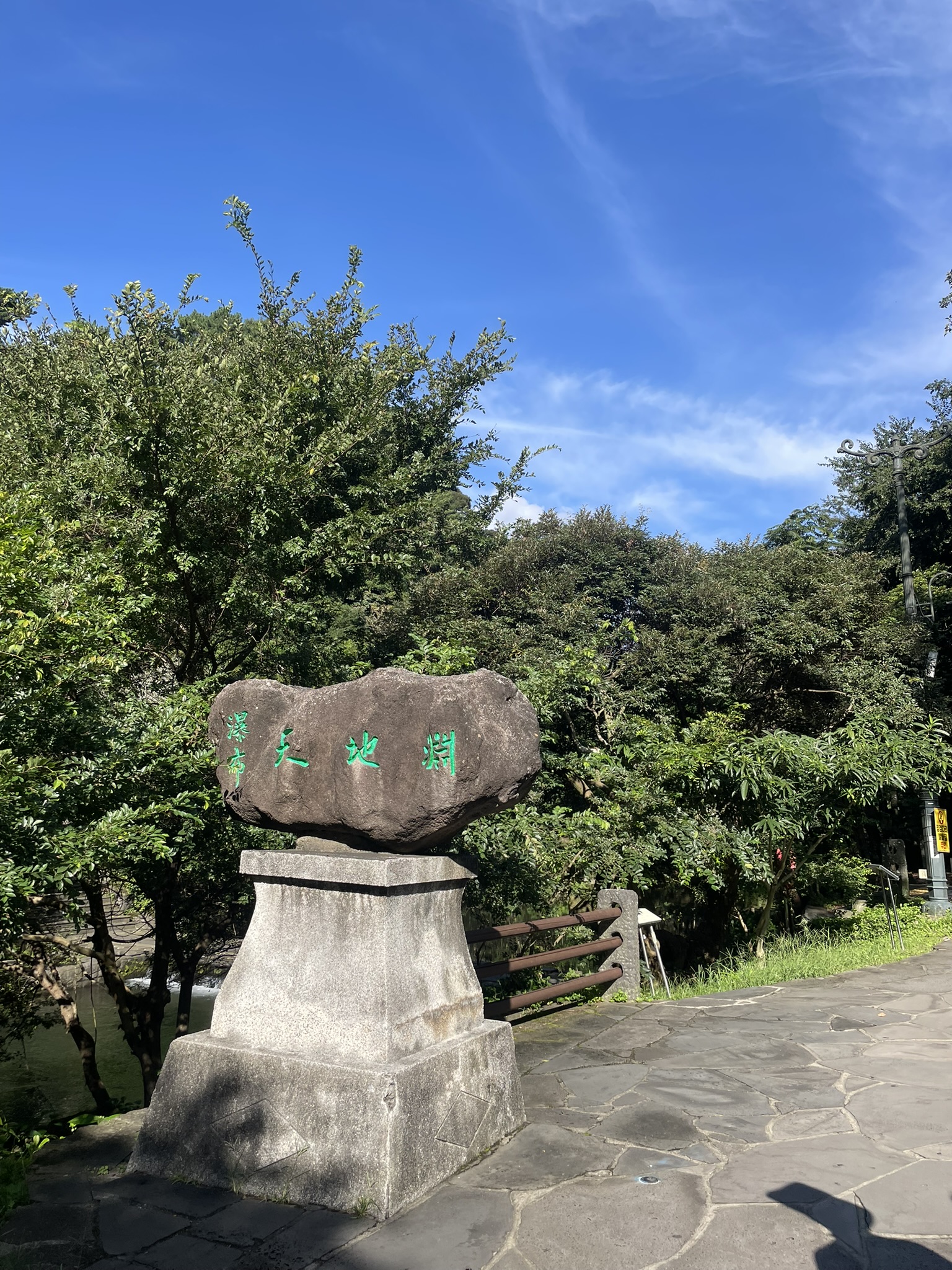
About 10 minutes on foot from Jeongbang, heading inland. The approach runs alongside a small river into a narrow valley. The entrance stone marks the site from the road: a dark volcanic boulder on a concrete base, the waterfall’s name carved in green characters.Entrance stone at Cheonjiyeon Falls (천지연폭포)
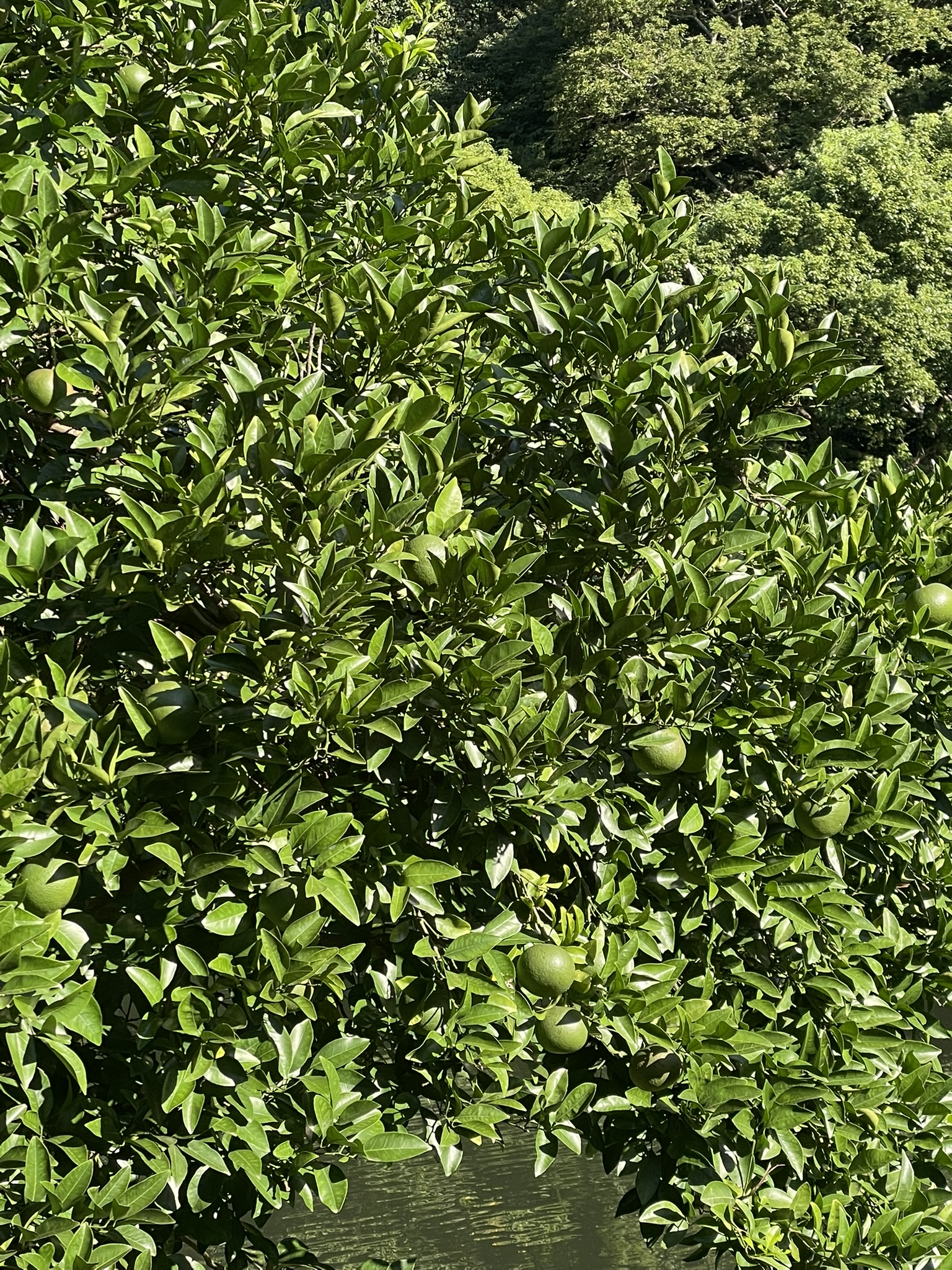
The riverside path is about 1 km, stone-paved and mostly flat. Citrus trees line parts of the lower approach — dense canopy, glossy leaves, unripe green fruit hanging through the summer months.Jeju mandarin orange trees (감귤) along the valley approach
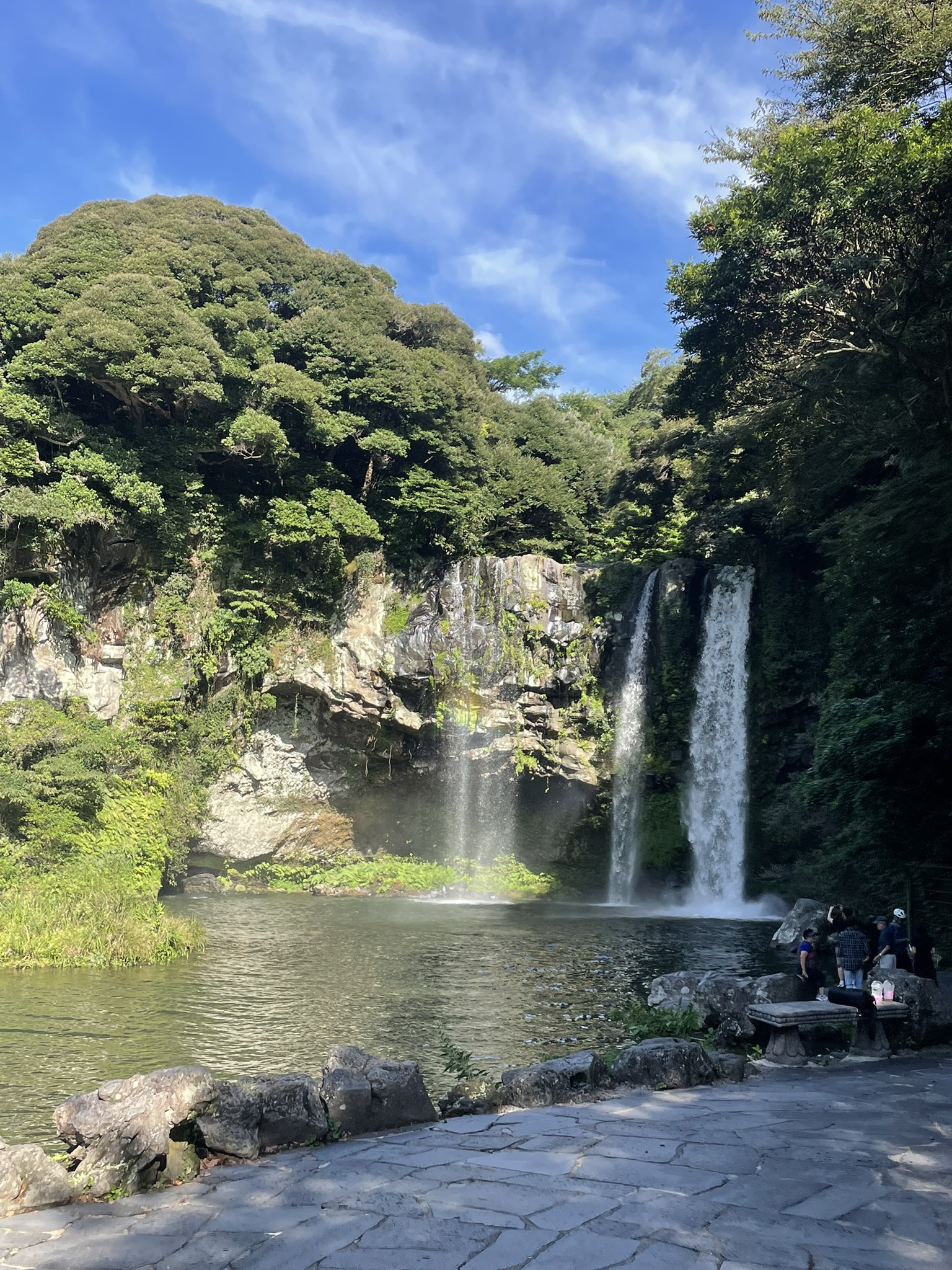
The falls open out at the end of the valley into a wide basalt basin. Two flows come down the same cliff face — a main curtain on the right, a secondary spray from the left side of the rock — dropping into a green pool below. The air inside the basin is cool and wet even on hot afternoons.Cheonjiyeon Falls (천지연폭포), central Seogwipo
The viewing terrace is flat stone with enough space to step back and see the full height of the drop. Spray mist catches the light on clear morningsEntrance: around ₩2,000. Open 09:00–17:30.
Waterfall 3: Cheonjeyeon (천제연폭포) — Bus to Jungmun
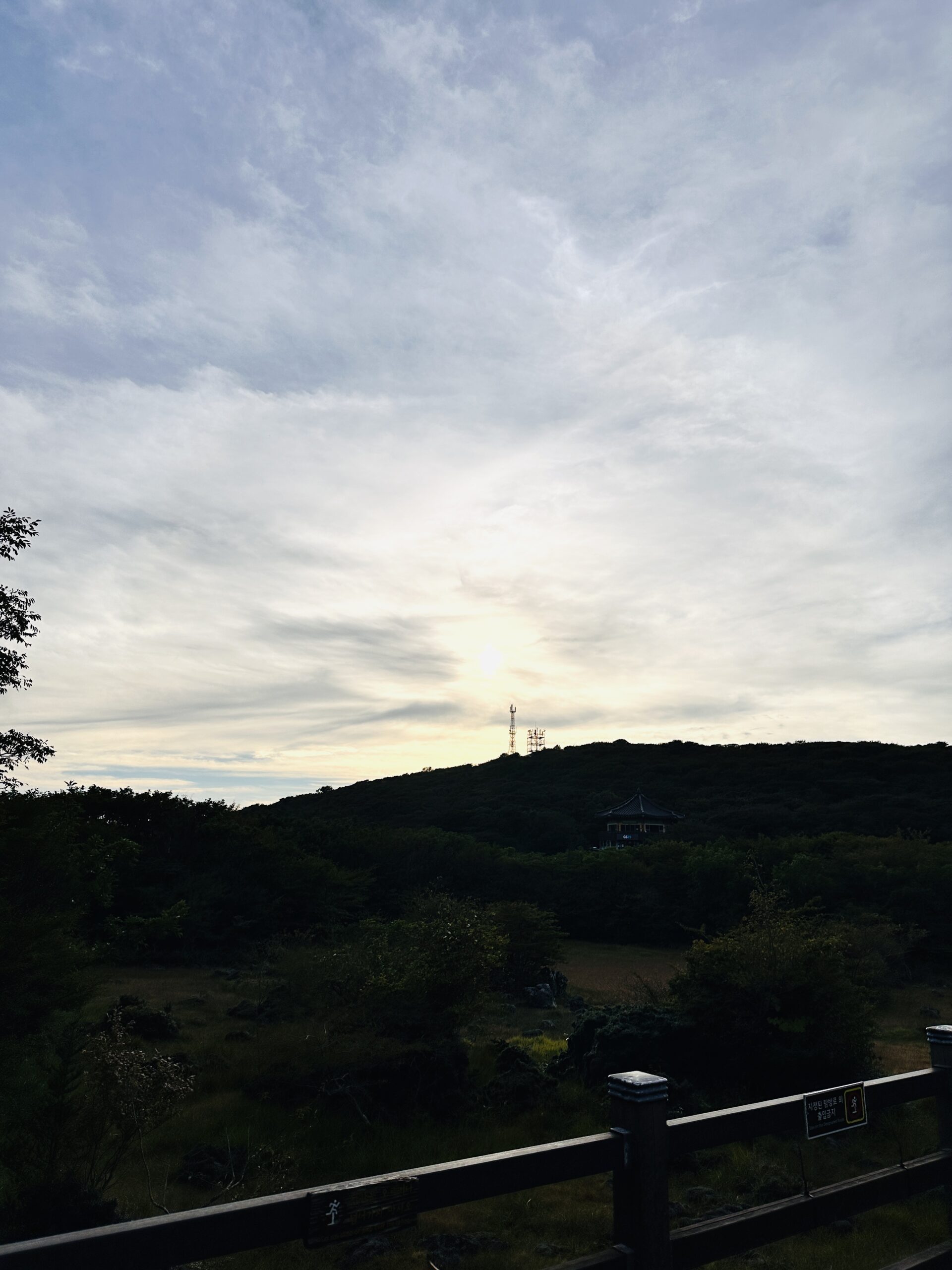
Cheonjeyeon is not in the city center. The Jungmun resort district lies a few kilometers west of Seogwipo, and a walk isn’t practical. Bus 600, 690, or 181 runs the route from central Seogwipo. Confirm the stop name for Cheonjeyeon before boarding — schedules and fares change seasonally, so check at the bus terminal or via the Jeju public bus app before heading out.Forested hillside, Seogwipo-si
The Jungmun area has a different character from the city center — more resort hotels, denser vegetation, quieter roads between sites. The walk from the bus stop to the Cheonjeyeon entrance passes through forested terrain.Cheonjeyeon runs as a tiered cascade through a forested gorge. The trail down is shaded and the site tends to be less crowded than the two downtown falls, particularly on weekday mornings.Entrance: around ₩2,000. Open 09:00–17:30.
Car-Free Half-Day Route
The practical order: Jeongbang first (09:00 opening, sea cliff best in morning light), then walk to Cheonjiyeon (10 minutes on foot), then catch a bus west to Jungmun for Cheonjeyeon.Both downtown falls are done by late morning. Lunch in Seogwipo city center fits between the walking section and the bus ride. Allow a little extra time on your first attempt to find the right bus stop — the Jeju bus app shows stop locations clearly in English.The full loop, including walking time at each site and the bus segment, runs four to five hours comfortably.
Tips Before You Go
Entrance fees: around ₩2,000 per waterfall. Budget ₩6,000 for all three.Opening hours: 09:00–17:30 at all three sites. Reach Jeongbang right at opening and you’ll be at Cheonjiyeon before 11:00.Bus to Jungmun: 600, 690, or 181 from central Seogwipo. Confirm the current stop for Cheonjeyeon at the terminal — stops are signposted in Korean and English.Footwear: The stone paths at Cheonjiyeon and the rocky approaches at Jeongbang get wet from spray. Grip soles matter more than ankle support here.Best season: Summer and early autumn bring the strongest water flow at all three falls. The Cheonjiyeon valley is densest in July and August — cool, humid, and very green inside.Have you done all three falls in one day? If you found a smarter bus stop or a better order for the route, drop it in the comments — other car-free visitors on Jeju will thank you.