A February Long Weekend in Boryeong (보령)
The Lunar New Year holiday meant crowded trains, relatives, and the particular tiredness that comes right after an international flight. Rather than sleep it off at home, we loaded into the car and headed south to the Yellow Sea coast.
Boryeong (보령, Chungcheongnam-do) is about two hours from Seoul. In summer it draws crowds for the mud festival. In winter, the draw is simpler: oysters. Specifically, the cluster of seafood restaurants and tidal farms at Cheonbuk Oyster Village (천북 굴단지).
We arrived around 11 a.m. on the first day of the long weekend, jet lag still somewhere behind my eyes.
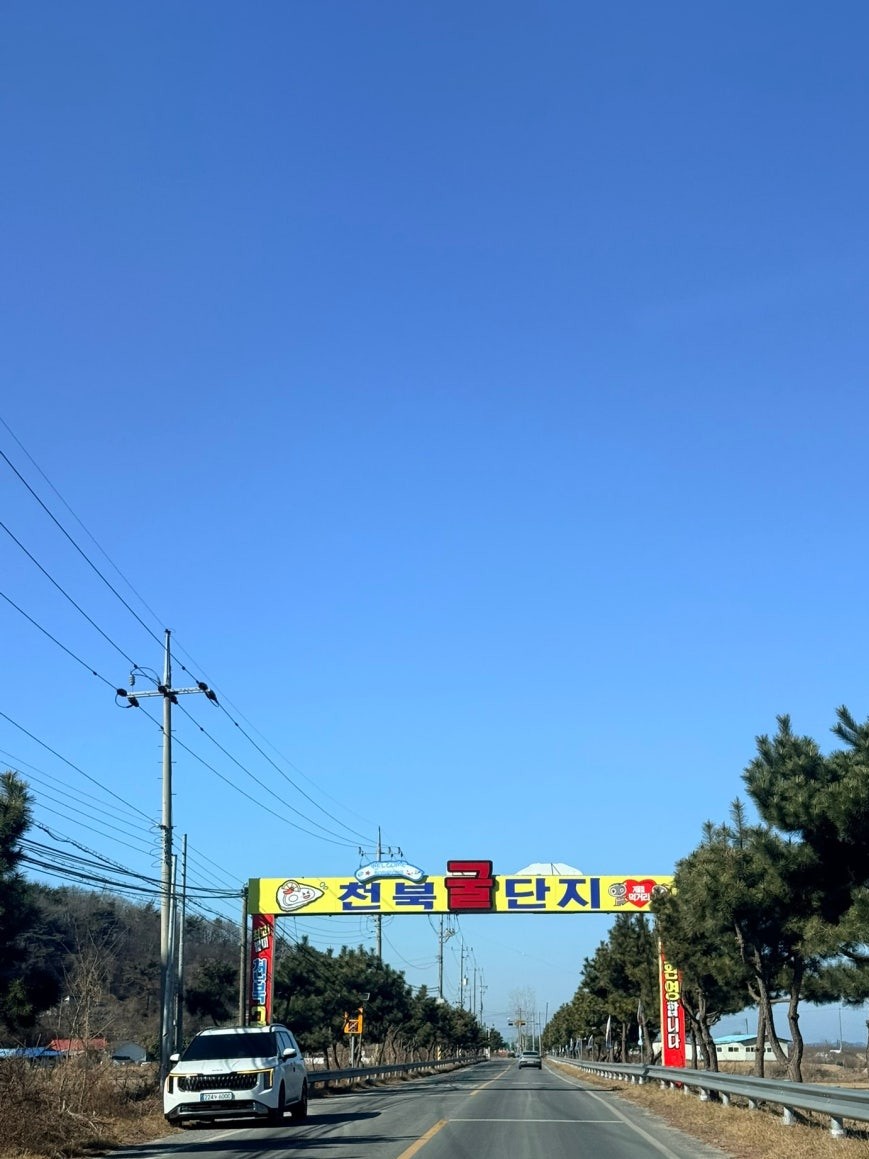
Cheonbuk Oyster Village (천북 굴단지) — Arriving and Parking
Peak oyster season here runs late December through January. We came in mid-February — tail end, as the farmers would tell you. Still very good. Just not the best it gets.
The village is a long strip of restaurants built facing the tidal mudflats. Light hawking near the entrance, nothing pushy enough to rush a decision. Walk the full length, check the menus posted outside each door, and pick by instinct.
Parking. A large free public lot sits directly in front of the restaurant strip. Spacious, but it fills on holidays and weekends. We arrived at 11 a.m. on Lunar New Year and found space without trouble — head toward the inner sections (3 and 4) of the village complex for the easiest spots.
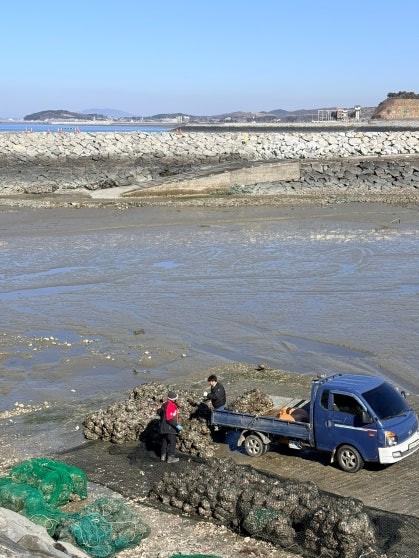
Heading toward Section 4 (4단지), you can watch the harvest in real time. Workers stack mesh-bagged oysters directly from the flats onto trucks while the tide is low.
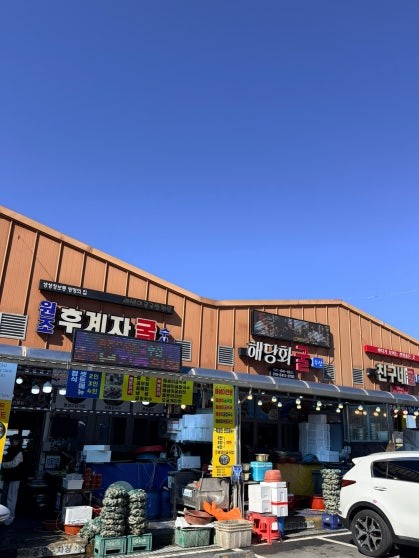
Lunch at Chinguné Gul Susan (친구네 굴 수산)
We picked Chinguné Gul Susan (친구네 굴 수산 — roughly "Friend’s Oyster Seafood") mostly because my mom wanted a table facing the sea.
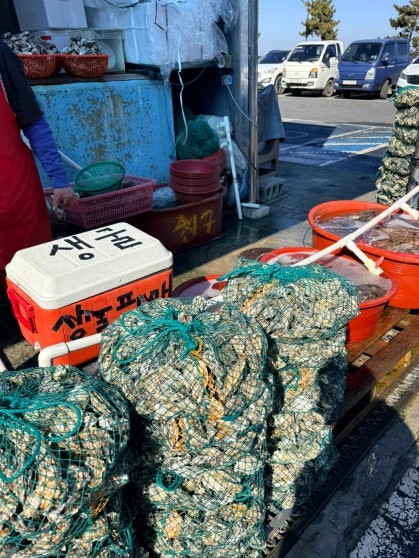
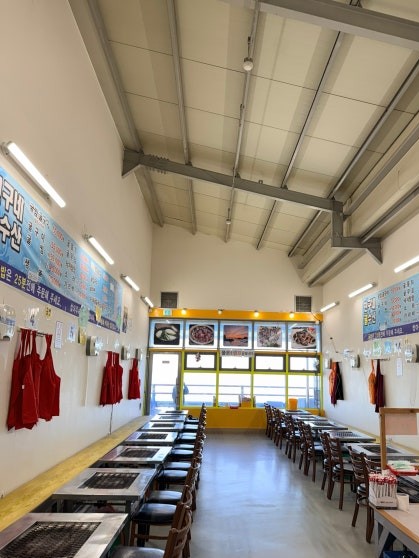
Inside: a rectangular room, tables running in two long rows, red aprons on both walls for when the steam starts. The layout is pure function.
The menu covers the full range — oyster BBQ (굴구이), steamed oysters in large and medium portions (굴찜), raw oysters, oyster rice porridge, octopus hotpot (낙지탕탕이), and scallops by the kilo.
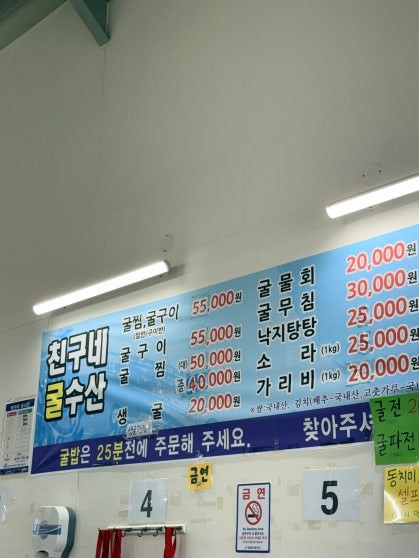
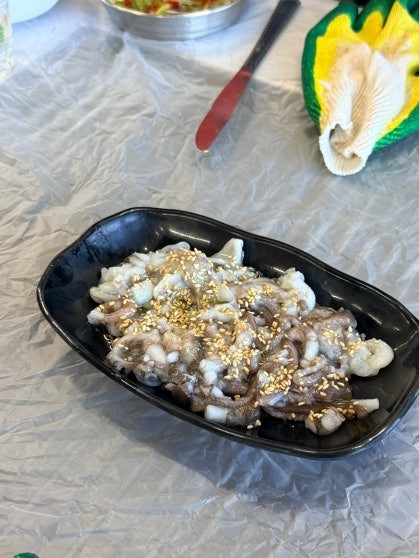
We ordered gul-jjim (굴찜, steamed oysters) in the large size. Before that arrived, the kitchen sent out san-nakji (산낙지, live octopus) as an opener.
Side dishes: julienned green onion (파채) and dongchimi (동치미, white radish water kimchi) that tasted house-made — sharp and refreshing, the right foil for what followed.
Then the main bowl arrived.
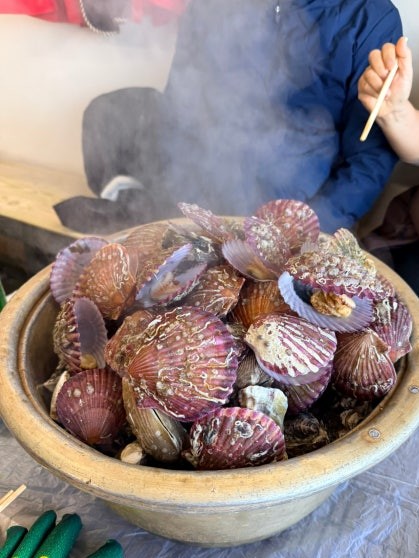
You pry each shell open using the dull-edged knife provided — built for leverage, not cutting. The oysters inside weren’t especially large (mid-February, end of season), but the flavor was there.
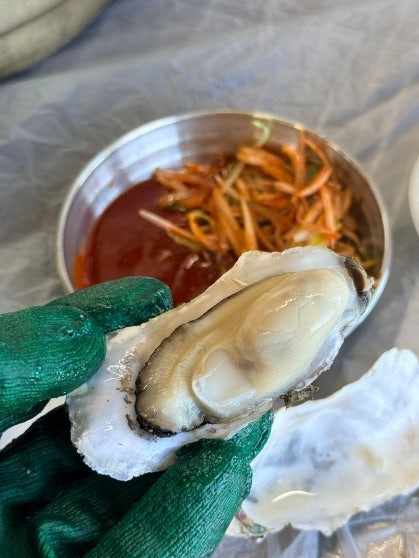
When the bowl was nearly empty and the richness started to settle, we ordered gul-bap (굴밥, oyster rice) to round things out — packed with oysters, simply served sides. Better than the usual ramen call at this point.
Any restaurant along this strip runs at a reliably solid level. Menus vary slightly — some lean into shellfish variety, others favor BBQ. Pick by instinct, or by whatever’s posted outside that day.
The Coastal Walk: Seohaerang-gil Trail Course 62 (서해랑길 62코스)
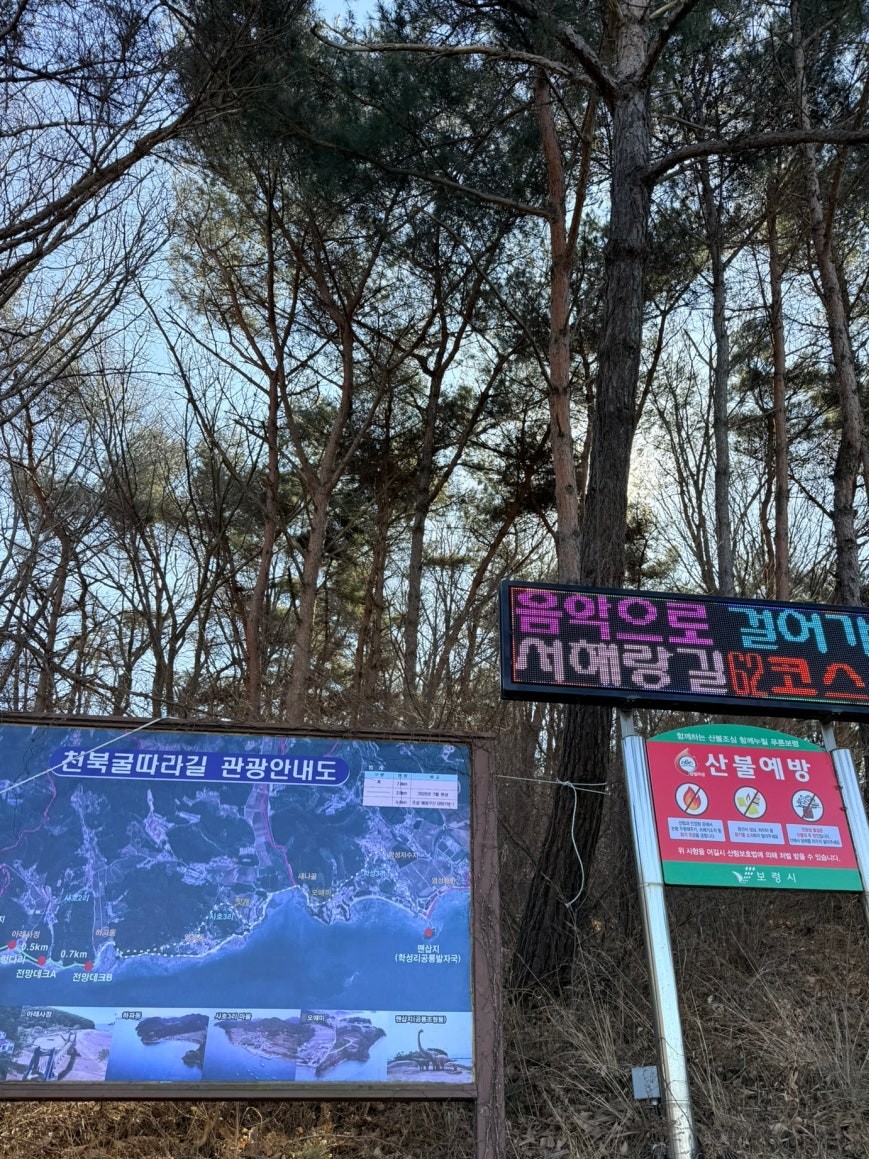
Right next to Section 4 is the trailhead for Cheonbuk Gulttara-gil (천북굴따라길, Oyster Follow Trail), which also forms the tail section of Seohaerang-gil Course 62 (서해랑길 62코스). The full course runs about 15 km from Ocheon Harbor (오천항 — site of the old Chungcheong Naval Fortress, 충청수영성) down to the oyster village. We walked only the coastal deck section: flat, direct sea views, low effort.
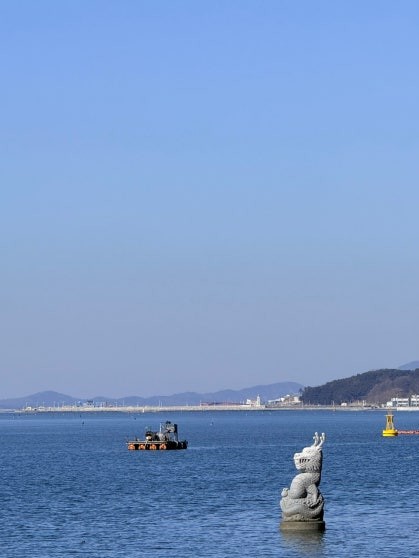
The day we visited: no wind, full sun. The Yellow Sea is typically grey-brown and opaque. That afternoon the water ran emerald — not a color you expect on this stretch of coast.
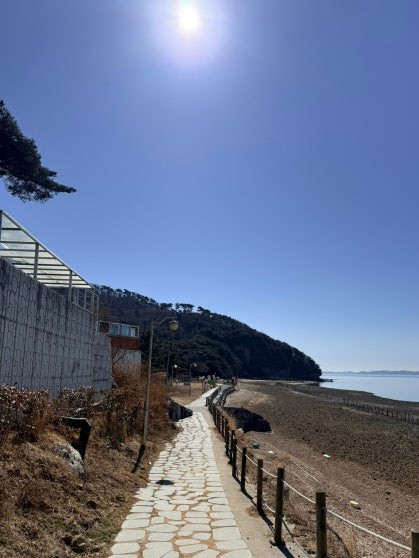
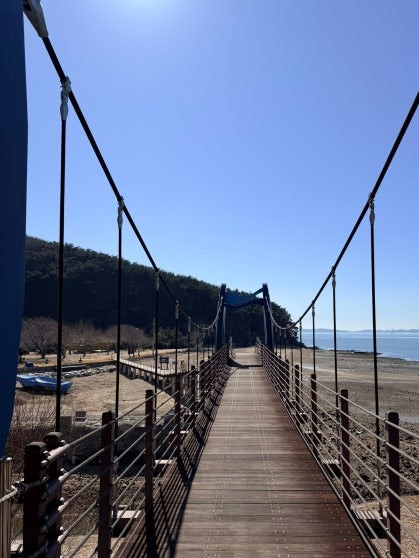
The path stays flat throughout. A suspension bridge (출렁다리) crosses a narrow inlet partway along.
Beyond the bridge, the trail opens onto a deck viewpoint. A stone sea-creature sculpture stands in the shallow water just offshore — a small fishing boat passes behind it, mountains across the bay.
Round trip from the oyster village to the far end of the trail and back: 30 to 40 minutes at an easy pace. Exactly the right amount for walking off a large midday meal.
On the Way Back: Boryeong Milk Warehouse Café (보령 우유창고)
Several large cafés cluster along the road back toward the highway. We had been meaning to try Boryeong Milk Warehouse Café (보령 우유창고) for a while — this was the trip.
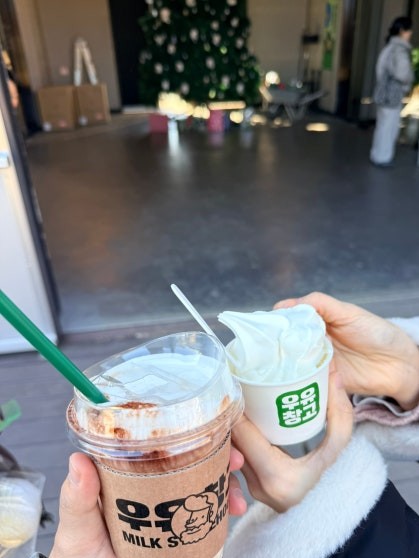
The signature Mokjang Cream Latte (목장 크림 라떼, farm cream latte) is ₩7,500. We also picked up salt-butter rolls (소금빵) and milk bread. The latte was genuinely good — creamy, not too sweet. The salt-butter roll was ordinary. Several better bakeries exist in the area.
Worth stopping if you’re passing and want somewhere to sit. Not worth a special detour.
The day started early and jet-lagged. It ended fed and quiet — oysters near the end of season, a flat coast walk with an unexpectedly emerald sea, a decent latte on the way home. Boryeong in winter earns its trip.
If you’ve made it out to Boryeong for the oysters, what did you eat? First visit or annual ritual — leave a note in the comments below.