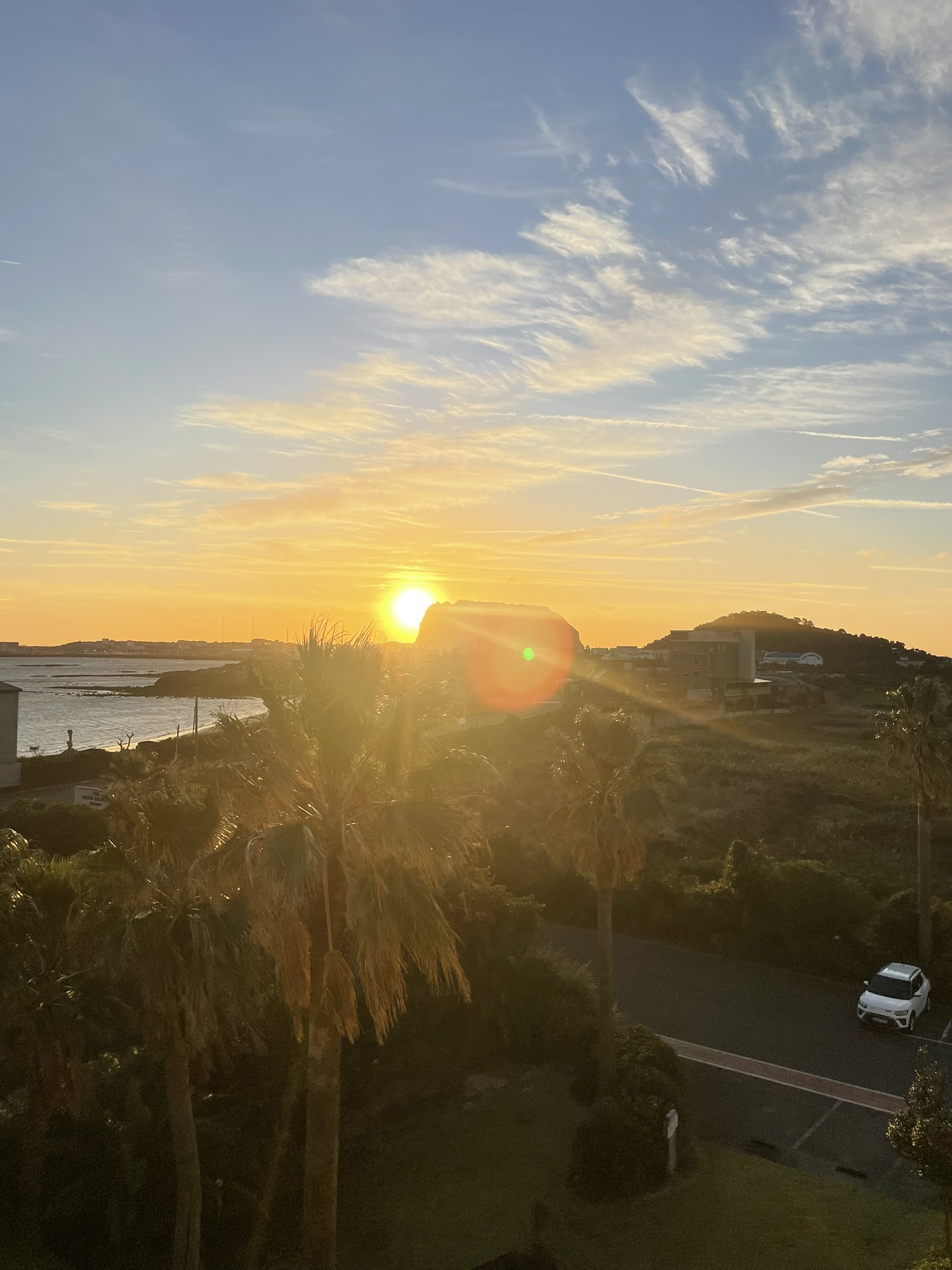
Saturday, 9:30 AM, Soesokkak (쇠소깍). A volunteer in a yellow vest is already at the trailhead, talking with the first arrivals. Free program. English-speaking guide. No agency, no booking fee — just Route 6 and someone who knows every bend of it.
That’s Walking Mate. Most foreign visitors spend a week in Jeju and never find out it exists.

Why Route 6 Instead of the Usual Suspects
Jeju Olle (제주 올레) is a network of 26 coastal and inland walking routes circling the island. Most first-timers get routed toward Seongsan in the east — specifically Seongsan Ilchulbong (성산일출봉), the UNESCO volcanic crater that dominates every Jeju travel blog.
The crater is worth seeing. The queue is real.
Route 1 covers the Seongsan coast; Route 7 runs the west. Neither has an English guide program built in. The trail markers are in Korean, the stamp stations are staffed by Korean-speaking volunteers, and if you want context on what you’re walking through, you’re on your own.
Route 6 solves this differently. It stays within Seogwipo city limits — well-connected by local bus from the Seogwipo Intercity Bus Terminal, no rental car required. The elevation gain stays under 300 meters total. It’s a beginner-OK coastal walk that ends at a produce market with bus access back to the city. And on Saturdays, a free English-speaking guide walks it with you.
What Walking Mate Actually Is
Walking Mate is run by the Jeju Olle Foundation. English-speaking volunteers lead the Route 6 walk every Saturday at 9:30 AM. The Sunday version covers Route 18 in Jeju City — a different route, different start point. Saturday is the one you want for Seogwipo.
The cost is zero. The guide walks the full 15.7 km with you, explains the stamp system, and gives context at each main stop. They don’t carry your bag or dictate the pace — it’s a group walk, not a tour package.
Slots fill. Book ahead through the Walking Mate Facebook group before you arrive in Jeju. Same-day walk-up sometimes works; it also sometimes doesn’t. Send a message in advance.
On the Olle passport (올레 여권): each route has two stamps, one at the start and one at the end. The passport is optional — you can pick one up at the Soesokkak stamp station on the day — but collecting stamps across routes has a compounding satisfaction that’s hard to explain until you’re three routes in.
Getting There: Soesokkak, 9:15 AM
The Route 6 start is at Soesokkak (쇠소깍), Seogwipo’s southern tidal estuary where a slow-moving river cuts through basalt channels before meeting the sea. The Olle stamp station and meeting area sit at the estuary entrance.
From Seogwipo Intercity Bus Terminal, local buses connect to the Soesokkak area — confirm the current route and stop at the terminal information desk, as schedules shift seasonally. Arrive by 9:15 to stamp your passport and find the group before the guide moves off.
The Route: Soesokkak to Seogwipo Olle Market
The path leaves Soesokkak along the rocky shoreline heading west. The first stretch is basalt underfoot — black volcanic rock, sea on the left, field stone walls and citrus orchards on the right. On a clear morning the contrast between the dark rock and the blue water is sharp enough to stop you mid-stride.
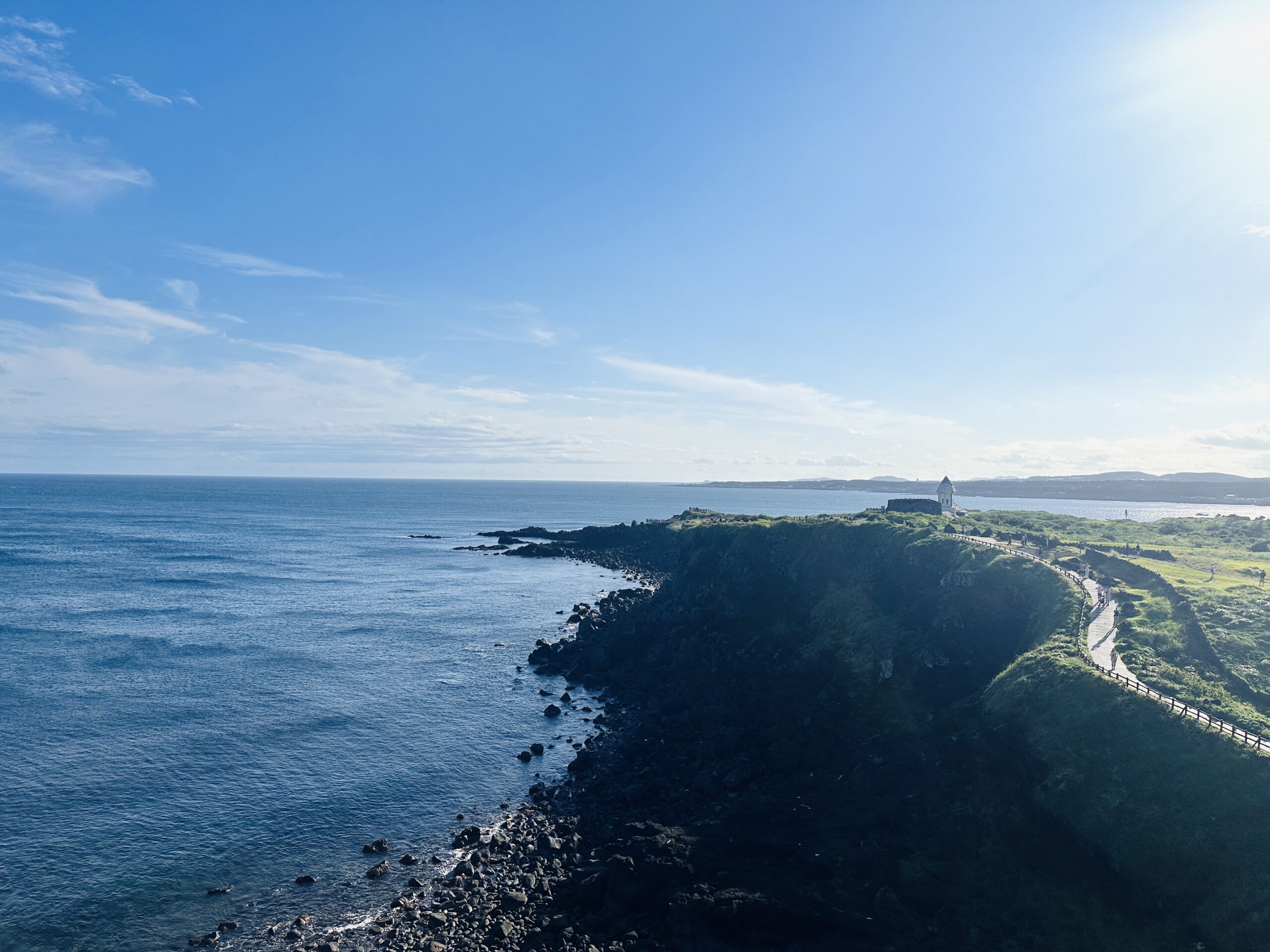
The coastal path narrows at several sections before opening onto longer flat stretches. The route then moves through Seogwipo’s urban area and past the waterfall corridor that makes this stretch unusual for a coastal trail.
Jeongbang Waterfall (정방폭포) is the one that falls directly into the sea — the only waterfall in East Asia to drop straight into the ocean, according to the signs at the entrance (several of them). Route 6 passes right by it. Admission is separate; ask the guide whether the group is pausing there.
Further along, the route leads inland briefly to Cheonjiyeon Waterfall (천지연폭포). The falls drop into a wide natural pool, the water going green where the light filters down through the subtropical tree canopy above.
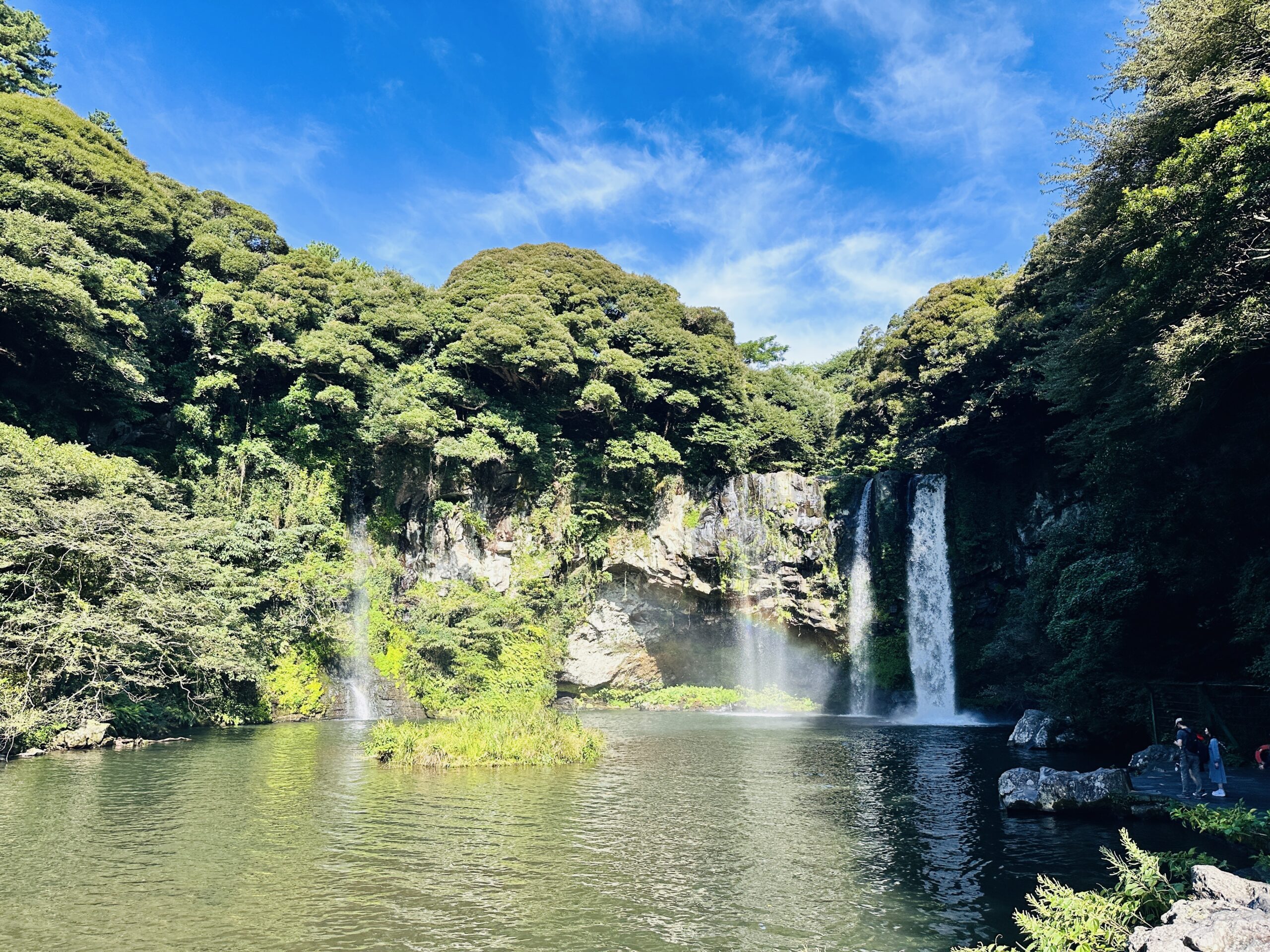
The entrance stone sits just before the main falls viewpoint.
If you’re planning a separate afternoon for waterfall exploration in Seogwipo, the car-free waterfall route from Seogwipo covers both Cheonjiyeon and Jeongbang in more depth.
The route finishes at or near Seogwipo Olle Market (서귀포 올레시장), a covered traditional market selling produce, local food, and Jeju specialties. Get your end stamp before you sit down for lunch — the stamp station closes when the market quiets. Local buses from the market return to Seogwipo Bus Terminal.
What to Bring + Lunch
No resupply at Soesokkak. Pack water and a snack for the first half — convenience stores and small shops appear once you hit the Seogwipo urban stretch.
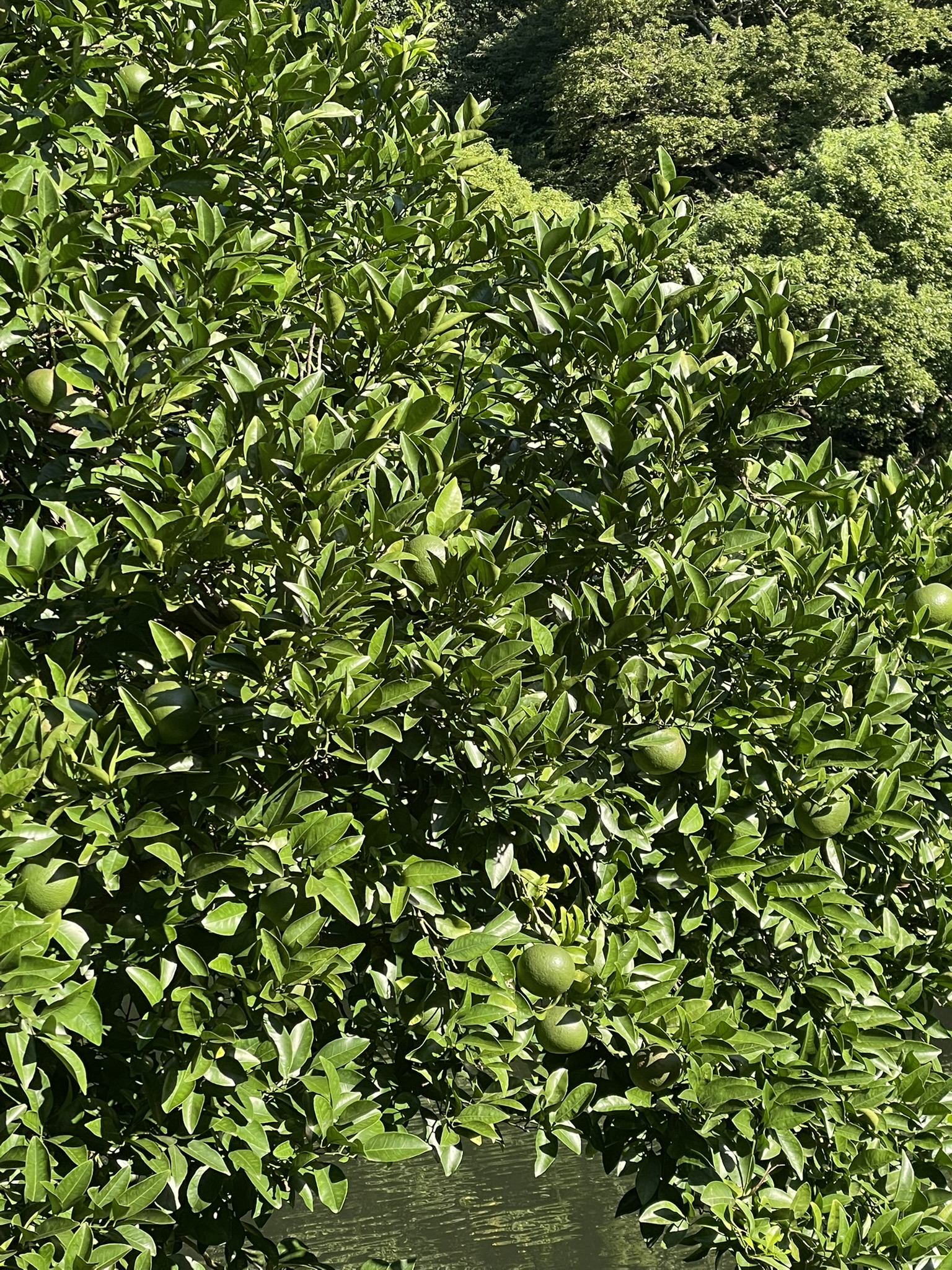
The trail’s inland side is lined with citrus orchards for stretches at a time. Jeju’s 감귤 (gamgyul, Jeju mandarin) season peaks in autumn and winter, but the trees carry green fruit through most of the year.
Lunch at the Seogwipo Olle Market is the path of least resistance — raw fish, dumplings, fresh juice, seasonal produce. The guide usually knows which stalls cater to non-Korean speakers. Sit-down restaurants are also scattered through the Seogwipo streets the route passes.
Bring: sunscreen, a light rain layer (Seogwipo’s weather shifts fast), comfortable trail shoes with grip (the basalt sections are uneven), and your Olle passport if stamps matter to you.
Bail-Out Points If You Need Them
Route 6 runs through or near the Seogwipo city center for most of its western half. Once you’re past the remote Soesokkak section and into the urban stretch, local buses are accessible at several points. The guide can point out the nearest stops along the way — worth asking at the 9:30 AM briefing.
Don’t start intending to quit early. But knowing there are exits past the halfway point makes the first kilometer easier.
Where to Stay in Seogwipo for an Early Start
The 9:30 AM start at Soesokkak is manageable from Seogwipo city without an unreasonably early wake-up. Staying in central Seogwipo puts you within bus range of the trailhead.
Guesthouses and mid-range hotels near the waterfall corridor are the practical choice — walking distance to Cheonjiyeon and Jeongbang, easy access to the bus terminal. If you’re building a longer Jeju trip around public transit, the car-free Jeju family itinerary has accommodation logic for staying south without a rental car.
Route 6 on a Saturday: free English guide, Seogwipo’s south coast, a market finish with bus access home. The logistics are simpler than most Olle routes. If you’ve been putting the trail off because the system looks Korean-only, this one has the answer built in — show up at Soesokkak (쇠소깍) by 9:15. Hiked Route 6? Drop a comment — especially if the stamp station or meeting point has moved.