Twenty Years Between Jeju Trips
Four of us — my parents, my younger sibling, and me — took an early flight to Jeju Island (제주도) on what turned out to be our first family trip there in roughly two decades.
I put together the itinerary. The broad route runs west on Day 1, then east, then south — with fallback spots saved near each stop in case something didn’t fit my parents’ pace.
One stop was non-negotiable: Udo (우도), the small island off Jeju’s northeast coast. I’ve been to Jeju three times and never made it to Udo — rain or strong winds blocked the ferry every single time. So for this trip, we locked the dates around a weather window.
Day 1 — Morning Flight and Car Pickup
Early flight out of Cheongju Airport (청주공항). About an hour in the air, and Jeju came into view.
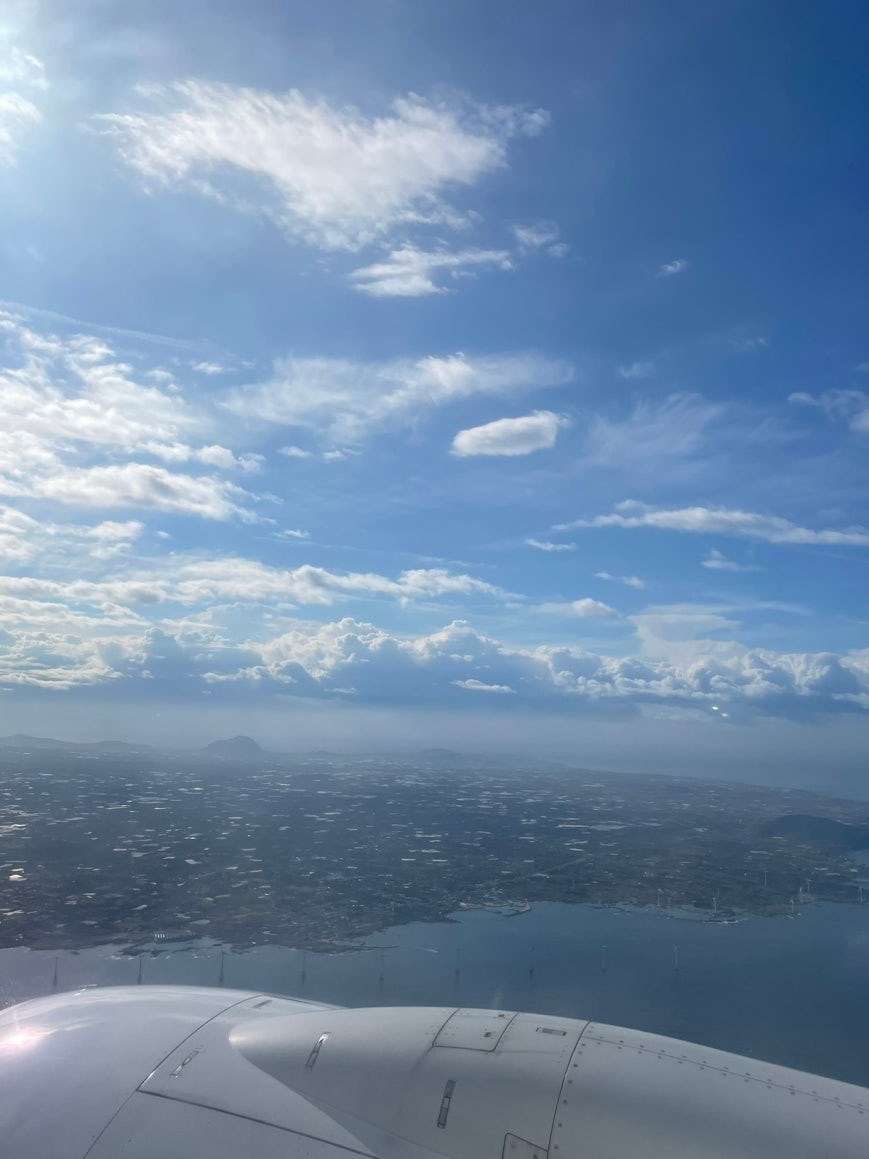
Landing done, we went straight to Lotte Rent-a-Car (롯데렌터카). A shuttle connects the airport to the pickup zone, and the handover is fully contactless — no counter queue, no paperwork to fill out in person. We were in the car within twenty minutes of landing.
The vehicle: a Hyundai Santa Fe MX5. Four adults and four suitcases fit without rearranging anything. Right call for two and a half days of driving.
Gwakji Beach (곽지해수욕장) and the Gwamul Spring Bath
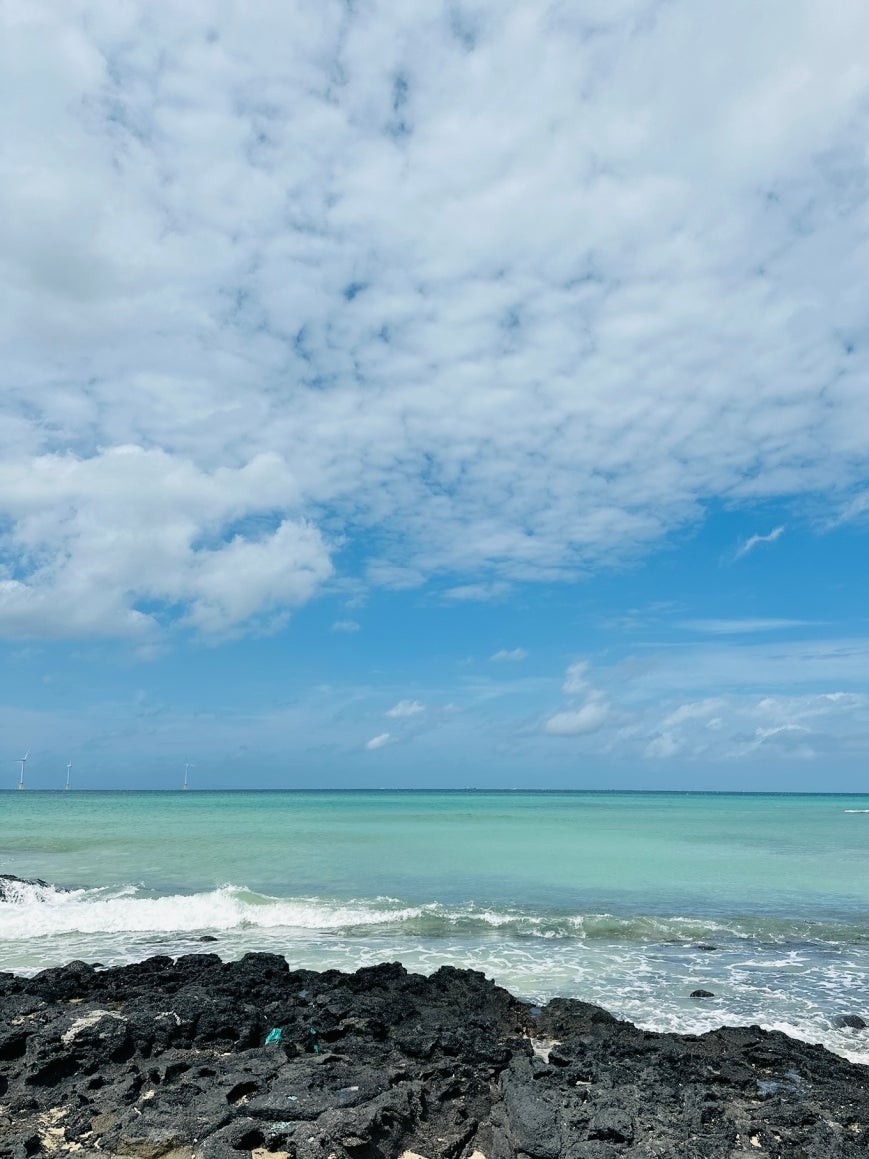
First stop: Gwakji Beach (곽지해수욕장), reached via the Hagwi-Aewol coastal road (하귀애월 해안도로). The water runs teal to turquoise depending on where you’re standing, and the shoreline is framed by Jeju’s signature black volcanic rock.
At the far end of the beach is Gwamul Noecheontang (과물노천탕), an open-air freshwater spring bath. The name "gwamul" refers to water said to travel underground from Hallasan (한라산, Jeju’s central volcano), passing beneath Gwak Oreum before surfacing near the sea — long described as sweet water. The baths are divided into separate male and female sections. Popular for rinsing off after a swim, and usually busy on clear days.
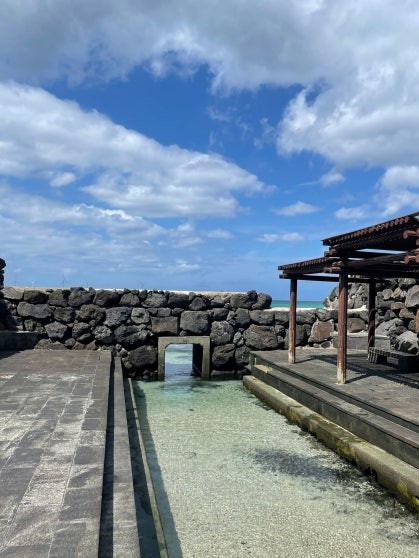
We spent around thirty minutes — feet in the water, a few photos. Nothing complicated.
Lunch at Keonyeo (큰여)
Less than five minutes by car from the beach. Keonyeo (큰여) is a local seafood place — steady turnover, mostly neighborhood regulars, no tourist rush.
We ordered hanchi mulhoe (한치물회 — cold squid in spicy vinegar broth) and galchi-jorim (갈치조림 — braised hairtail fish). Live hanchi mulhoe wasn’t available that day, which was a minor letdown, but the standard version held up. The galchi-jorim came in a solid portion.
Hallim Park (한림공원) and Hyeopjae Cave (협재굴)
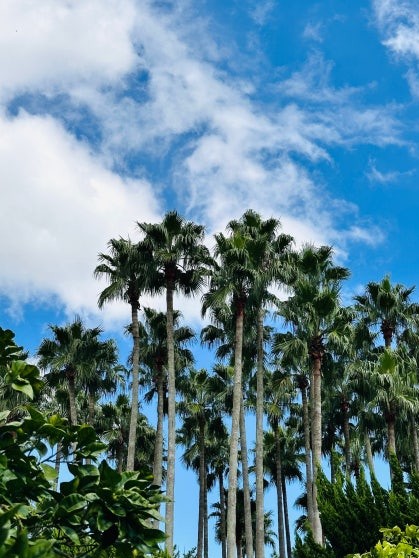
Hallim Park (한림공원) is larger than it reads on a map. Under the palm canopy, it feels closer to Southeast Asia than Korea.
The main draw is Hyeopjae Cave (협재굴), a lava tube shaped by pahoehoe lava flow. The cave runs about 100 meters. What sets it apart: shells and red algae from the coastal dunes above dissolved over time and seeped through the rock, leaving limestone deposits — so the cave has both stalactites and stalagmites forming inside a volcanic tube. That combination isn’t common.
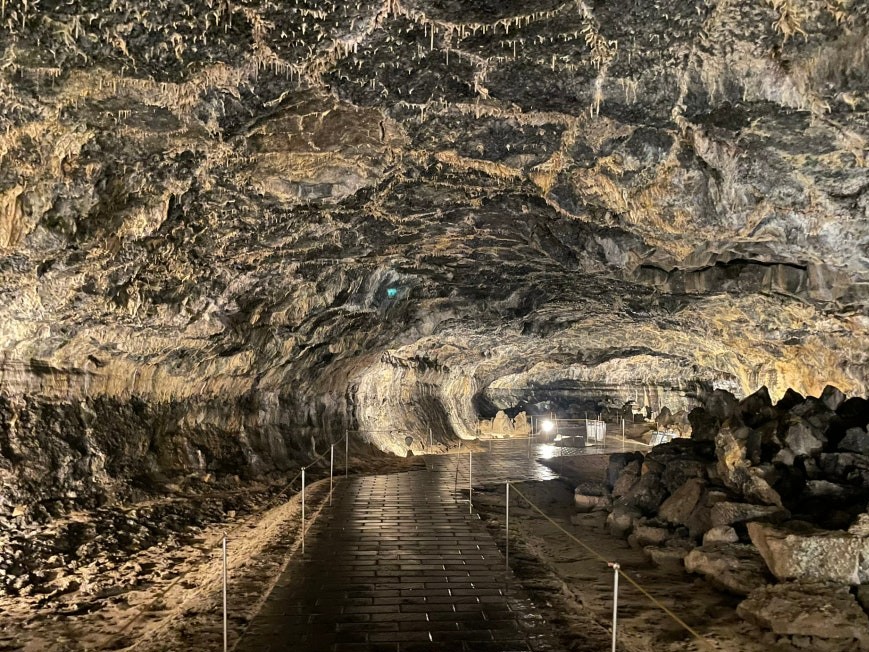
Plan around two and a half hours for the full park loop.
Saebyeol Oreum (새별오름)
Oreum (오름) are the volcanic cinder cones scattered across Jeju — there are close to four hundred of them. Among the western-side ones, Saebyeol Oreum (새별오름) is my top pick.
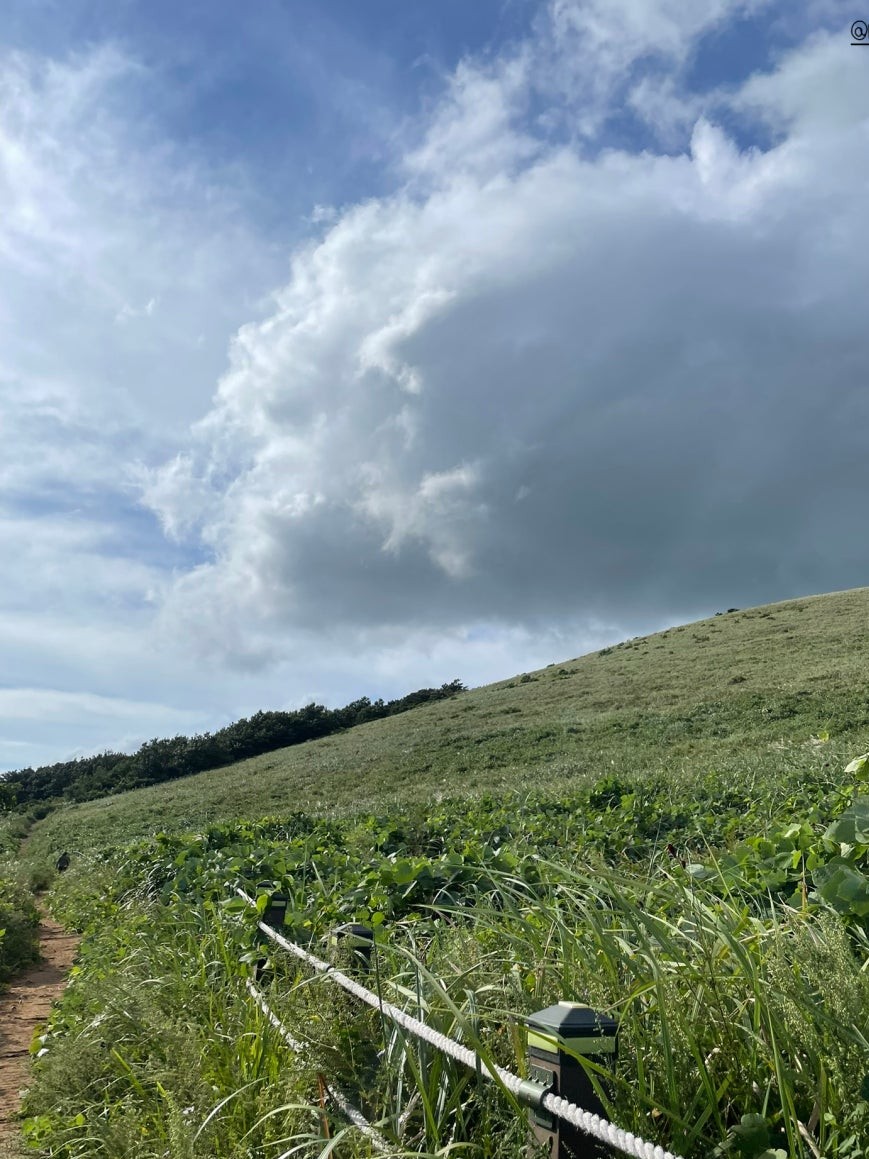
The ascent is steeper than the base suggests. Go slow. The views at the top make it.
Hotel, Black Pork Dinner, and What Came Next
On the drive back, we stopped at Hallasan 1100 Highland (한라산 1100고지) — a rest area and wetland park at 1,100 meters on Hallasan’s slopes. The air was noticeably cooler. A short loop trail circles the highland wetland; easy walking, no real climb once you’ve parked. Good end to a full day before heading to the hotel.
The accommodation was Shilla Stay Plus Ihoteu (신라스테이 플러스 이호테우) — a room with a double bed and a bunk bed, plus a large table good for spreading out food later. The weather turned in the evening. No sunset.
For dinner, the original plan was Donssamchun (돈삼춘), an old-school black pork spot. The wait was over an hour. We left and found a different restaurant — one that had appeared on the Korean food program Meogeul Tende (먹을텐데), hosted by singer Sung Si-kyung (성시경).
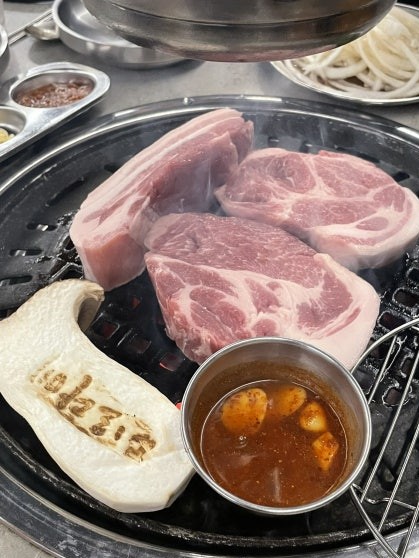
Four people, soju-beer mix to start, ₩200,000 for the full table. The pork was good. Jeju black pork (제주 흑돼지) is a local breed — darker meat, slightly richer than standard. Worth the detour from the original plan.
For the second round, we picked up takeout from a nearby fish restaurant: mackerel sashimi and ddaksaewu sashimi (딱새우회 — a Jeju langoustine-like shrimp, typically served sliced raw). The set came with cold seafood soup (물회) and mussel broth (홍합탕). Solid combination for eating back at the room.
The Udo ferry was already on everyone’s mind. The forecast for the next morning showed heavy cloud and thunder. Three previous Jeju trips, zero Udo visits — always the weather. This was starting to feel like a pattern.
Woke up the next day to grey skies and a flat sea. No rain, no strong wind. The ferry was running.
If you’ve done a Jeju west-route day like this one, which stop surprised you most? Drop a note in the comments — always looking for spots I might have missed on the western side.