Day 2: Bakeries, Rail Bikes, and Korea’s Naples — Donghae & Samcheok
Day 2 of a 4-year anniversary trip along Korea’s east coast. Donghae (동해) and Samcheok (삼척) sit on the East Sea coast of Gangwon-do (강원도), about three hours from Seoul by car. Quieter than Gangneung (강릉), with their own stretch of coastline and a much shorter tourist queue.
Today: bakery breakfast before 9 a.m., a rental car, an hour on the Samcheok Ocean Rail Bike (삼척해양레일바이크), a short cable car crossing, and Janghohang Port (장호항) — the spot Koreans call the Naples of Korea.
Breakfast at Donghae Jeppangso (동해제빵소)
The bakery near our accommodation releases salt-butter rolls (소금빵) and potato bread (감자빵) at 8 a.m. That alone was reason enough to eat breakfast — something we almost never do at home.
Donghae Jeppangso (동해제빵소) was already busy for a weekday morning. The display case was only partially stocked — bread arrives in batches throughout the day — but our two targets were there. We added a mochi cream cheese bread (모찌크림치즈빵) to the bag. Three items, no deliberation.
The potato bread tasted like actual steamed potato. Earthy, soft, nothing like a standard filled bun. Korean bakeries are deep into a root-vegetable bread trend right now; after one bite, you understand why it’s spreading.
Four or five tables inside; we packed ours to-go and ate in the car.
Rental Car: Casper 1.0 Turbo (캐스퍼)
Booked through Gcar, a Korean car-sharing app. The Casper was the cheapest option that day — khaki color helped close the decision. Avanté and Seltos were also available, but the compact was more than enough for the day.
Driving into Samcheok: The Cement Factory
Nothing prepares you for what sits directly in front of Samcheok Station (삼척역). A massive cement complex — silos, metal conveyor structures, industrial scaffolding — towers over the road heading into the city.
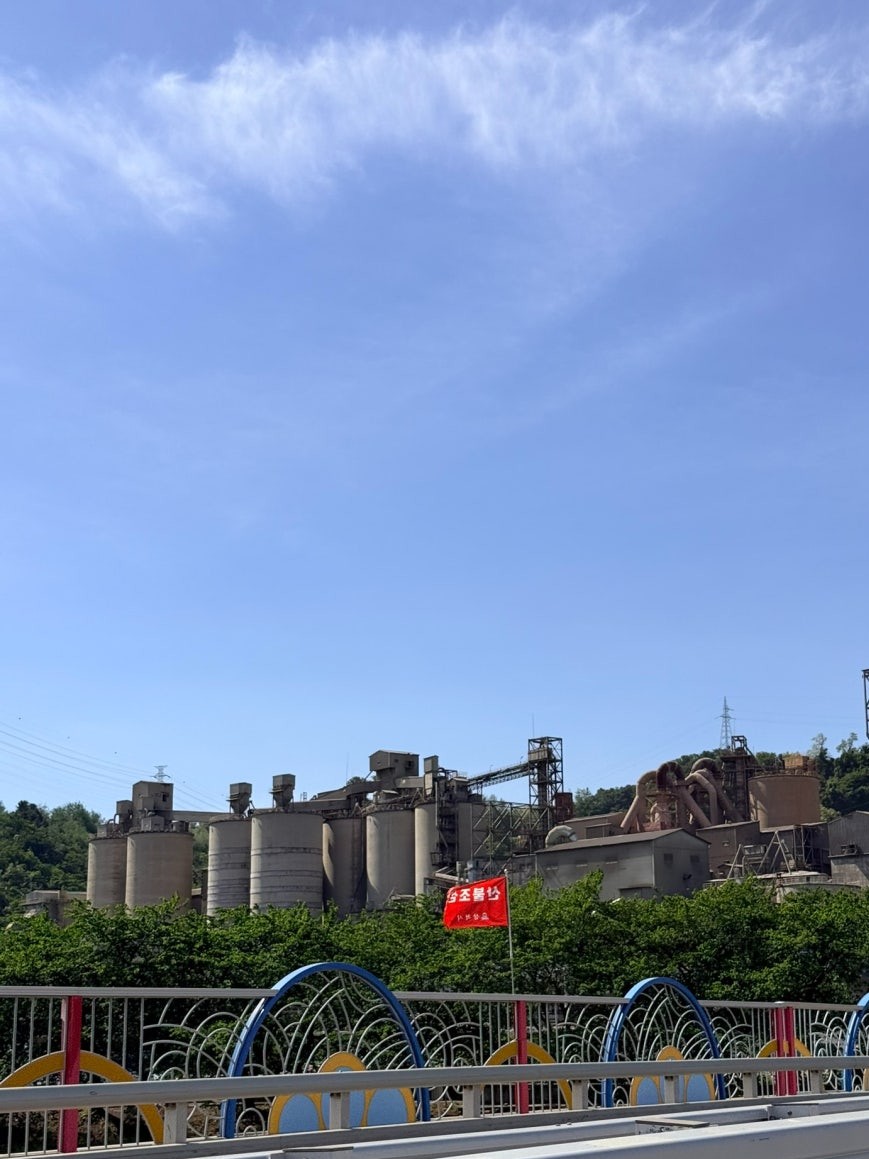
You’ll stop paying attention to the road for a moment. If you’re drawn to post-industrial scale or post-apocalyptic aesthetics, budget extra time here.
Samcheok Ocean Rail Bike (삼척해양레일바이크)
From Samcheok Station, we drove straight to Yonghwa Station (용화정거장). The rail bike boards here, and the Samcheok Marine Cable Car (삼척해상케이블카) terminal is right next door — one parking lot handles both.
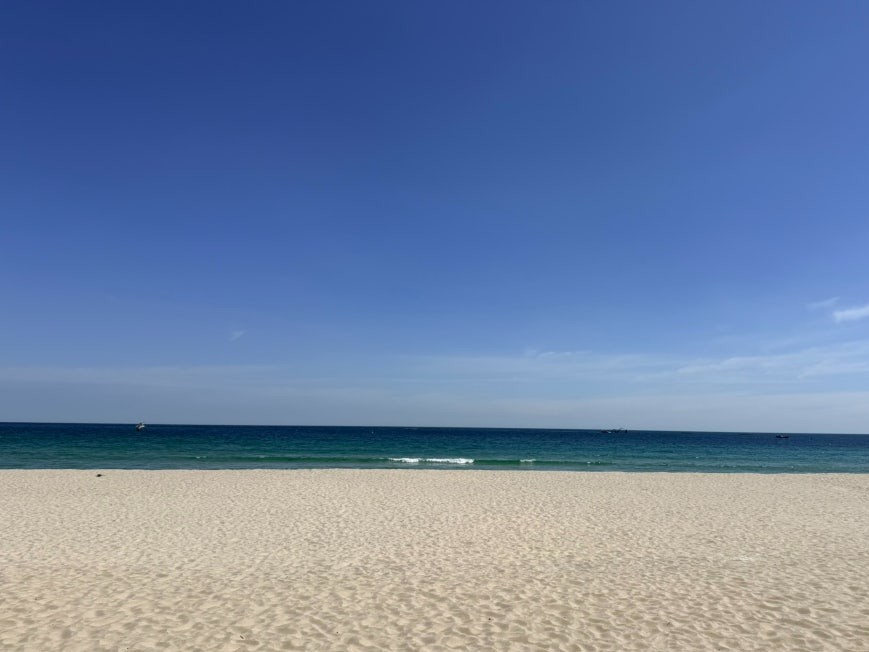
We arrived around 10 a.m. and booked the 10:30 departure. Parking was easy — weekday, wide open. With 30 minutes to spare, we walked to the beach right beside the station.
Schedule (same from both Yonghwa and Gungchon stations):
| Departure | Time |
|---|---|
| 1st | 09:00 |
| 2nd | 10:30 |
| 3rd | 13:00 |
| 4th | 14:30 |
| 5th | 16:00 |
Fares:
| Bike | Standard | Group (10+ bikes) | Reduced |
|---|---|---|---|
| 2-seater | ₩25,000 | ₩23,000 | ₩15,000 |
| 4-seater | ₩35,000 | ₩32,000 | ₩21,000 |
Local residents with a Gangwon provincial residency card get the reduced rate on weekdays — a regional benefit, not available to outside visitors.
At 10:30 we boarded. Far more bikes than expected — easily over 100 staged and ready. We walked to the front section.
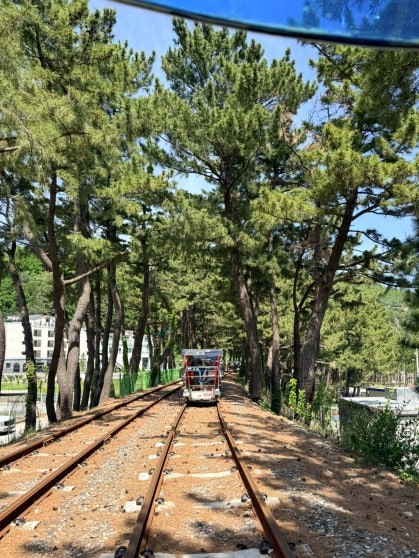
Pedaling is lighter than it looks. Even going slow, the bike rolls smoothly. The route follows the coast and passes through several tunnels — longer than they appear from outside, and lit entirely in blue and purple LEDs.
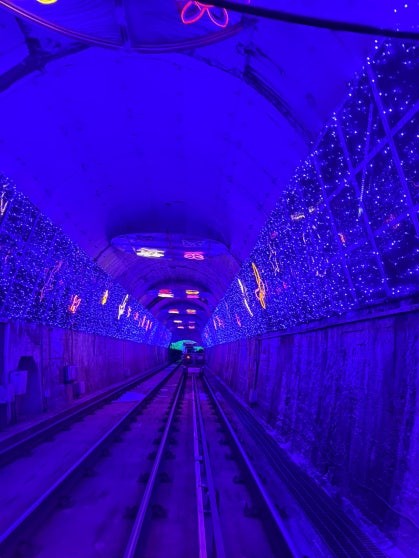
In midsummer, those tunnels will be the best stretch of the ride.
There’s a rest stop midway. Under construction during our visit — we kept moving.
The full route from Yonghwa to Gungchon Station (궁촌역) takes about an hour. A shuttle bus waits at Gungchon. It doesn’t run on a fixed schedule — fills and leaves. Brand-new bus. About 10 minutes back to Yonghwa.
One note from experience: my girlfriend left her jacket on the bike. Lost-and-found forms are at the front counter — the staff seemed used to it. We requested COD mail delivery; the jacket arrived home two days later.
Samcheok Marine Cable Car (삼척해상케이블카)
The cable car terminal is a 2–3 minute drive from the rail bike station, or walkable if you prefer to skip the car.
Individual fares:
| Category | Round trip | One way |
|---|---|---|
| Adult (13+) | ₩10,000 | ₩6,000 |
| Child (36mo+) | ₩6,000 | ₩4,000 |
Group fares (30+ people):
| Category | Round trip | One way |
|---|---|---|
| Adult | ₩8,000 | ₩5,000 |
| Child | ₩5,000 | ₩3,000 |
Other rates: seniors (65+) pay ₩7,000/₩4,000 round trip/one way. Residents of Samcheok, Taebaek (태백), Jeongseon (정선), and Yeongwol (영월) get weekday discounts. People with disabilities, veterans, and local active military: ₩5,000/₩3,000.
Staff are stationed throughout. Boarding is smooth and easy to follow.
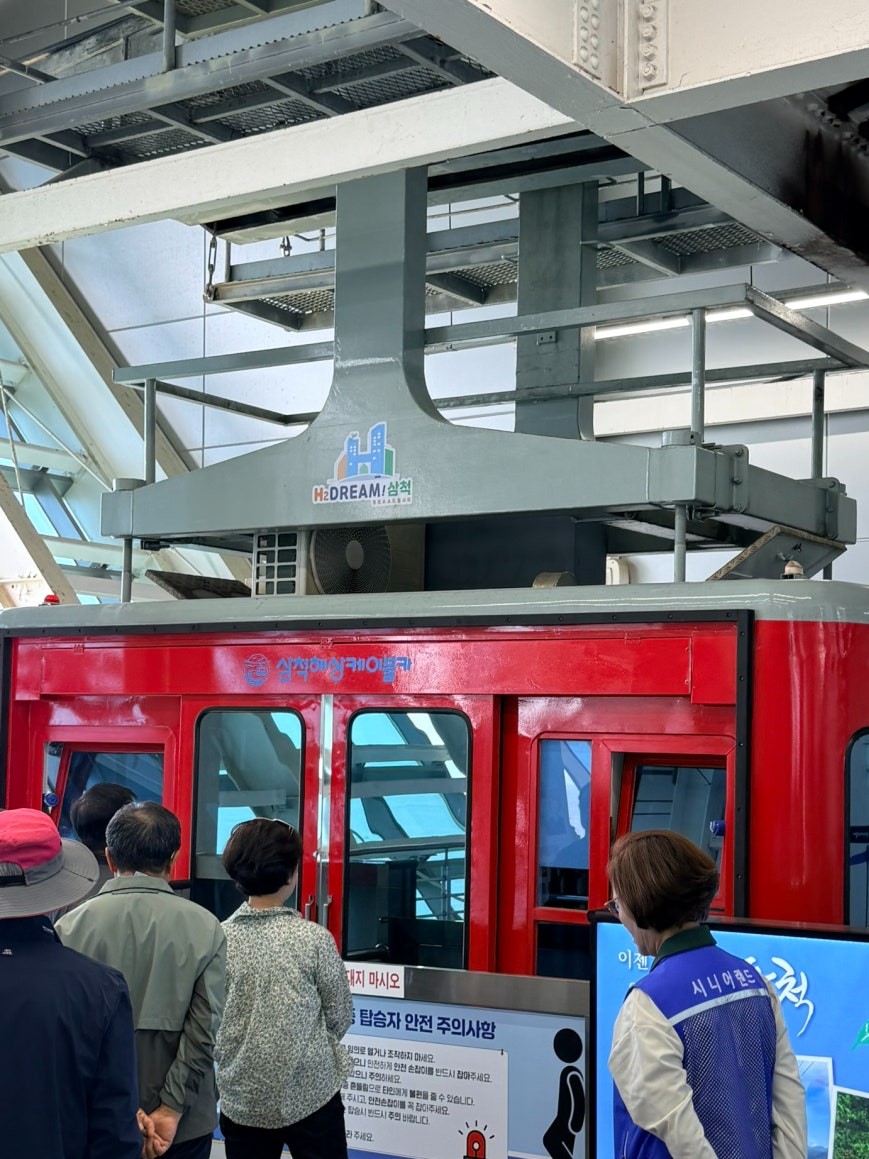
The ride is about 7 minutes in a shared cabin. At ₩10,000 for 7 minutes with strangers, it feels more like transit than sightseeing. The coast below looks genuinely good — but on a crowded weekend, a bad position in the cabin means very little view at all.
Janghohang (장호항) — Korea’s Naples
Janghohang is routinely called the Naples of Korea for its compact cove and unusually clear water. The cable car descends directly toward the port.
In May, the snorkeling season hadn’t opened — water still too cold. Clear kayaks were operating. Part of the harbor was under construction.
The cove has an almost valley-like quality: rocky walls on the sides, shallow flat seabed below, water you can see through clearly.
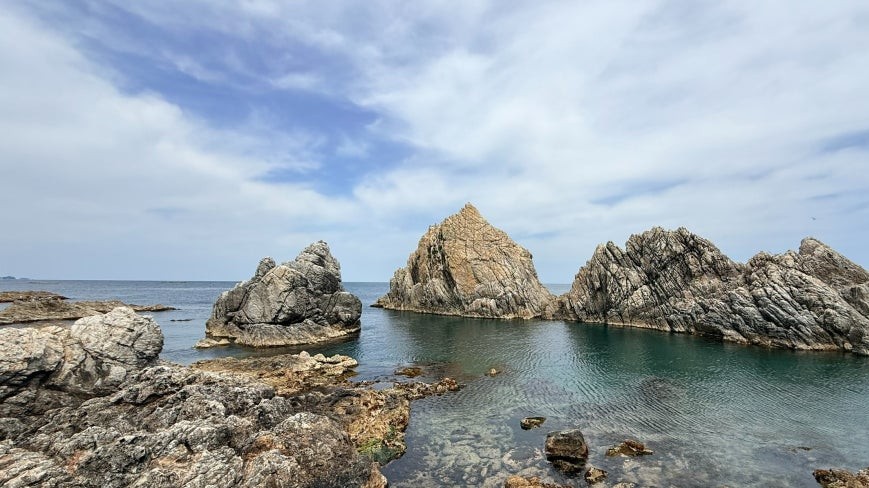
Peak summer packs the flat seabed areas with platform mats — families spread out for full-day swims and snorkeling sessions. In May, we had it nearly to ourselves. Most nearby shops were closed.
The experience center runs clear canoe (투명카누) rentals; pricing is on the steeper side for the experience. Life vests are mandatory — bring your own or rent on-site.
For lunch, the nearby options were thin. A gukbap (국밥 — Korean rice-and-soup) restaurant was open and that’s where we landed. Reliable flavor.
Return Cable Car
Four passengers on the way back — us and one other couple. The attendant used the quiet ride to point things out: a yellowtail (방어) aquaculture farm directly below, rock seaweed (돌미역) on the coastal surface. Mullet sometimes pass through, he said.
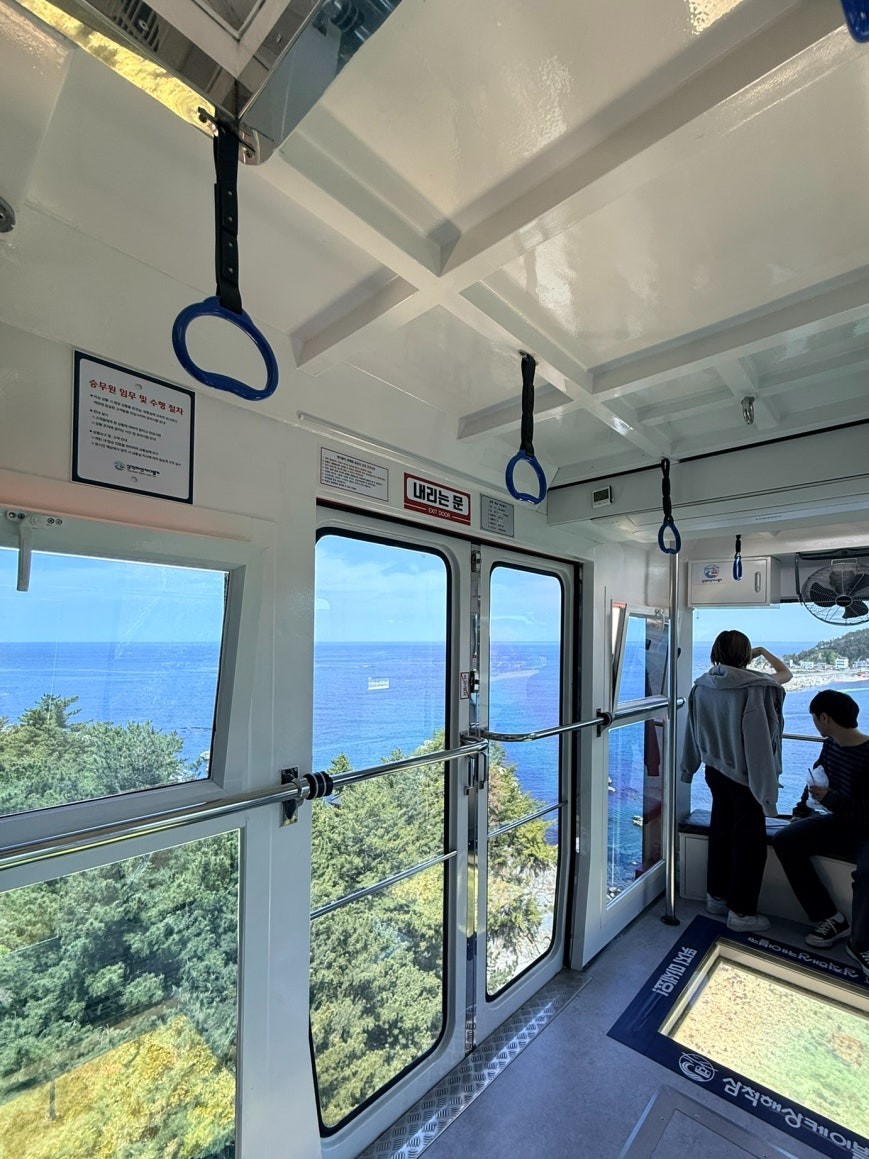
That version of the cable car — empty cabin, narrated commentary — is the one worth catching.
Deoksan Beach (덕산해수욕장) & A Market Miss
With time before check-in, we stopped at Deoksan Beach (덕산해수욕장). Known locally for its 외나무다리 (single-log bridge) — a narrow wooden crossing over what was once a flowing stream channel. Worth the two-minute walk.
Clouds finally came in by then, catching up with the morning forecast at last.
We drove to Samcheok Jungang Market (삼척중앙시장), drawn by its Youth Mall (청년몰) — small stalls run by younger vendors. Monday. All closed. Every single one.
There’s a No Brand store nearby that operates as a coexistence branch, deliberately avoiding any product overlap with the market. Noted, but cold comfort when the market itself is shut.
Pension Check-in
We’d booked an ocean-view pension (펜션 — Korean-style guesthouse) with a spa tub and BBQ setup. Checked in early. Made full use of both.
Day 3: Seafood Lunch, Coastal Drive, Candlestick Rock
Slept late. Lunch was a seafood rice bowl (해물덮밥) near Samcheok Beach — the standard order for the area.
Before returning the car, we drove Isabu Coastal Road (이사부 해안도로), one of the region’s well-known scenic routes running along the Samcheok coastline.
Last stop: Chuam Candlestick Rock (추암 촛대바위), Samcheok’s most recognized landmark. An easy 30-minute loop — good walking, striking rock formations.
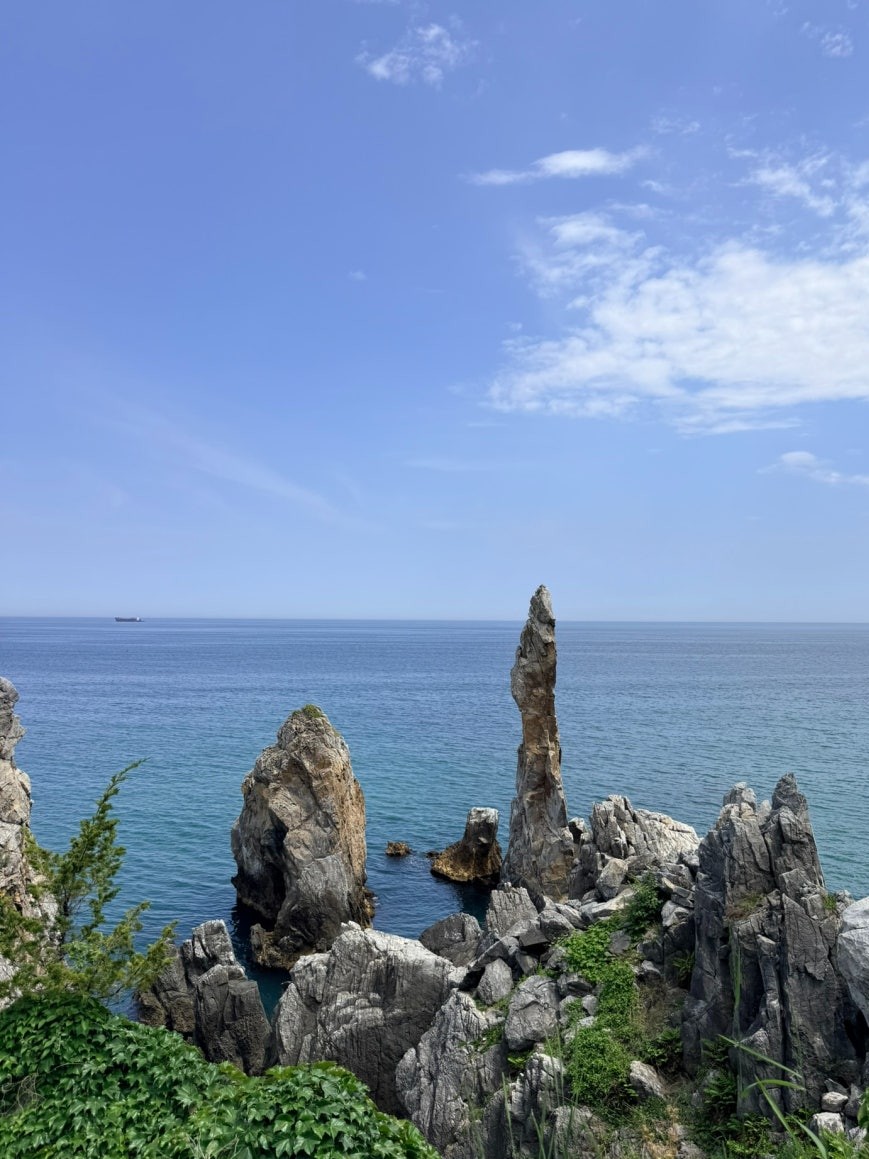
Suspension bridge on-site, but we skipped it. The one at Chogok Yonggul Candlestick Rock Trail (초곡 용굴 촛대바위길) is reportedly the better of the two — worth knowing before you plan.
Returned the car. Walked to Mukho Station (묵호역). An unmanned café sits directly across the street — self-service, americano at ₩2,000. Good place to decompress.
Back to Seoul. Two nights along this stretch of coast was exactly right.
Donghae and Samcheok feel softer than Gangneung (강릉) or Yangyang (양양) — smaller scale, quieter rhythm, fewer crowds. Worth the detour from better-known east-coast stops.