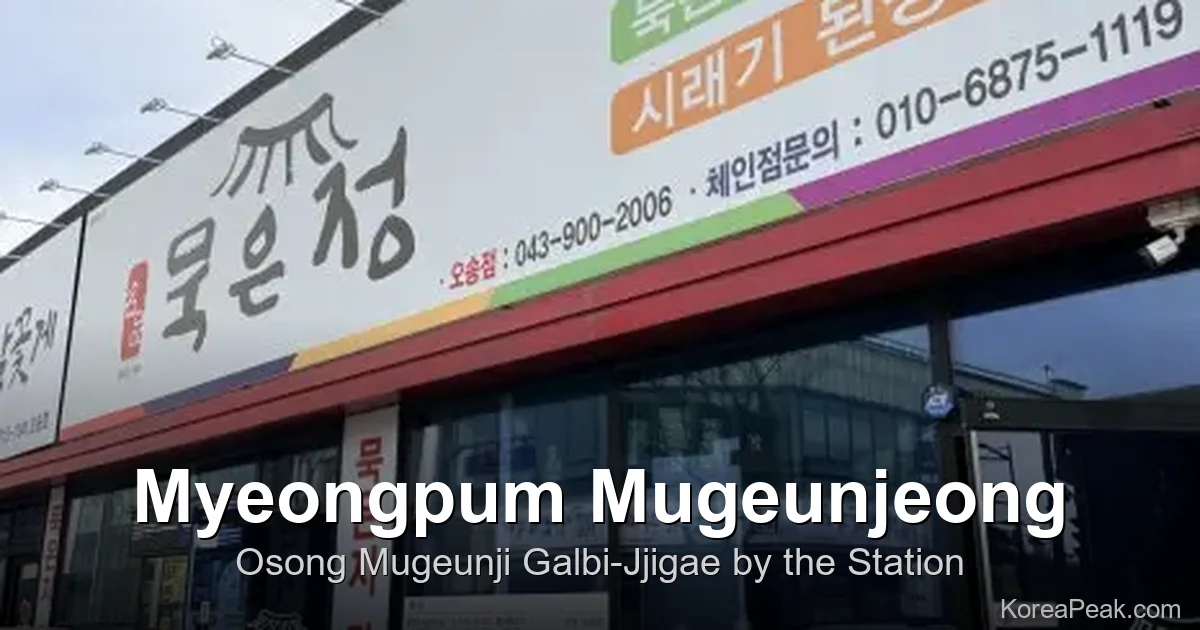
Osong mugeunji galbi-jjigae (묵은지갈비찌개) at Myeongpum Mugeunjeong (명품 묵은정) is a stew of bone-in galbi ribs simmered under a whole head of mugeunji (long-aged kimchi), not the small diced pork that goes into a standard kimchi-jjigae. The restaurant sits right in front of Osong Station, which makes it a real option on a KTX transfer.
Getting There
Myeongpum Mugeunjeong is right in front of Osong Station, with almost no walk between the platform and the door. The full address is 충청북도 청주시 흥덕구 오송읍 오송생명13로 13 1층 (Osongsaengmyeong 13-ro 13, 1F, Osong-eup, Heungdeok-gu, Cheongju-si, Chungcheongbuk-do). Search 명품 묵은정 in Naver Map or KakaoMap and the pin drops on the door.

What to Order
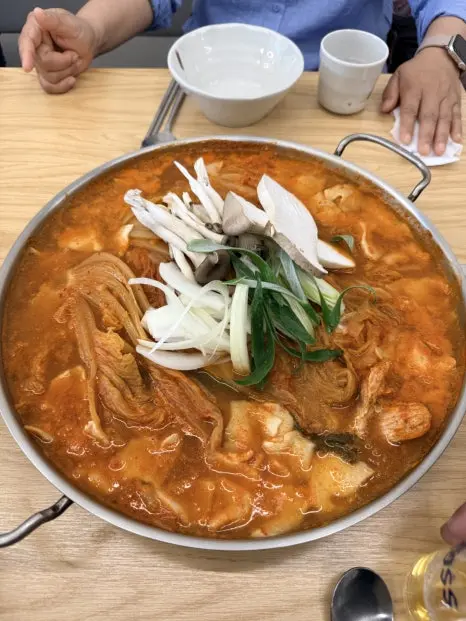
The headline dish is mugeunji galbi-jjigae, the stew this place is known for around the neighbourhood. A whole head of mugeunji sits on top of the pot when it arrives, and the galbi ribs come in big, bone-attached pieces, not bite-sized cubes. Once the broth is bubbling, you use the scissors and tongs at the table to cut both down to manageable sizes. The heat comes from the aged kimchi itself rather than added spice, and the meat fills the broth out underneath.
The order pattern matters here. Order one stew per person and the sujebi (수제비, hand-torn dough pieces) and ramyeon noodles come unlimited, so the rhythm to follow is finish the meat and kimchi first, drop the sujebi mid-meal, and put the ramyeon in once the broth has reduced. Order fewer stews than heads at the table and the refills don’t come included.
The other mains worth knowing about are mugeunji galbi-jeongol (묵은지 갈비전골), the larger shared hot-pot version of the same combination, and siraegi doenjang-gukbap (시래기 된장국밥), a soybean-paste soup with rice and dried radish greens. Both are listed as the kitchen’s main lines alongside the jjigae.
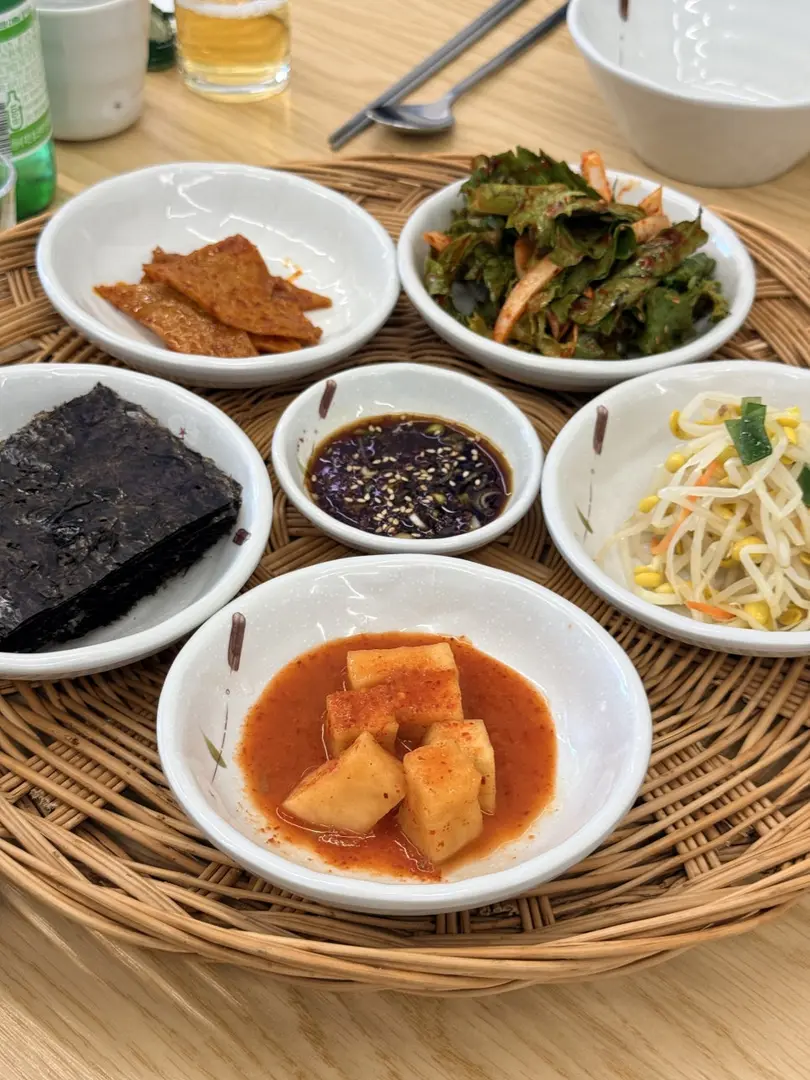
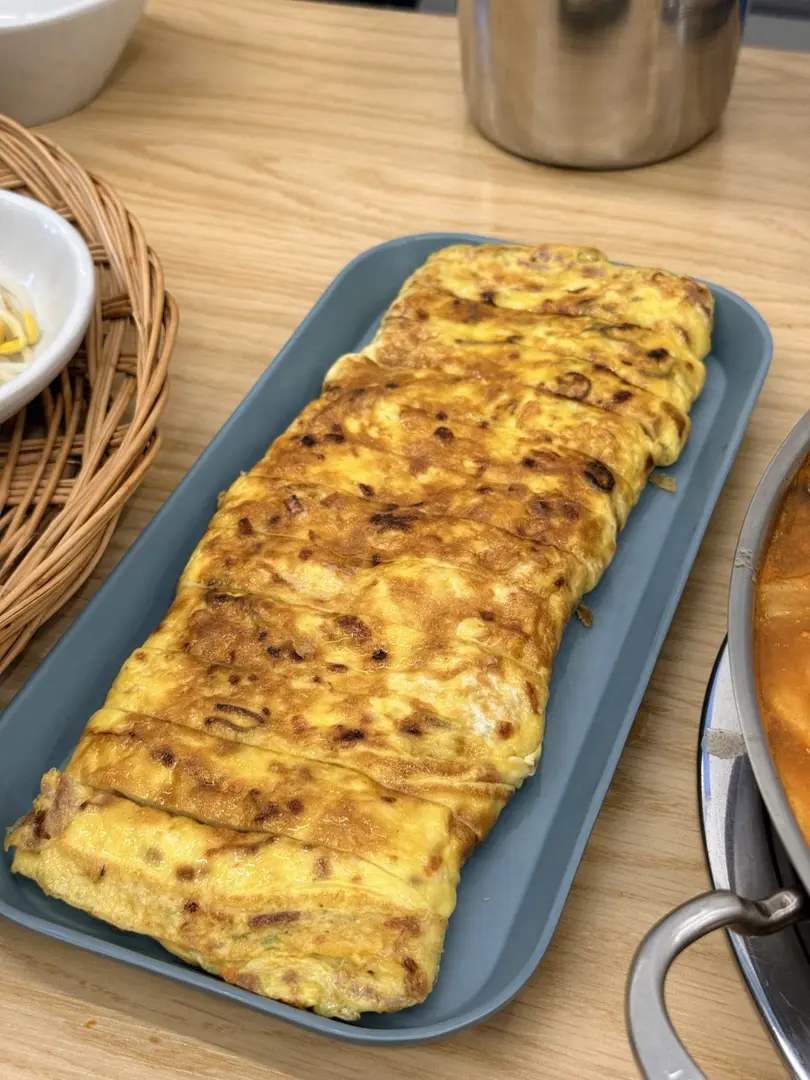
For sides, the gyeranmari (계란말이, rolled omelette) at ₩10,000 is the one to add. It lands thick and offsets the heat of the stew. The complimentary banchan run to gim (김, toasted seaweed sheets), eomuk-bokkeum (어묵볶음, stir-fried fishcake), kongnamul-muchim (콩나물무침, seasoned bean sprouts), and sangchu-muchim (상추무침, seasoned lettuce), all set out as a self-service bar so refilling doesn’t need flagging anyone down.
What It’s Like
The interior is clean and cosy. Lunch and dinner peaks fill the room with workers from nearby offices and Osong locals, so if a quiet table matters, aim for either side of those windows.
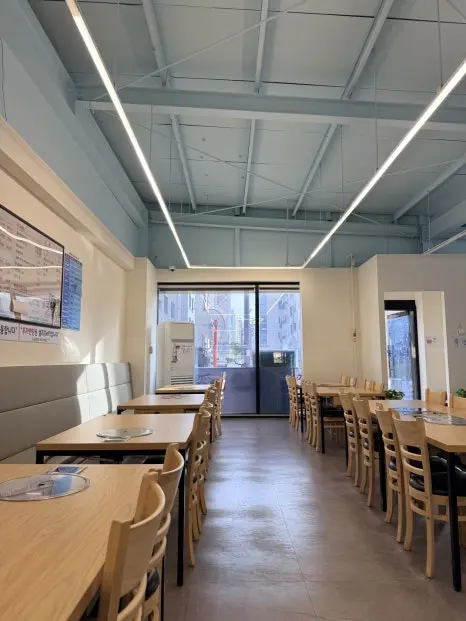
I went just past the lunch peak, when the place had eased off and a table opened without a wait. The banchan hit the table first, then the big pot arrived with a whole head of mugeunji draped over the bone-in galbi. Cutting it down took a few minutes with the scissors and tongs at the table. The gyeranmari landed around the time the broth was starting to feel heavy, and a packet of ramyeon went in last.
Practical Tips
- Hours: 8:30–21:30 (break 15:00–17:00)
- Closed: odd-numbered Saturdays each month
- Ordering rule: one stew per person for unlimited sujebi and ramyeon noodles
- Side worth adding: gyeranmari (₩10,000)
- Banchan: self-service refills
- Naver Map search: 명품 묵은정
Final Thoughts
If you’re transferring through Osong with a real window between trains, this is the meal worth getting off the platform for. Order one mugeunji galbi-jjigae per person, add a gyeranmari for the table, and pace the sujebi and ramyeon for the second half of the broth. Skip the lunch and dinner peaks if a quiet table is the priority.