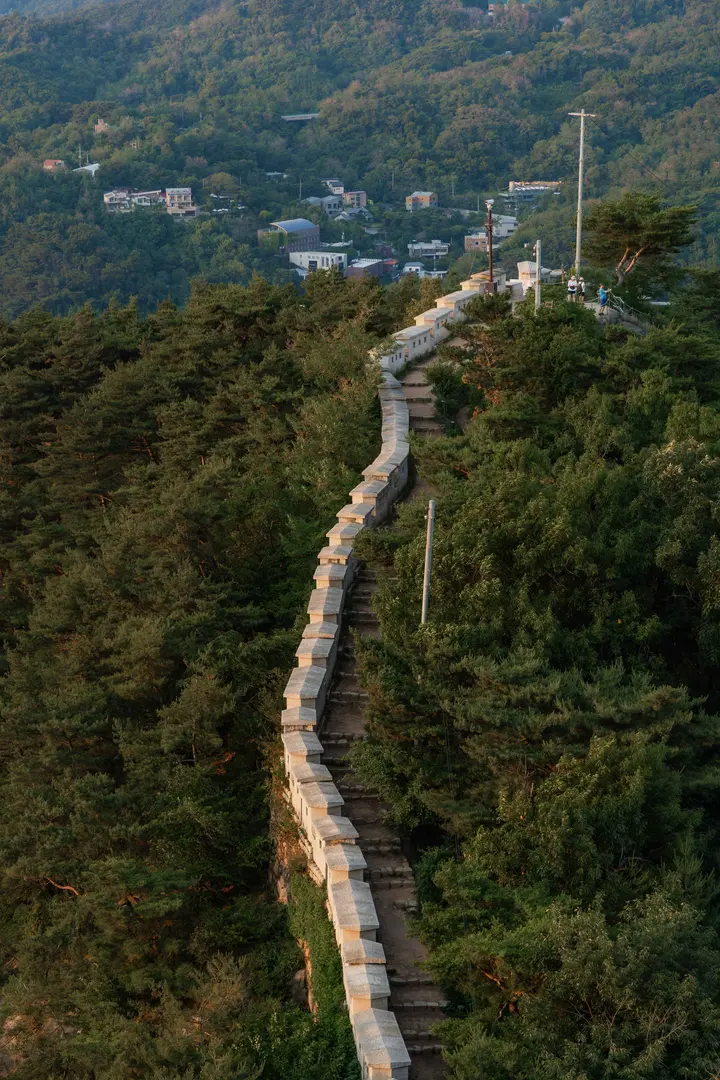
Inwangsan is 2.5 km along Seoul’s old fortress wall — Line 3 to Dongnimmun, Exit 2, then you’re at the trailhead in 10 minutes. At 338 m it’s not a climb, but the skyline combo from the summit (Gyeongbokgung, N Seoul Tower, and the old Blue House in one frame) is what makes it the one Seoul day hike that’s actually hard to recreate elsewhere. Below: the route I took, the shrine and rock you’ll pass, and what I’d do differently if I went again.
Contents
Getting There
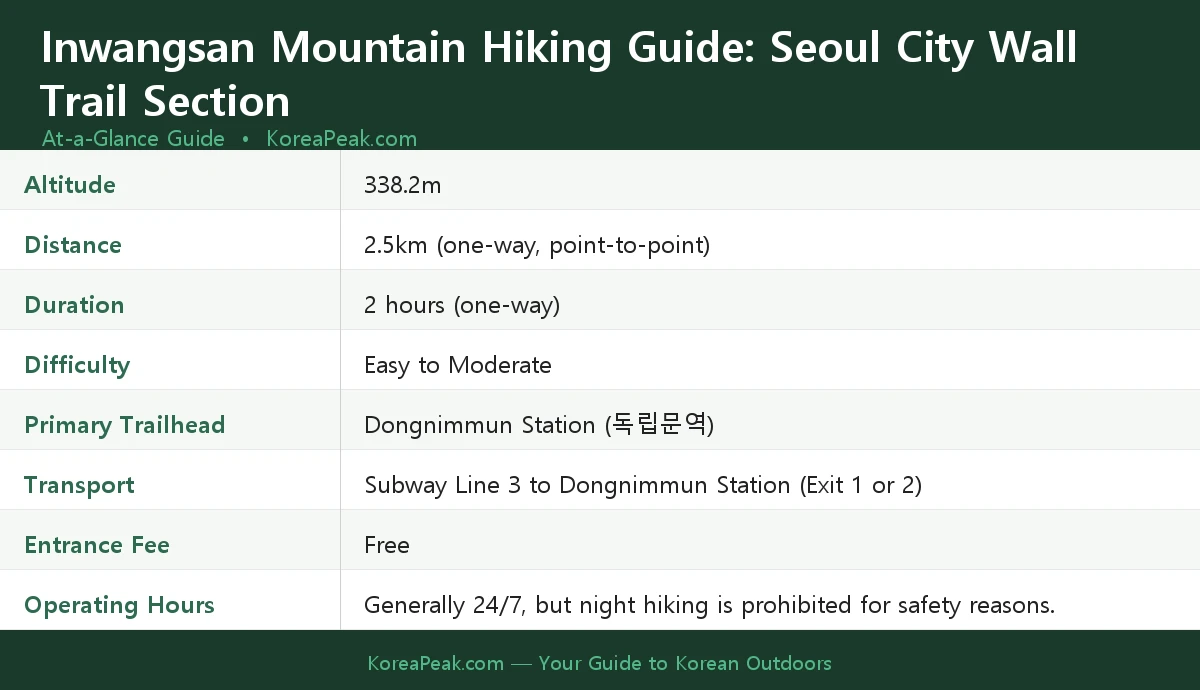
Getting to Inwangsan is straightforward, even for first-time visitors to Seoul. The primary trailhead sits near Dongnimmun Station (독립문역), served by Seoul Subway Line 3. Take Exit 1 or Exit 2 and follow the signs toward Inwangsan — the mountain is hard to miss once you’re street-level.
One important heads-up for international visitors: Google Maps is notoriously unreliable in South Korea. I recommend switching to Naver Map or KakaoMap for all navigation while you’re here. To search for the trailhead, copy and paste this into your app: 인왕산. Both apps offer English-language interfaces and will give you accurate walking directions from the station to the trail entrance.
Trail Guide: The Seoul City Wall Route
The most popular way to experience Inwangsan is along the Inwangsan section of the Seoul City Wall Trail, a point-to-point route running from Dongnimmun Station to Changuimun Gate. The trail stretches 2.5km one-way and takes approximately 2 hours to complete at a comfortable pace.
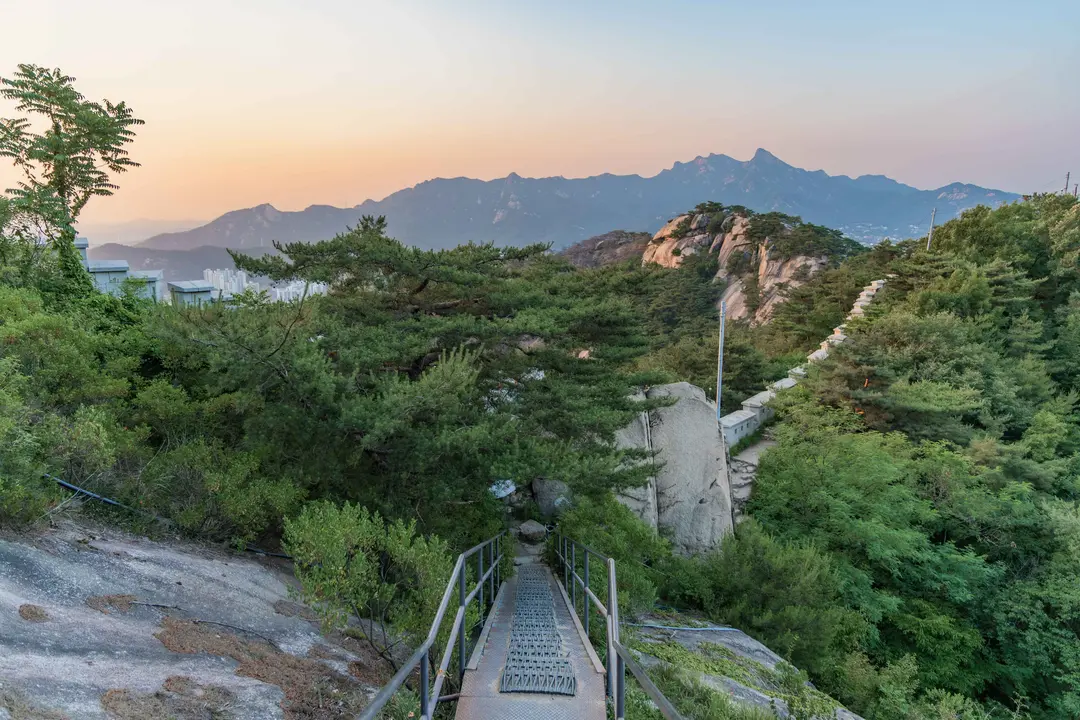
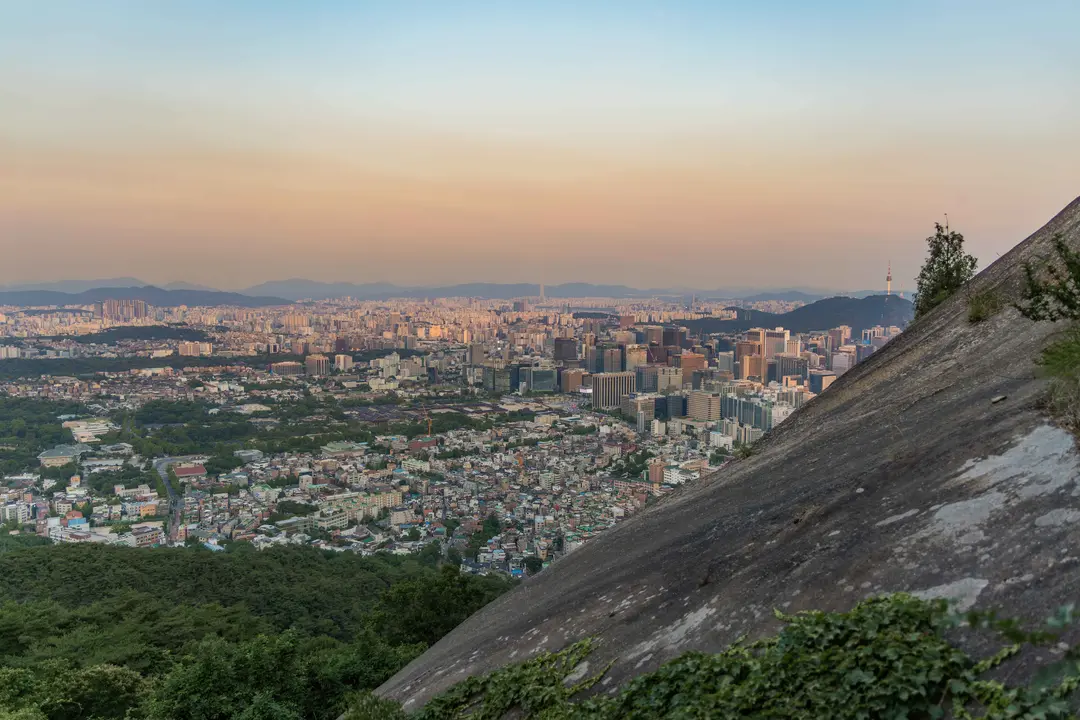
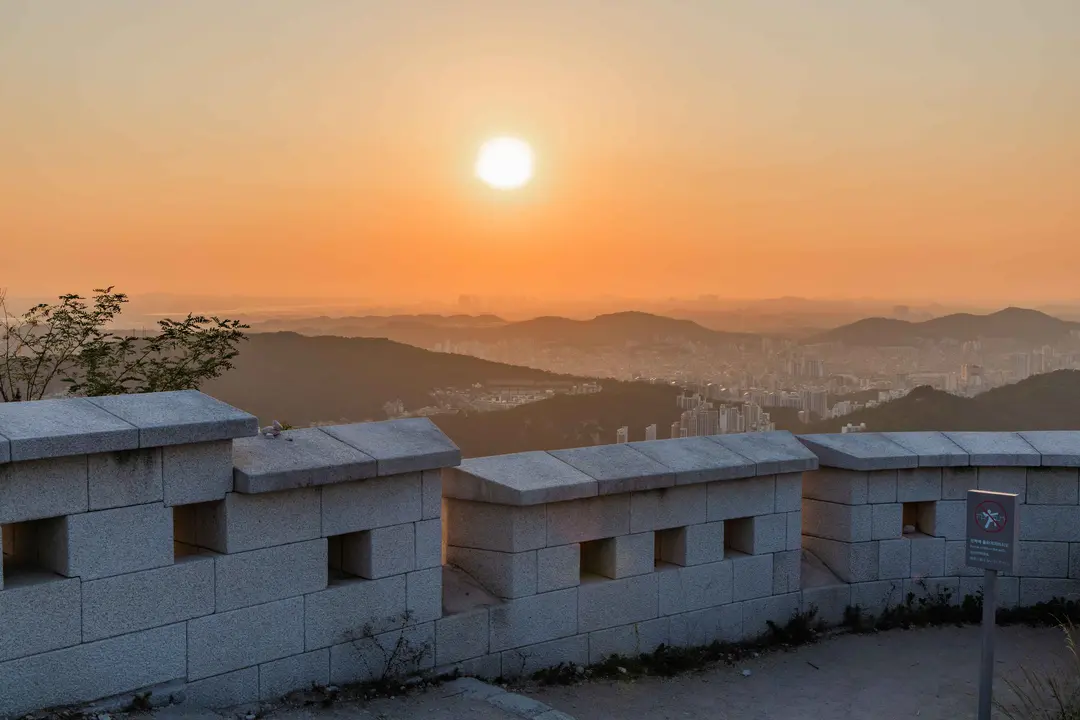
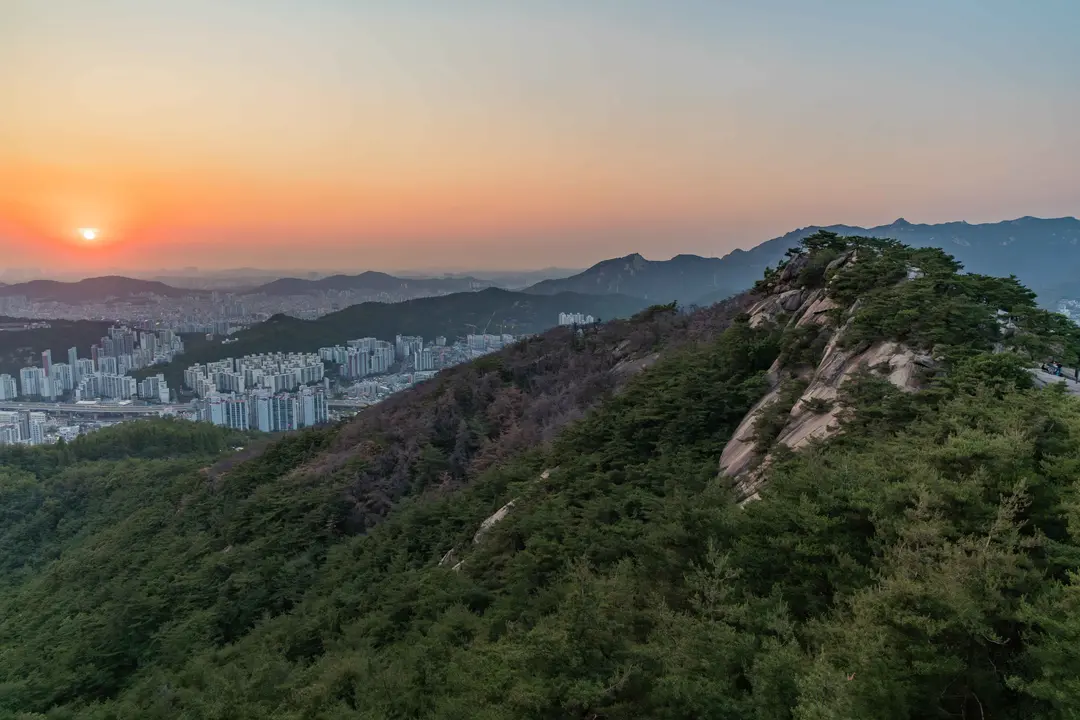
At 338.2 metres above sea level, Inwangsan isn’t the tallest mountain in Seoul — but don’t let that fool you. The summit rewards you with sweeping panoramic views that include Gyeongbokgung Palace, N Seoul Tower, and the former Blue House (Cheong Wa Dae). On a clear day, the cityscape spread out below you is breathtaking.
The trail is rated Easy to Moderate in difficulty, making it accessible to most fitness levels. That said, some sections do require a bit of effort, so wearing proper footwear is always a good idea. Trail running shoes or light hiking boots will serve you well here.
The route is a point-to-point trail, so you’ve two options: retrace your steps back to Dongnimmun Station, or continue to Changuimun Gate and arrange onward transport from there. For the most up-to-date route details, check the Official Seoul City Wall Trail Course Guide, which covers the full Inwangsan section with maps and waypoints.
What to See Along the Way
Inwangsan isn’t just a nature walk — it’s a living history lesson woven into the hillside. As you follow the ancient stone wall, keep an eye out for these highlights:
- Inwangsan Guksadang Shrine — a fascinating shamanist shrine that has been an active spiritual site for centuries. It’s one of the most culturally distinctive spots on the entire Seoul City Wall trail.
- Chima Rock (Skirt Rock) — a striking natural rock formation that’s become one of Inwangsan’s most recognisable landmarks. The name comes from its resemblance to the flowing skirt of a traditional Korean hanbok.
- The Seoul City Wall itself — sections of the original fortress wall, dating back to the Joseon Dynasty, run alongside and above the trail, giving the hike a sense of walking through layers of Korean history.
Practical Tips for Visiting Inwangsan
Before You Go
- Stock up before the trailhead. There are no shops, vending machines, or food stalls on the mountain trail itself, this is standard across Korean hiking culture. Grab water, snacks, and anything else you need at a convenience store near Dongnimmun Station before you start climbing.
- Pack out all your trash. There are no rubbish bins along the trail. Every piece of waste you bring up, you carry back down. A small zip-lock bag tucked in your pack makes this easy.
- Entrance is free of charge. No entrance fee is required to hike Inwangsan or access the Seoul City Wall Trail.
Hours and Closures
- The trail is accessible around the clock, and Inwangsan is actually one of Seoul’s most popular destinations for night hiking. The Seoul City Wall is beautifully illuminated after dark, making it safe and highly recommended for evening visits.
- The trail may be temporarily closed during extreme weather, heavy snow or strong winds can trigger short-notice shutdowns. Always check conditions before heading out, especially in winter.
- During spring and autumn fire prevention periods, Korean mountain trails, including Inwangsan, can be subject to temporary closures. Check with the Seoul City Wall official website or local news before your visit if you’re hiking in spring or autumn.
What to Bring
- Enough water for the full 2-hour one-way journey (more in summer)
- Comfortable, grippy footwear, trail shoes or light hiking boots recommended
- Layers, especially in spring and autumn when temperatures can shift quickly at elevation
- Sun protection, the upper sections of the trail are exposed
- A fully charged phone with Naver Map or KakaoMap downloaded
Best Time to Visit
- Spring (April. May) and autumn (October. November) offer the most comfortable hiking temperatures and the most dramatic scenery.
- I’d suggest arriving early in the morning on weekends. Inwangsan is popular with Seoul locals, and the trailhead can get busy by mid-morning.
- Summer hiking is possible but can be hot and humid; start early and bring extra water.
I walked the Dongnimmun → Changuimun direction on a weekday morning in late October, starting at around 7:30 AM when the wall was still in shadow. The first 20 minutes from Exit 2 are deceptively flat, then it climbs hard once you join the wall — I had to take my jacket off by the third watchtower. The Guksadang shrine area was quiet at that hour (only two people praying), which is the opposite of the photos you’ll see on Naver Blog. If you’re going up Chima Rock for the skyline shot, the railing on the north side is the safer angle even though most influencers shoot from the south.
Final Thoughts
Inwangsan Mountain is one of those rare places where urban convenience and genuine natural beauty meet head-on. You step off the subway, walk a few minutes, and find yourself tracing a centuries-old city wall with all of Seoul laid out beneath you. The 2.5km Seoul City Wall Trail section from Dongnimmun Station to Changuimun Gate is manageable for most visitors, historically rich, and free of charge, it’s honestly one of the best half-day experiences Seoul has to offer.
Just remember: download Naver Map, search for 인왕산, grab your snacks at the convenience store near the station, and pack out everything you bring in. Follow those simple rules and you’re set for a fantastic hike.
Have you already hiked Inwangsan, and if so, did you spot anything at the Guksadang Shrine or Chima Rock that surprised you? Drop your experience in the comments below. I’d love to hear what the mountain looked like on the day you visited!
* Cover image source: ⓒ한국관광공사 포토코리아-안영관