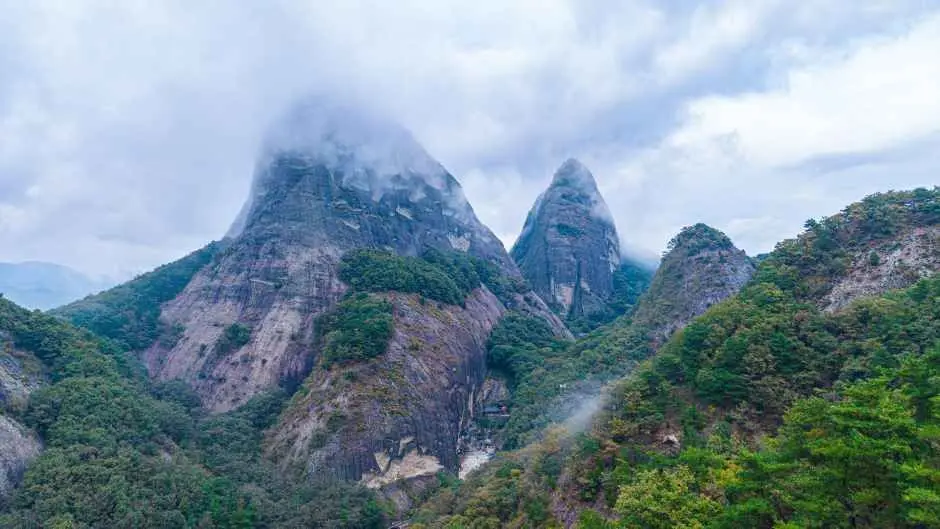
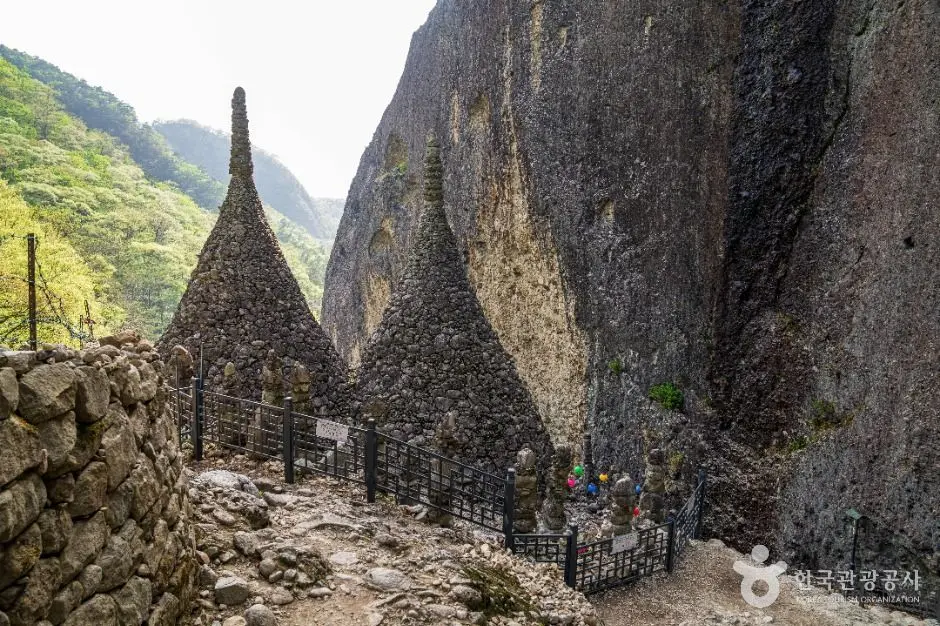
If you’re looking for a one-of-a-kind hiking experience in Korea, this Tapsa Temple stone pagodas hiking guide is exactly what you need. set inside Maisan Provincial Park in North Jeolla Province, Tapsa Temple is home to over 80 gravity-defying stone pagodas — stacked without a single drop of mortar — rising against the backdrop of Maisan’s iconic twin peaks. It’s the kind of place that stops you in your tracks and makes you wonder how it’s even possible.
Contents
Quick Facts
| Peak Altitude | Ammaibong (667m) — the primary accessible summit. |
|---|---|
| Trail Distance (Traverse Course) | 6.0km (one-way, point-to-point) |
| Duration | Approximately 3 hours |
| Difficulty | Moderate |
| Trailhead | Maisan South Parking Lot (마이산 남부주차장) → Maisan North Parking Lot (마이산 북부주차장) |
| Transport | Local bus from Jinan Intercity Bus Terminal (진안시외버스터미널). Check Naver Map for current schedules. |
| Entrance Fee | 3,000 KRW (Adults) / 2,000 KRW (Youth) / 1,000 KRW (Children).Note: While many national park entry fees were abolished in 2023, Tapsa Temple is a private temple that still charges a cultural heritage viewing fee. |
| Tapsa Temple Hours | 08:30–18:30 (Summer) / 09:00–17:30 (Winter) |
| Seasonal Trail Closures | Spring: February 1 – May 15 / Autumn: November 1 – December 15 (2026 specific dates) |
What Makes Tapsa Temple So Special?
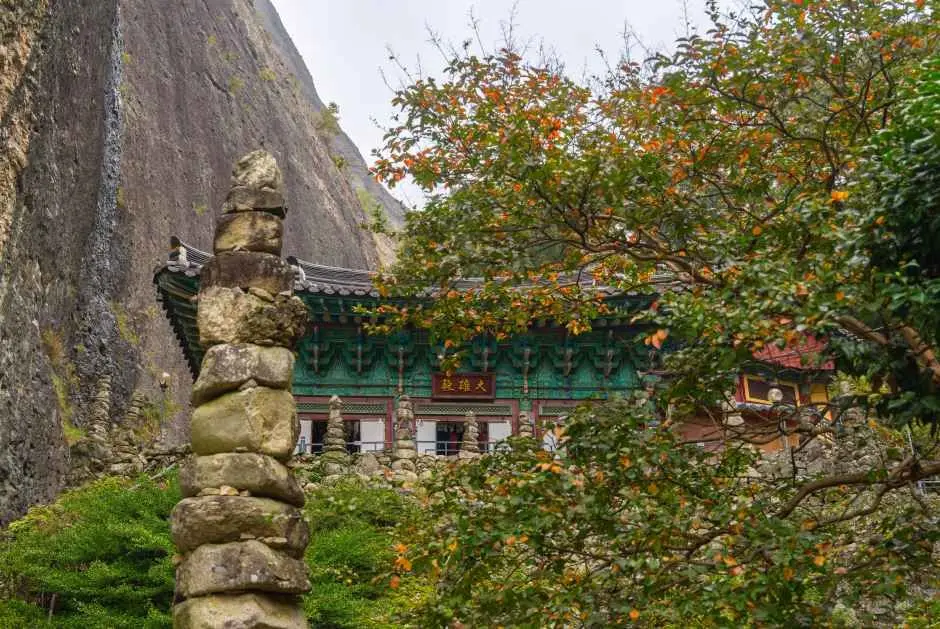
Tapsa Temple — whose name literally means “pagoda temple”, earns that name in the most spectacular way imaginable. A monk named Yi Gap-yong spent over 30 years of his life stacking natural stones into towering pagodas, some reaching over 10 meters in height, all without using any mortar or binding agent. The result is a forest of more than 80 stone towers that seem to defy physics with every passing breeze.
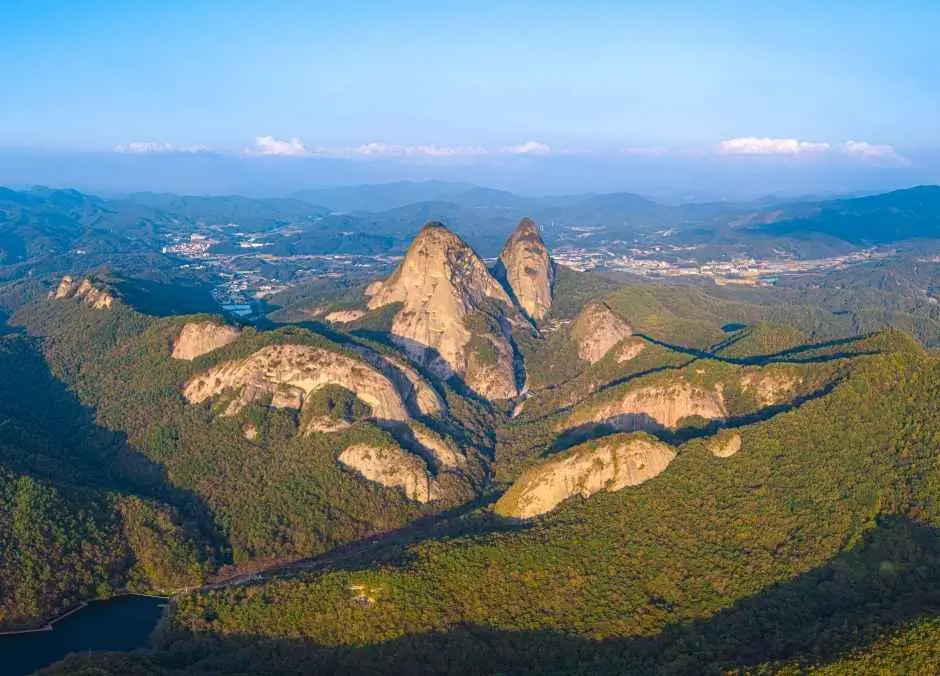
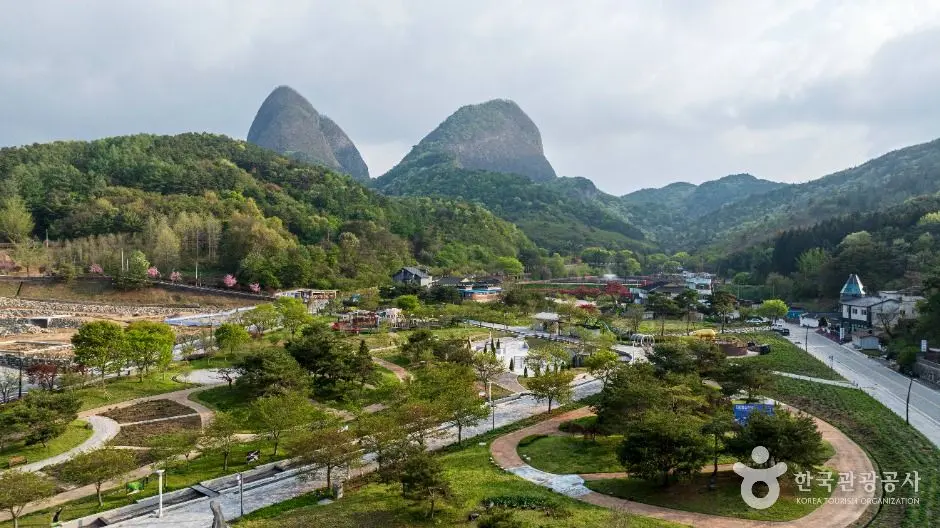
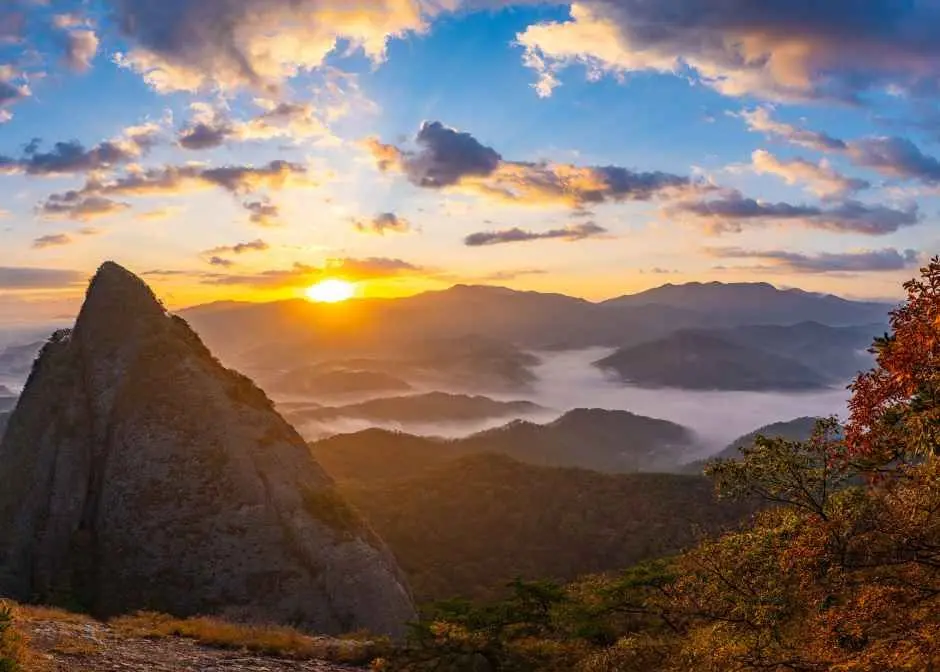
The temple sits within Maisan Provincial Park, which takes its name, “Horse Ear Mountain”, from its two distinctive peaks: Ammaibong (667m) and Sumaibong (673m). These twin rocky summits jut dramatically from the surrounding landscape, giving the park an atmosphere unlike anywhere else in Korea. While access to Ammaibong (667m) is open to the public via a designated staircase trail, excluding winter and fire prevention periods, access to Sumaibong (673m) remains strictly restricted. thus, visitors can now combine a rewarding summit push to Ammaibong with the park’s most iconic cultural destination, the extraordinary Tapsa Temple.
For more details on the park’s layout and facilities, visit the Official Maisan Provincial Park Tourism Website.
Getting There: Reaching Maisan Provincial Park
Maisan Provincial Park is located in Jinan County, North Jeolla Province. Getting here from major cities requires a bit of planning, but it’s very doable as a day trip or overnight excursion.
By Intercity Bus
The most practical way to arrive without a car is by intercity bus to Jinan Intercity Bus Terminal (진안시외버스터미널). From there, local buses run approximately hourly to both the Maisan South Parking Lot (마이산 남부주차장) and the Maisan North Parking Lot (마이산 북부주차장).
A quick heads-up for international visitors: Google Maps doesn’t work reliably in South Korea for transit routing. I recommend using Naver Map or KakaoMap instead, they’re accurate, up-to-date, and cover local bus routes that Google simply misses. To search for the park, copy and paste this into Naver Map or KakaoMap: 마이산도립공원. For the south entrance specifically, search: 마이산 남부주차장.
By Car or Taxi
If you’re driving or taking a taxi from Jinan, navigation to the parking lots is straightforward. Keep in mind that parking fees apply at the designated lots, the park and temple entrance itself is free of charge.
Trail Guide: The Maisan Traverse Course
The main hiking route for visiting Tapsa Temple is the Maisan Traverse Course (종주코스), a point-to-point trail that runs between the South and North Parking Lots, passing directly through the heart of the park and by Tapsa Temple along the way.
Route Overview
- Start: Maisan South Parking Lot (마이산 남부주차장)
- End: Maisan North Parking Lot (마이산 북부주차장)
- Distance: 6.0km one-way
- Estimated Time: Approximately 3 hours
- Difficulty: Moderate
Because this is a point-to-point route rather than a loop, you’ll want to plan your transport at both ends. I’d recommend starting from the South Parking Lot so that Tapsa Temple comes into view as a highlight during your hike, and finishing at the North Parking Lot where you can catch a bus back to Jinan. Use Naver Map to check the return bus schedule before you set off, it’ll save you a lot of guesswork at the end of the trail.
Visiting Tapsa Temple on the Trail
Tapsa Temple is the undisputed centerpiece of this hike. When you arrive, take your time wandering among the stone pagodas, each one is unique in shape and scale, and the collective effect of over 80 towers rising around you is awe-inspiring. The temple operates from 09:00 to 18:00 (Summer) and 09:00 to 17:00 (Winter), so time your hike accordingly to make sure you arrive during opening hours.
Entry to both Maisan Provincial Park and Tapsa Temple is completely free of charge. Parking fees apply at the designated lots.
A Note on the Peaks
You’ll have views of Ammaibong (667m) and Sumaibong (673m) throughout the hike, but please be aware that access to the actual summits of both peaks is restricted. This is an official measure to allow the natural environment to recover, and there are no designated trails leading to the tops. Respect the signage and barriers, the views from the trail itself are more than worth the trip.
Practical Tips Before You Go
Food & Water: Stock Up Before the Trail
This is one of the most important things to know before hiking at Maisan: water fountains are generally not available on hiking trails in Korean provincial parks, so you should carry sufficient water and snacks for the actual hiking sections. Make sure to:
- Buy enough water at a convenience store before you start.
- Pick up trail snacks (kimbap, energy bars, nuts) at the same convenience store, they’re affordable and perfect hiking fuel.
- Bring more water than you think you’ll need, especially in warmer months.
Leave No Trace: Pack Out Your Trash
Korean provincial parks have no trash cans on the trails. This is standard practice across the country, hikers are expected to carry all of their waste back down with them. Bring a small zip-lock bag or reusable pouch for your rubbish, and leave the trail exactly as you found it. It’s a simple habit that keeps these beautiful places pristine for everyone.
What to Wear & Bring
- Wear proper hiking shoes with grip, trail conditions can vary.
- Layer up, especially in spring and autumn when temperatures can shift significantly between the trailhead and higher sections of the route.
- Bring sun protection (hat, sunscreen) for exposed sections of the trail.
- Download Naver Map offline before you go, mobile signal can be patchy in the park.
Seasonal Closures & Best Times to Visit
Before you book your trip, check the trail closure calendar carefully. Maisan Provincial Park trails are typically closed during two fire prevention periods each year:
- Spring closure: March 1 to April 30
- Autumn closure: November 1 to December 15
These closures are strictly enforced, so visiting during these windows means you won’t be able to hike the Traverse Course or access Tapsa Temple via the trails. Always check the official park website or Naver Map for the latest closure status before you travel.
Outside of closure periods, late spring (May. June) and early autumn (September. October) are generally considered the best times to visit, the weather is comfortable for hiking and the park’s natural scenery is at its most vivid. Summer (July. August) is doable but can be hot and humid, so an early morning start is especially important during those months.
Final Thoughts
The Tapsa Temple stone pagodas hiking experience is unlike anything else in Korea. It combines a satisfying moderate hike through a dramatic twin-peaked landscape with one of the country’s most extraordinary cultural and spiritual sites, over 80 hand-stacked stone towers that have stood for more than a century without a single drop of mortar. Whether you’re a seasoned hiker or someone looking for a meaningful half-day adventure, the Maisan Traverse Course delivers on every level.
Plan ahead, stock up on water and snacks before you hit the trail, check the seasonal closure dates, and use Naver Map (search: 마이산도립공원) to sort your transport. Do all that, and you’re in for one of the most memorable days out in all of South Korea.
Have you visited Tapsa Temple before, or is this on your Korea bucket list? I’d love to know, which of Yi Gap-yong’s stone pagodas would you most want to see in person: the tallest ones reaching over 10 meters, or the smaller, more intricate towers? Drop your thoughts in the comments below!
* Cover image source: ⓒ한국관광공사 포토코리아-조영권