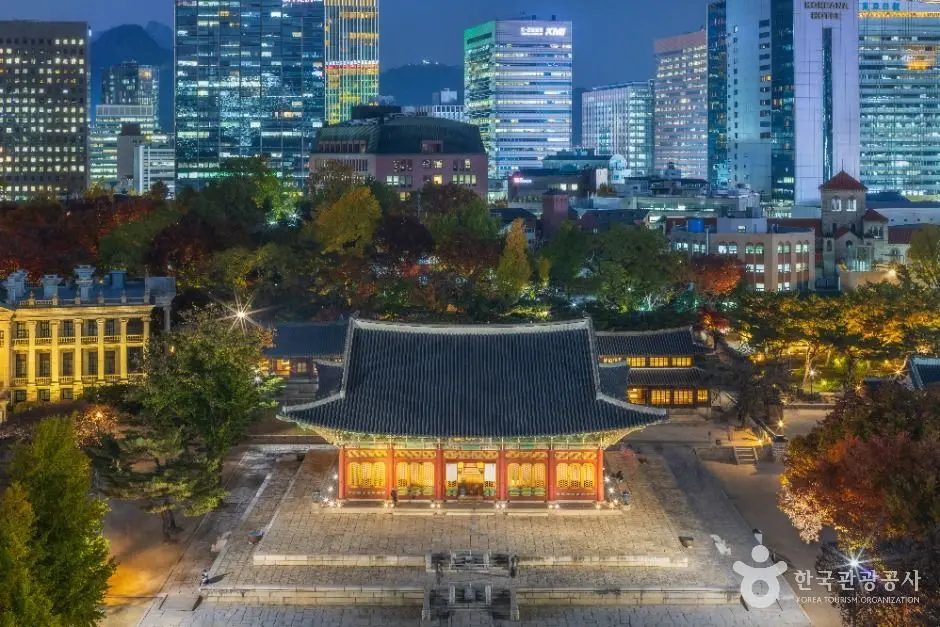
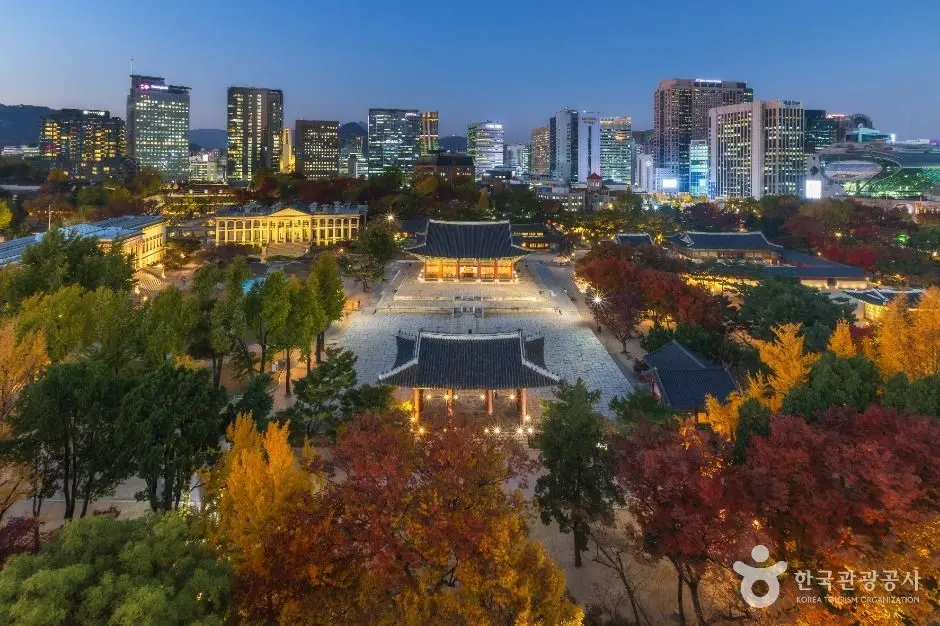
Deoksugung Palace western architecture sets this royal compound apart from every other palace in Seoul. While Gyeongbokgung and Changdeokgung are defined by traditional Korean design, Deoksugung holds neoclassical stone buildings and a hybrid pavilion that reflect the turbulent final decades of the Korean Empire. That contrast is the main reason to visit.
Quick Facts
| Opening Hours | 09:00 – 21:00 (Last admission 20:00) |
|---|---|
| Closing Days | Mondays |
| Admission Fee | 1,000 KRW (Foreign Adults 19–64) |
| Nearest Subway Station | City Hall Station (시청역) Line 1, Exit 2 or Line 2, Exit 12 |
| Recommended Visit Duration | 1.5 – 2 hours |
| Key Western Buildings | Seokjojeon (석조전), Jeonggwanheon (정관헌), Jungmyeongjeon (중명전) |
The Three Western Buildings
Most visitors come for the traditional palace grounds, but the Western-style structures are what make Deoksugung historically distinctive. There are three to know.
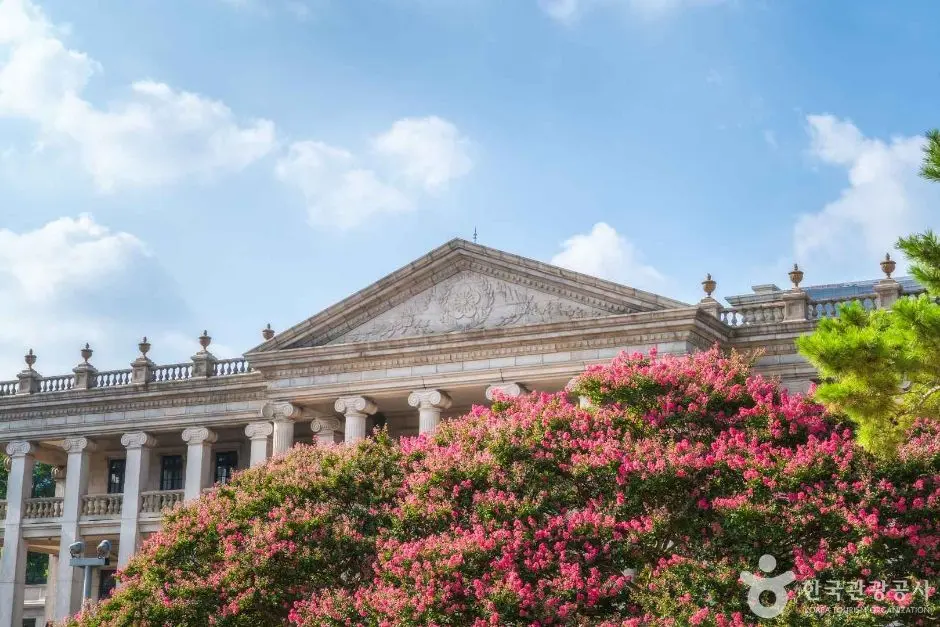
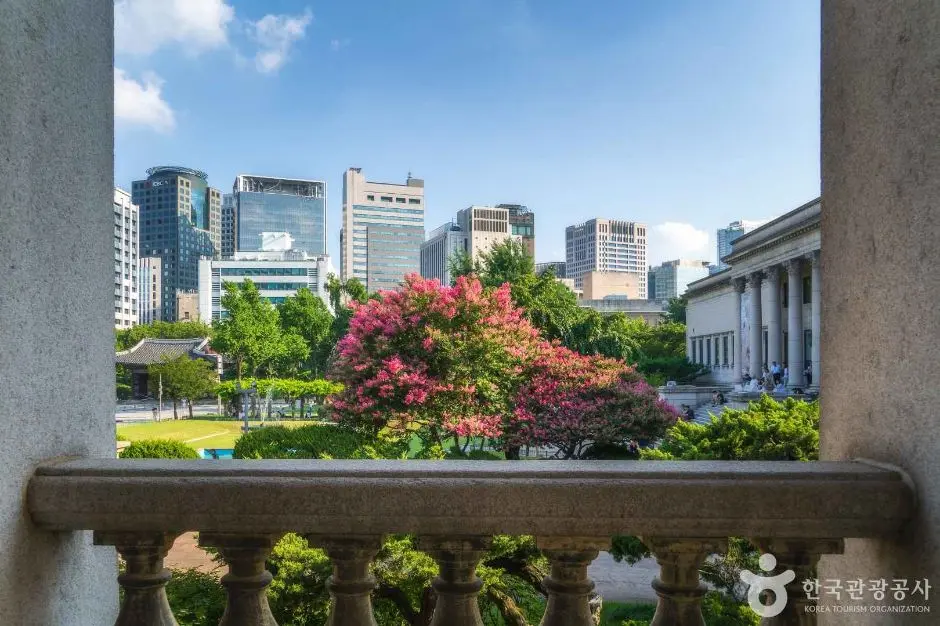
Seokjojeon (석조전) is the most prominent. Completed in 1910, it’s a neoclassical stone building that originally served as a reception hall and sleeping quarters for Emperor Gojong during the Korean Empire period. The scale and style would look at home in a European capital, which was partly the point — the Korean Empire was signalling its ambitions on the world stage. Today it houses the Daehan Empire History Museum. Note that the interior requires an advance online reservation. you can’t simply walk in on the day.
Jeonggwanheon (정관헌), built in 1900, is a smaller pavilion that blends traditional Korean roof forms with Western decorative elements. It’s the most visually unusual structure on the grounds — neither fully one thing nor the other — and worth a close look for that reason.
Jungmyeongjeon (중명전) is a Western-style brick building that started as an imperial library and later became a diplomatic reception hall. It sits just outside the main palace walls, so some visitors miss it entirely.
Planning Your Visit
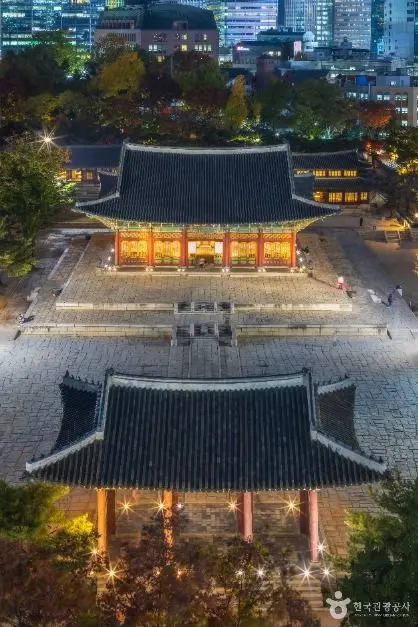
The palace is open daily except Mondays, from 09:00 to 21:00. Last admission is at 20:00, so an evening visit is possible — the grounds are lit after dark, which changes the atmosphere considerably compared to a midday visit.
General admission for foreign adults aged 19 to 64 is 1,000 KRW. Other age groups and certain conditions qualify for free entry. check the Official Deoksugung Palace Website for the current fee schedule before you go.
Plan for 1.5 to 2 hours if you want to cover the main grounds and the Western buildings at a reasonable pace. If you’re reserving a spot for the Seokjojeon museum interior, factor in additional time and book ahead online.
Common Mistakes
A few patterns come up repeatedly with first-time visitors.
- Arriving on a Monday. The palace is closed every Monday without exception. It’s an easy detail to overlook when planning a Seoul itinerary, and there’s no workaround.
- Skipping the Seokjojeon reservation. The exterior is visible to all visitors, but the museum inside Seokjojeon requires an advance booking. If seeing the interior matters to you, sort that out before you travel, not at the gate.
- Missing Jungmyeongjeon. Because it sits outside the main palace enclosure, it doesn’t appear on every map and many visitors walk past without realising it’s there. If the history of the Korean Empire period interests you, it’s worth the short detour.
- Assuming free entry. At 1,000 KRW the admission fee is low, but it exists. Some visitors confuse Deoksugung with sites that have no entry charge. You can simply use a credit card or transit card to tap and enter directly at the gate, or pay with card at the ticket booth.
- Cutting the visit too short. The palace grounds are compact, but the three Western buildings are spread across different parts of the site. Rushing through in under an hour means you’ll likely miss context that makes the architecture meaningful.
Getting There
City Hall Station (시청역) is the most direct option. From Line 1, use Exit 2. From Line 2, use Exit 12. The palace entrance is a short walk from either exit. The subway connection is straightforward enough that it’s the practical default for most visitors coming from central Seoul.
Deoksugung Palace has no parking facilities, so visitors are advised to use public transportation.
One practical note: the palace grounds are compact, and 1.5 to 2 hours of walking in warm weather adds up faster than expected. Plan accordingly and arrive hydrated.
* Cover image source: ⓒ한국관광공사 포토코리아-정규진