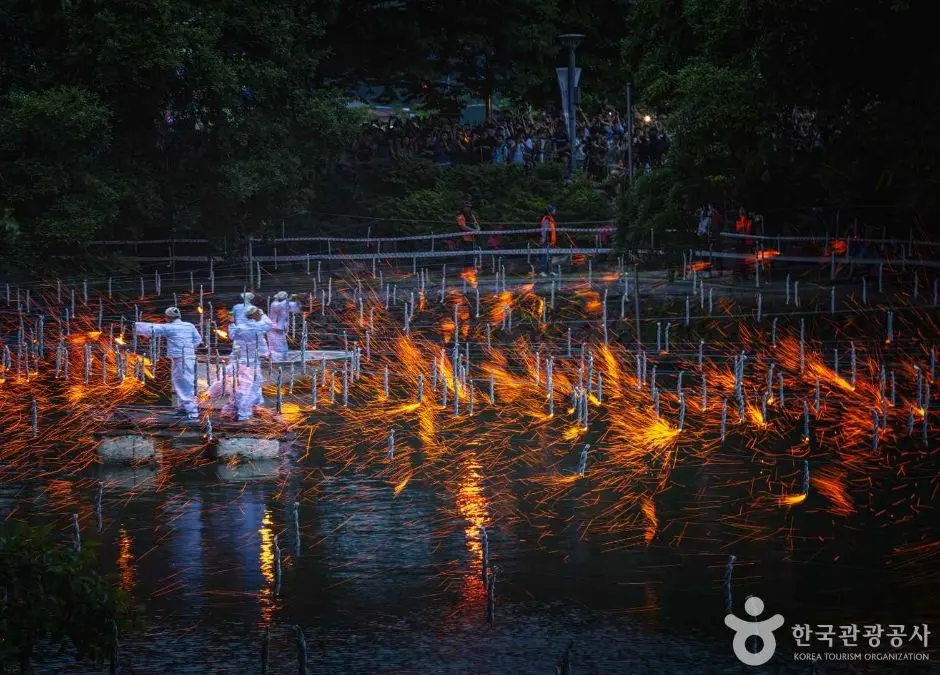
The Haman Nakhwa Nori Festival is one of the most visually striking traditional events in South Korea, held annually in May around Buddha’s Birthday in Haman-gun, Gyeongsangnam-do. Charcoal powder packed into handmade bags is ignited and swung from a bridge, sending cascading sparks down over the water below. It’s free to attend, but advance online reservation is strictly required, and securing a ticket takes real planning.
Contents
Quick Facts
| Best Season | May (annually around Buddha’s Birthday) |
|---|---|
| Difficulty | Easy (spectator event) |
| Entrance Fee | Free, but advance online reservation is strictly required — budget for food, drinks, and transportation |
| Essential Gear | Mat or portable chair, warm clothing, snacks, water, power bank |
| Key Warnings | Extreme crowds, heavy traffic, arrive hours early, limited parking |
What Is Nakhwa Nori
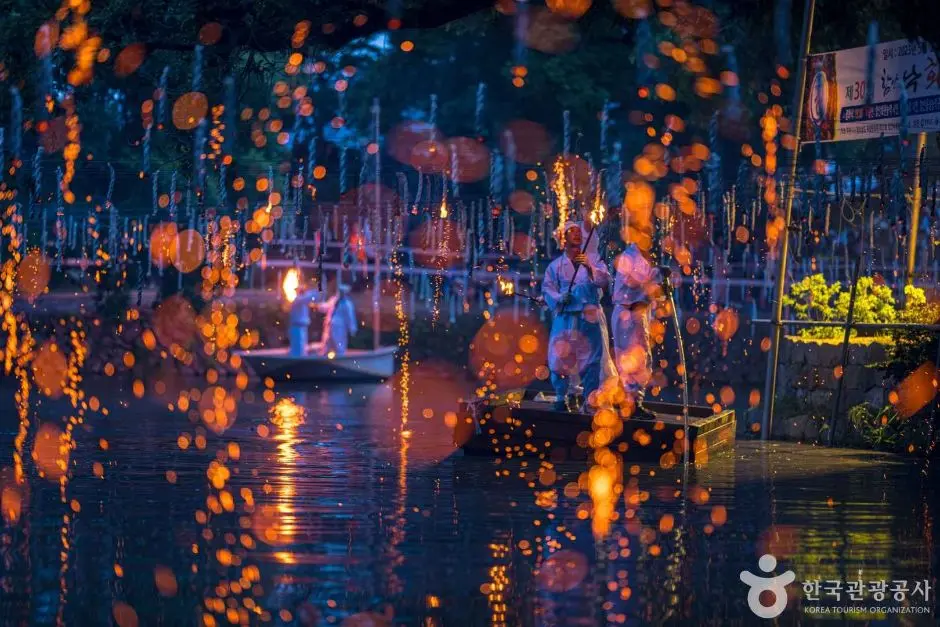
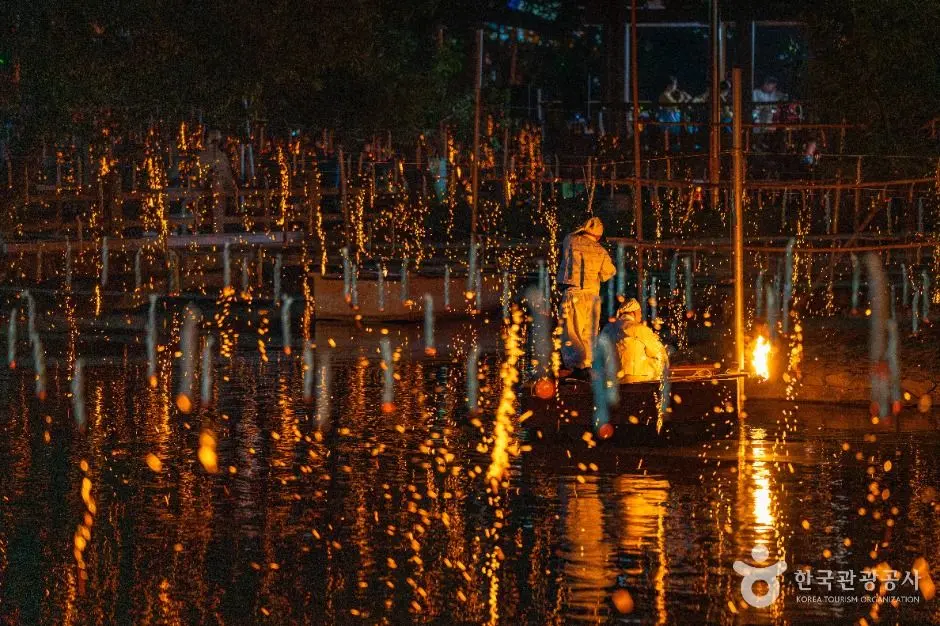
Nakhwa Nori translates roughly to ‘falling fire play.’ The technique involves filling handmade bags with oak charcoal powder (참나무 숯가루), igniting them, and swinging or dropping them so the burning particles scatter and fall like rain. Performed over water at night, the effect is a curtain of glowing embers drifting downward in the dark.
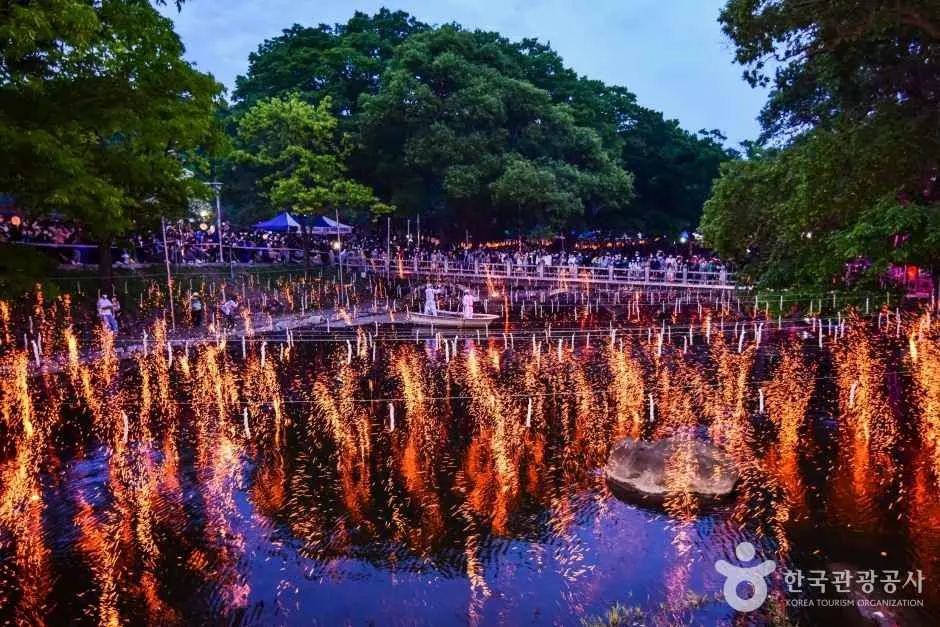
This isn’t a modern pyrotechnics show. The practice is designated as Gyeongsangnam-do Intangible Cultural Heritage No. 33, which means it’s been formally recognised as a living piece of regional folk tradition. The performers and techniques are tied to a specific cultural lineage, not a production company. That distinction matters if you’re trying to understand what you’re watching.
When and Where
The festival takes place at Mujinjeong Pavilion and its pond (무진정 일원) in Haman-myeon, Haman-gun, Gyeongsangnam-do. The date shifts each year because it’s pegged to Buddha’s Birthday on the lunar calendar, which typically falls in May on the Gregorian calendar.
Exact dates for upcoming editions are announced by Haman County officials closer to the event. Check the Visit Korea official festival listing for Haman Nakhwa Nori or the Haman County government website for confirmed dates before making travel arrangements. Don’t rely on third-party travel blogs for the date — they’re often a year out of date.
Getting There
Haman-gun is in the southern part of Gyeongsangnam-do. Public transportation options to the festival site are limited, so plan accordingly.
Parking near Mujinjeong is scarce on the day of the event. Temporary parking lots are typically set up at a distance, which means a walk to the venue. If you’re driving, factor in significant traffic congestion, especially in the hours leading up to the performance. Arriving well before the evening event isn’t excessive.
Confirm local transport options on Naver Map closer to your travel date, as shuttle arrangements can vary by year.
What to Bring
The festival is a spectator event, so comfort over the course of several hours is the main concern. Based on available information, here’s what makes a real difference:
- Seating: A foldable mat or portable camping chair. The viewing areas along the bridge and surrounding ground fill up early, and standing for hours on uneven ground gets old fast.
- Warm clothing: May evenings in Gyeongsangnam-do can be cool, especially near water. A light jacket or fleece is worth packing even if the afternoon feels warm.
- Water and snacks: Food vendors are typically present at large Korean festivals, but lines get long and prices reflect the crowd. Bringing your own snacks and a water bottle saves time and money.
- Power bank: You’ll likely be taking photos or video for an extended period. A charged power bank keeps your phone usable for navigation on the way out.
- Cash: Smaller vendors and food stalls at Korean festivals often prefer cash. Have some on hand.
There’s no entrance fee, so the main costs are getting there, eating, and any accommodation if you’re staying overnight in the area.
Common Mistakes Visitors Make
A few patterns come up repeatedly among visitors who leave disappointed or frustrated.
Arriving Without a Reservation
This is now the most consistent problem. The event operates on a strict advance reservation system, and you will be denied entry without a pre-booked wristband regardless of how early you arrive. For ticket holders, getting to the site several hours early is still recommended, particularly if you want a clear sightline over the water rather than a view through other people’s phones.
Underestimating Traffic
The roads into Haman-myeon back up significantly on festival day. If you’re driving, build in extra time and don’t assume GPS travel estimates will hold. Leaving your accommodation earlier than you think necessary is a reasonable buffer.
Not Confirming the Date
Because the festival date follows the lunar calendar, it shifts each year. Visitors who book travel based on a previous year’s date without checking the current year’s announcement sometimes arrive on the wrong day entirely. Always verify the confirmed date directly with Haman County before booking anything.
Skipping the Walk-In Plan
Temporary parking lots are set up away from the main venue, and the walk can be longer than expected. Wear comfortable shoes. If you’re bringing a chair or mat, a small backpack or tote makes carrying gear easier than juggling it by hand through a crowd.
Leaving Trash
Korea’s public trash bin situation at outdoor events can be sparse. Bring a small bag to collect your own waste and take it with you. It’s standard practice and keeps the site usable for everyone.
On the Day
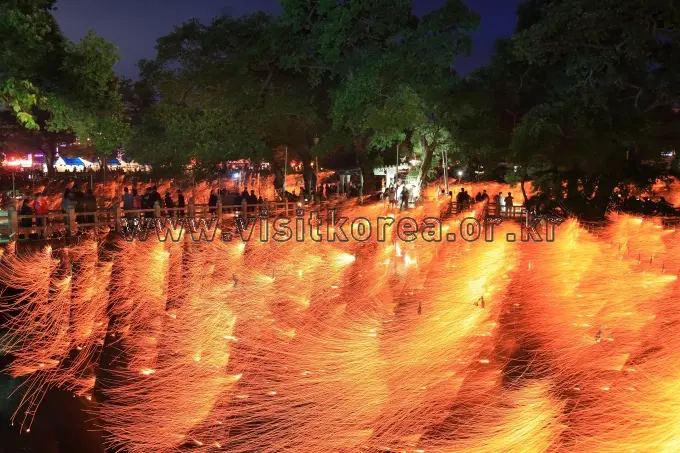
Once you’re in position, the event itself is straightforward to watch. The charcoal bags are ignited and the sparks fall over the water in a way that’s different from conventional fireworks — slower, more diffuse, and quieter. The cultural context adds something if you’ve read a little about the tradition beforehand.
After the performance ends, the crowd exits all at once. If you drove, expect a wait before traffic clears. Having a plan for where to eat or wait nearby makes the post-event period less frustrating. Haman-myeon is a small town, so options are limited — knowing in advance where you’re headed is better than searching on the spot in a crowd.
The Haman Nakhwa Nori Festival rewards visitors who treat it as a half-day commitment rather than a quick stop. Get there early, settle in, and the experience holds up.
* Cover image source: ⓒ한국관광공사 포토코리아-배수정