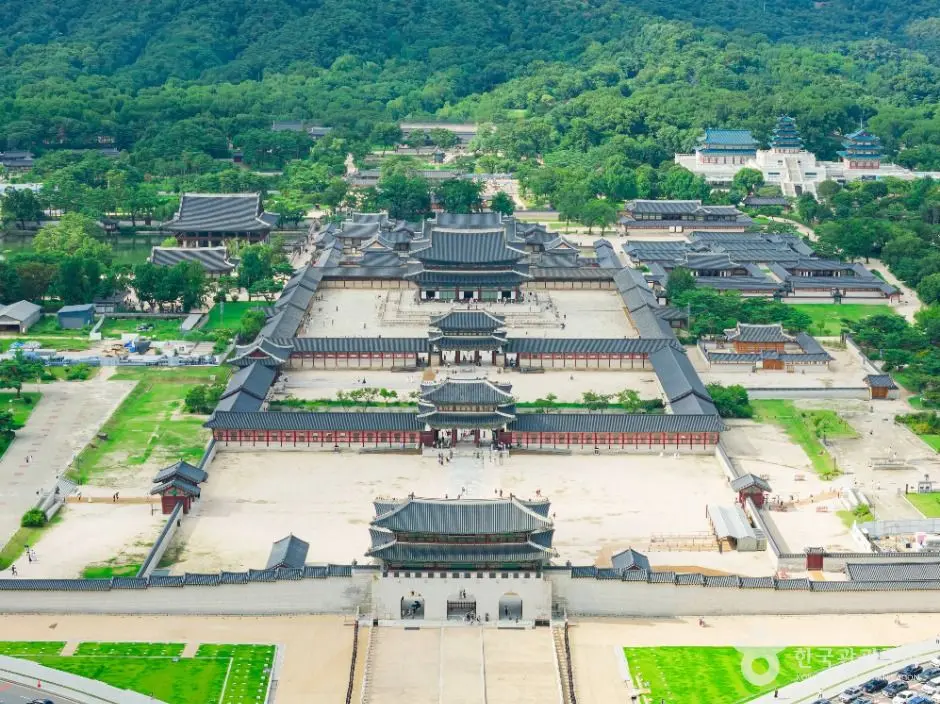
For Gyeongbokgung Palace photo spots and hanbok, the planning decisions you make before you arrive matter more than most visitors expect. Admission is 3,000 KRW for adults, but wearing hanbok gets you in free, and the rental shops nearby make that easy to arrange. This guide covers the main photo locations, how the hanbok rental works, and a few common mistakes worth avoiding.
Contents
Quick Facts
| Best Season | Spring (March–May) and Autumn (September–November) |
|---|---|
| Opening Hours | 9:00 AM – 5:00 PM (Nov–Feb) · 9:00 AM – 6:00 PM (Mar–May, Sep–Oct) · 9:00 AM – 6:30 PM (Jun–Aug). Last admission 1 hour before closing. |
| Admission Fee | Admission Fee 3,000 KRW (adults 19–64). Free for hanbok wearers, all visitors aged 18 and under, seniors 65+, and all visitors on Culture Day |
| Closed Days | Tuesdays |
| Recommended Duration | 2–3 hours for the main areas and photos |
| Nearest Subway | Gyeongbokgung Station (Line 3, Exit 5) or Anguk Station (Line 3, Exit 1) |
| Hanbok Rental Cost | Approximately 15,000–30,000 KRW for 2–4 hours |
Getting There
The two most convenient subway options are Gyeongbokgung Station on Line 3 (Exit 5) and Anguk Station, also on Line 3 (Exit 1). Both put you within a short walk of the palace grounds. For current bus routes, check Naver Map or Kakao Map before you go, as line numbers and stops can change.
Free Entry: Hanbok and Culture Day
Two situations get you through the gates without paying. The first is wearing hanbok: any visitor in traditional Korean dress enters free, regardless of nationality or age. The second is Culture Day, which falls on the last Wednesday of every month. On Culture Day, admission is free for everyone, no hanbok required.
If you’re visiting on a tight budget, combining a Culture Day visit with a hanbok rental still makes sense for photos, but you won’t need the rental to cover the entry cost. Check the calendar before you book anything.
Hanbok Rental Near the Palace
Rental shops are concentrated in the Samcheongdong and Bukchon Hanok Village areas, both within walking distance of the palace. Based on available information, rental prices run roughly 15,000, 30,000 KRW for a 2, 4 hour window, with the final cost depending on the style you choose and whether you add accessories like a headpiece or bag. Shops typically help with dressing and may offer basic hair styling as part of the package, though that varies by shop.
A few practical notes: book ahead on weekends and during spring or autumn, when demand is high. Return times are usually firm, so factor in how long you want to spend inside the palace before committing to a rental window. I’d recommend renting before you enter rather than planning to rent after, since the shops are outside the gates.
Main Photo Spots
The four locations most visitors prioritize are:
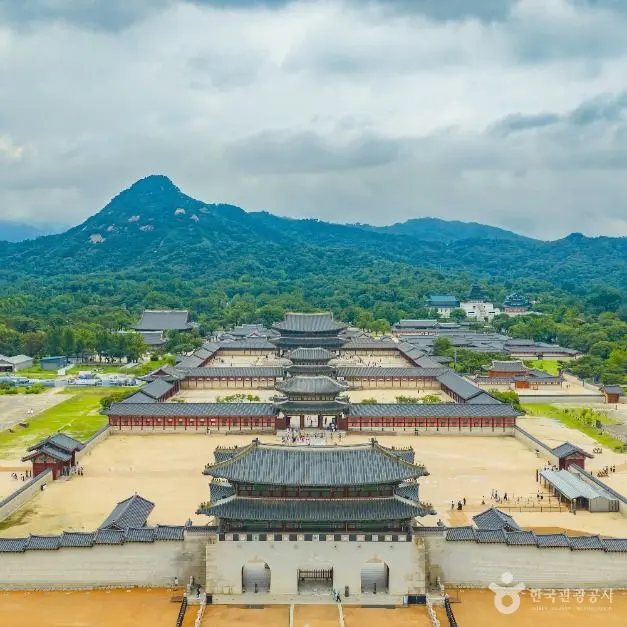
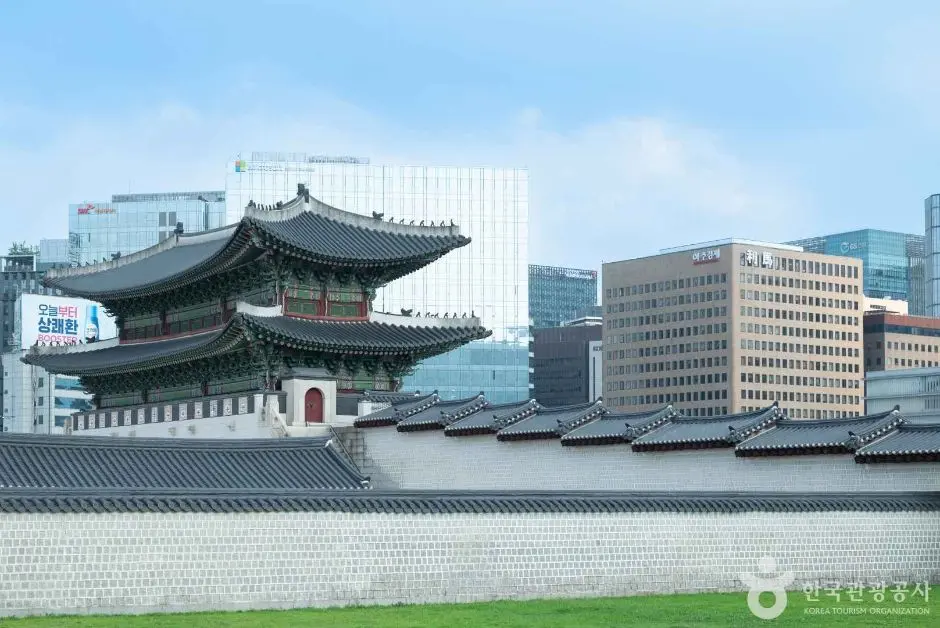
- Gwanghwamun Gate, the main entrance and the most recognizable facade of the palace complex. Good for arrival shots and wide framing.
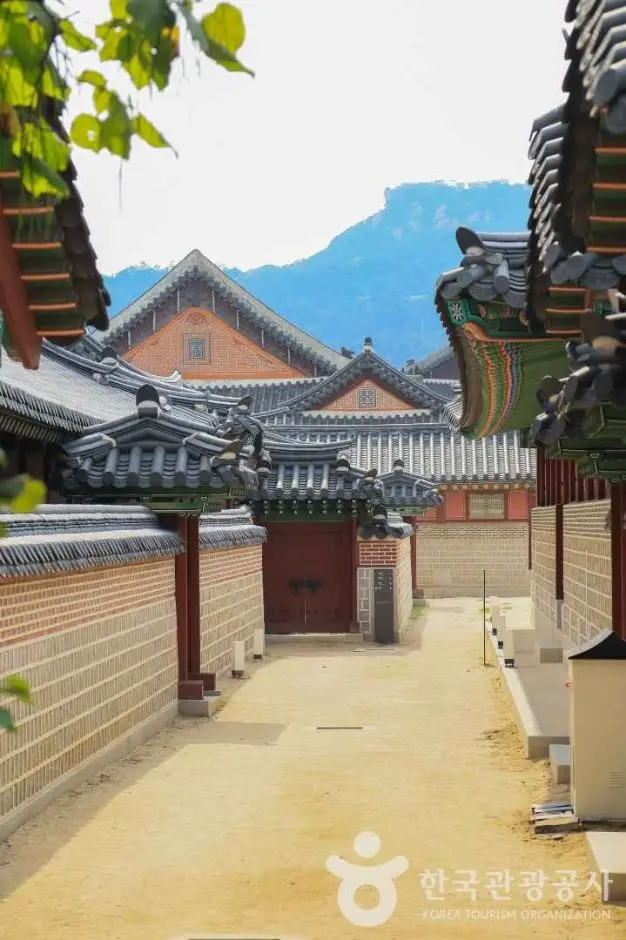
- Geunjeongjeon Hall, the main throne hall, set on a broad stone courtyard. The scale of the building works well for full-length hanbok portraits.
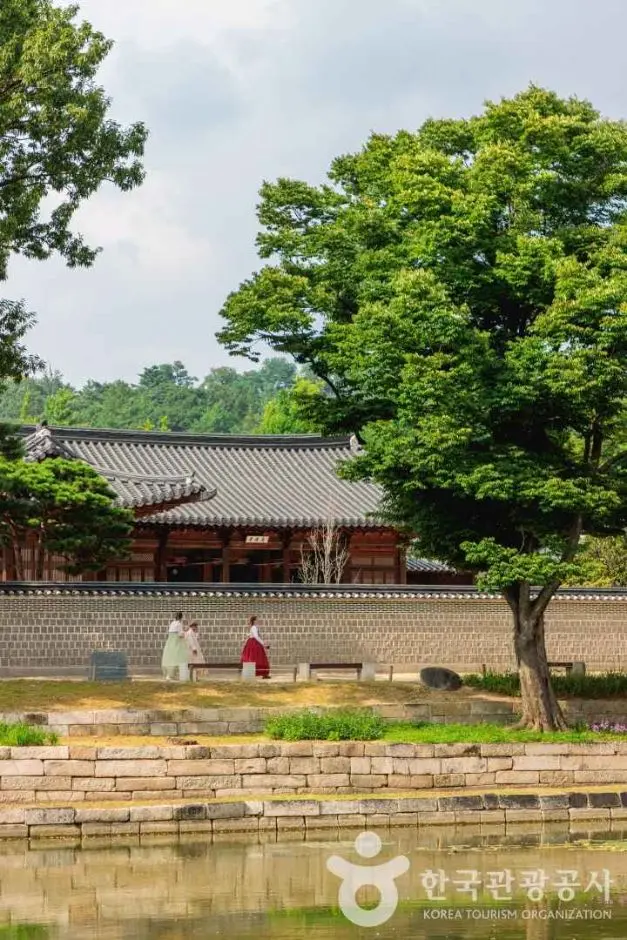
- Gyeonghoeru Pavilion, a large royal banquet hall built on a pond. The reflection in the water is the draw here, and it photographs well in both spring and autumn light.
- Hyangwonjeong Pavilion, a smaller island pavilion connected by a wooden bridge. It tends to be less crowded than Geunjeongjeon and gives a quieter, more composed shot.
Crowds at Geunjeongjeon and Gwanghwamun peak around midday. Arriving close to the 9:00 AM opening gives you cleaner shots at both locations before tour groups fill the courtyards.
Changing of the Royal Guard
The Changing of the Royal Guard ceremony takes place at Gwanghwamun Gate and Heungnyemun Gate multiple times a day, except on Tuesdays. It’s a structured cultural performance with costumed guards and traditional music, and it doubles as a photo opportunity that doesn’t require any extra planning. Check the Official Gyeongbokgung Palace Website for the current ceremony schedule before your visit, as timing can shift by season.
Best Time to Visit
Spring (March. May) and autumn (September–November) are the most popular seasons, and for good reason: the weather is mild and the grounds look their best. Summer visits are possible but the heat can be significant, and the extended hours (closing at 6:30 PM in June. August) do give you more flexibility. Winter visits are quieter, though closing time moves to 5:00 PM from November through February.
Regardless of season, weekday mornings are the least crowded. If your schedule allows, avoid Saturday and Sunday between 11:00 AM and 2:00 PM.
Common Mistakes
A few patterns come up repeatedly with first-time visitors:
- Arriving on a Tuesday. The palace is closed every Tuesday for maintenance. It’s an easy mistake to make if you’re booking accommodation or tours without checking. Confirm the day before you go.
- Missing the last admission cutoff. Entry closes one hour before the palace does. If you arrive at 5:30 PM on a day when closing is at 6:00 PM, you won’t get in. Build in buffer time.
- Underestimating the hanbok rental timeline. Getting dressed, walking to the palace, shooting at multiple locations, and returning the rental all take time. A 2-hour rental can feel rushed if you’re trying to cover all four main photo spots.
- Expecting trash cans inside. The palace grounds have none. As a cultural heritage site, visitors are expected to carry out everything they bring in. Pack a small bag for wrappers, bottles, and any food waste.
- Skipping the Culture Day check. If the last Wednesday of the month lines up with your visit, you save 3,000 KRW per adult with no extra effort. It’s worth a quick calendar check when you’re planning.
- Buying snacks inside. Options within the grounds are limited. Pick up anything you need at a convenience store near the subway station before entering.
Gyeongbokgung is a large site, and 2, 3 hours covers the main areas comfortably without rushing. If you’re wearing hanbok and want to photograph all four key locations, aim for the earlier end of that range to leave time for the guard ceremony as well.
* Cover image source: ⓒ한국관광공사 포토코리아-서문교