A group of friends. A free Saturday. Horse racing came up — none of us had been — and we ran with it.
Let’s Run Park Seoul (렛츠런파크 서울) is in Gwacheon (과천), a city just south of the Han River, about 20 minutes by subway from central Seoul. Korea’s main racecourse, operated by the Korea Racing Authority (한국마사회). The scale surprised us — the grandstand alone looks like a small stadium, and the grounds draw families, couples, and serious bettors in equal measure.
The day: racing in Gwacheon through the afternoon, then an hour’s drive west to Siheung (시흥) for a glamping-style outdoor BBQ dinner.
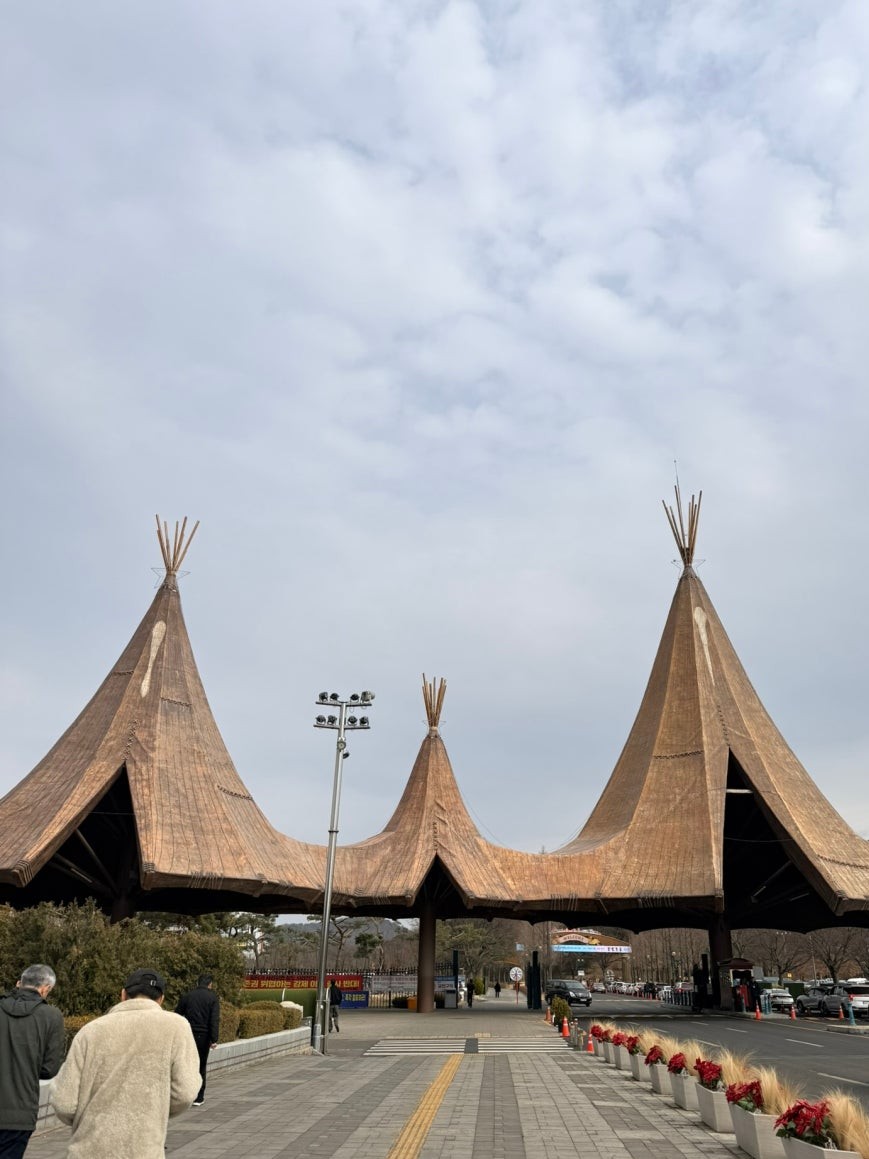
Racing Days, Hours, and Getting There
Races run mainly on Fridays, Saturdays, and Sundays. Non-race weekdays are open as a park — quieter, and parking is free.
Check the Korea Racing Authority’s official website before your visit. Race schedules and occasional closures are posted by date.
Subway. Line 4 terminates at Seoul Racecourse Park Station (경마공원역). Exits 1 and 2 connect directly to the venue path. No transfers needed from anywhere on Line 4.
Parking. Race days (Fri–Sun) are paid. All-day rates apply, with a possible reduction for visits under three hours. Lots fill up early on race mornings — the subway is the easier call. One friend drove; the rest of us took the train and met at the station.
Getting In: ₩2,000 and You’re Set
Admission is ₩2,000 per person. Less than the price of a vending machine coffee inside.
Buy at the ticket booth after exiting the station, or download the Let’s Run Park app in advance and QR-scan straight through the gate.
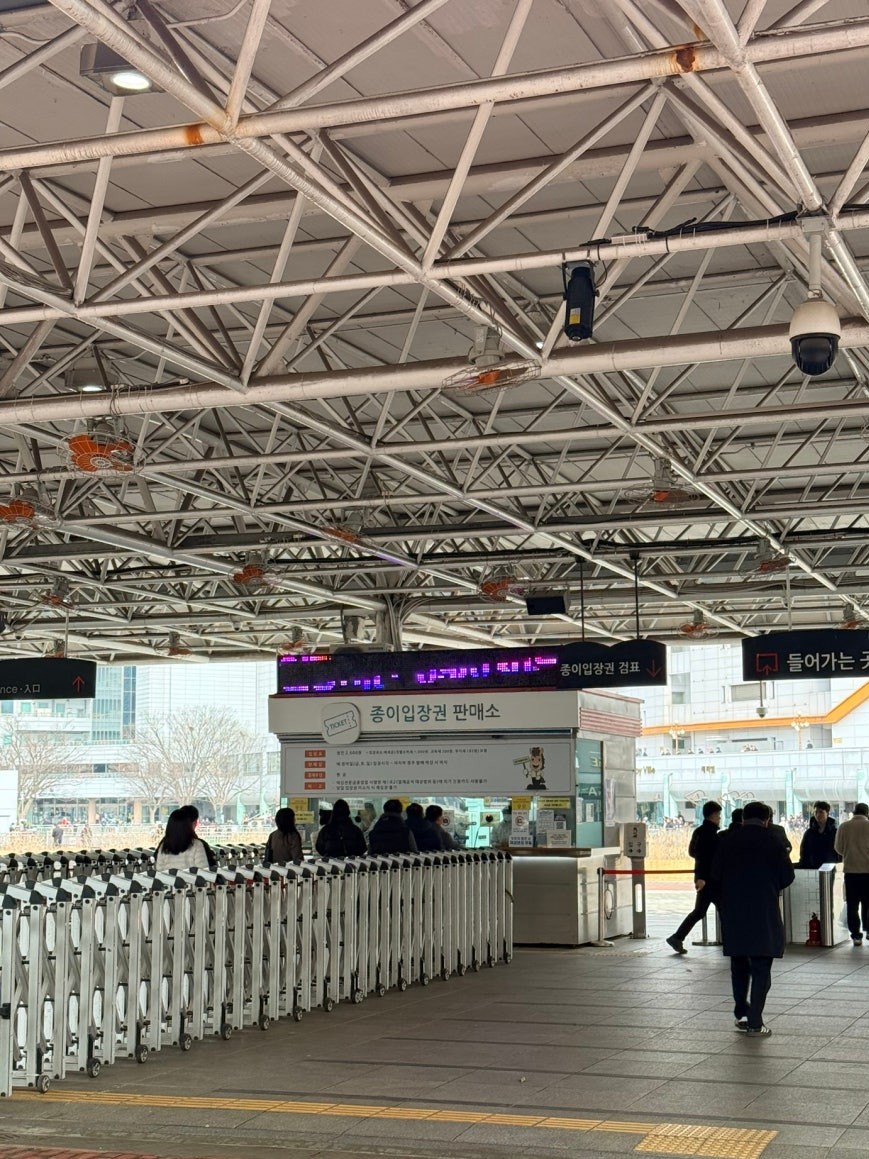
We bought paper tickets. Paper tickets allow re-entry — useful when a group arrives in batches. Anyone already inside can come back out to meet the others. We used this exactly that way.
Inside: a Lotteria (fast food), several food counters, snack stalls. Enough to eat between races without leaving the grounds. Families with strollers were everywhere; the atmosphere sat closer to a theme park day out than a betting hall.
The Beginner’s Class and How Betting Works
If it’s your first visit, start at the Beginner’s Class (초보교실). Free, runs in 30-minute sessions throughout race days.
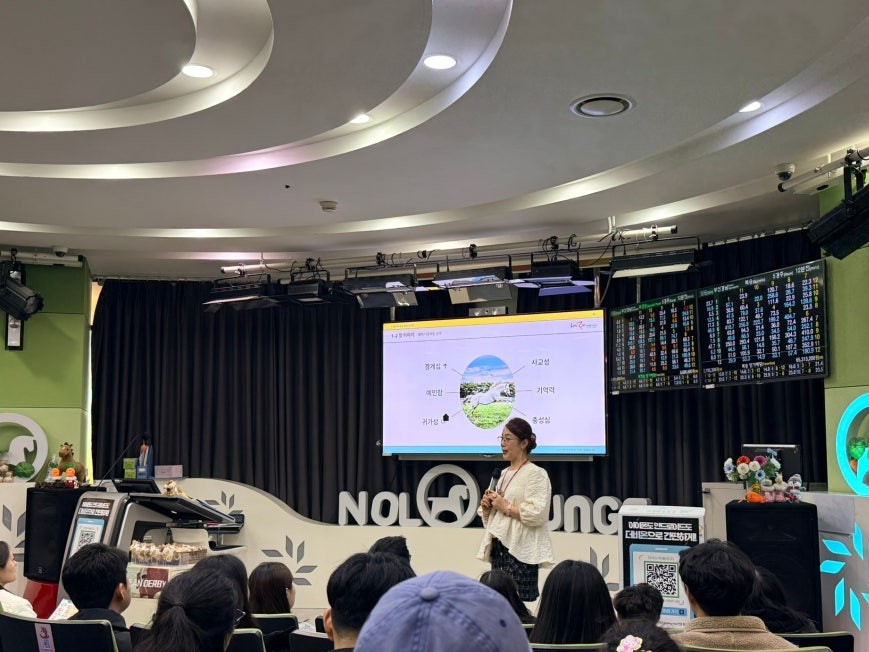
The instructor covers the basics in plain terms: how races are structured, what each bet type (승식) means, and how to fill out the OMR betting card. Partway through, a quiz — correct answers win a small horse plush. Everything is explained at a beginner pace. The visual aids make it useful even without full Korean comprehension.
Bet types, briefly:
- 단승 (win): pick the 1st-place finisher
- 연승 (place): back a horse to finish 1st or 2nd
- 복승 (exacta): pick the two horses that finish 1st and 2nd, any order
- 복연승: pick any two horses from the top-three finishers, any order — more lenient than 복승
- 쌍승 (forecast): pick 1st and 2nd in exact finishing order — higher payout, lower probability
- 삼복승 (trifecta): pick the top-three finishers in any order
Start with ₩1,000–₩10,000. The cap is ₩100,000 per transaction. The point is a fun afternoon, not a financial plan.
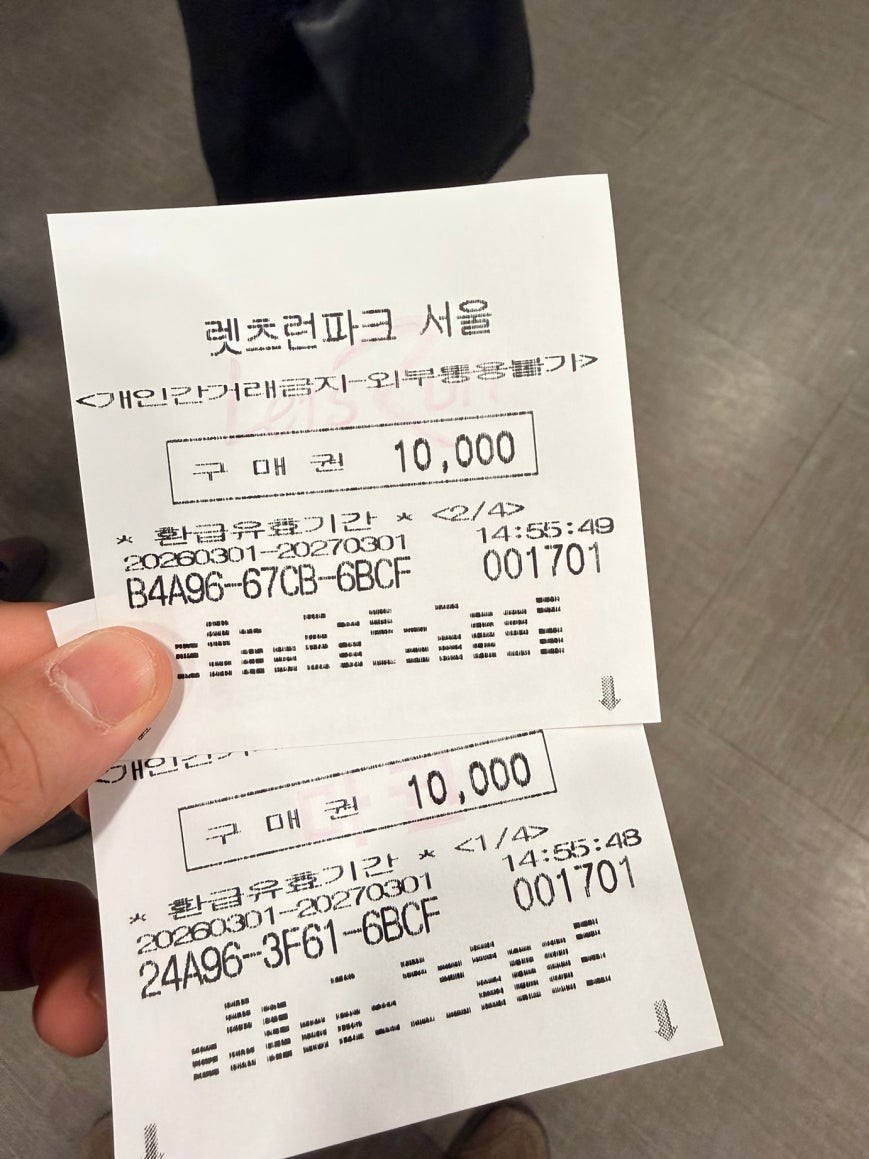
We bought ₩20,000 in betting vouchers (구매권) each at the on-site counter.
The OMR betting card (마권 구매표) gets filled in by hand — bubble in the race number, your chosen horses, and the bet type. One card holds up to three bets. Blank cards are free and stacked at counters throughout the venue; mistakes just mean grabbing a fresh one.
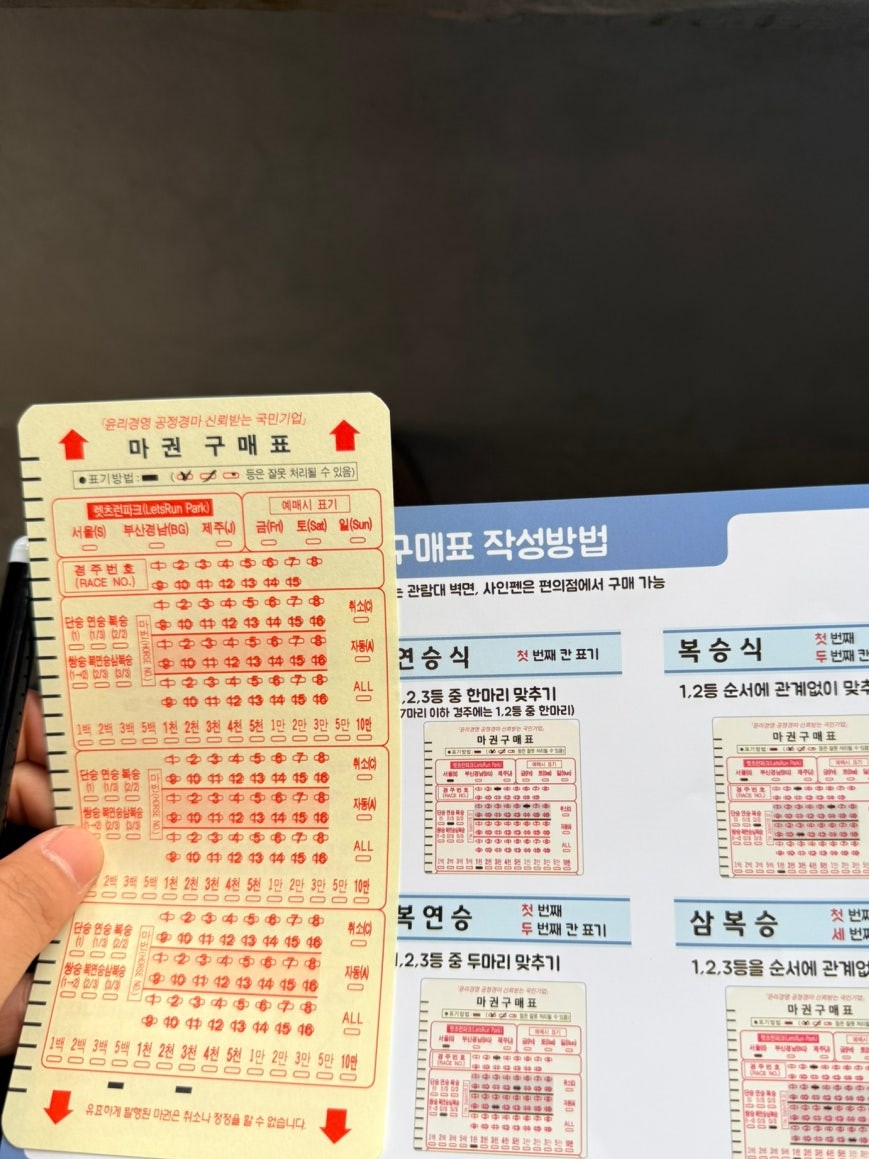
Race programs (예상지) are sold near Seoul Racecourse Park Station and at the venue entrance. ₩3,000–₩5,000 depending on the vendor — the cheaper editions near the station apparently involve some light bargaining, per one friend who knew.
On the Floor: Two Levels, Two Registers
The grandstand is large enough that even on a packed race day, the crowd doesn’t compress.
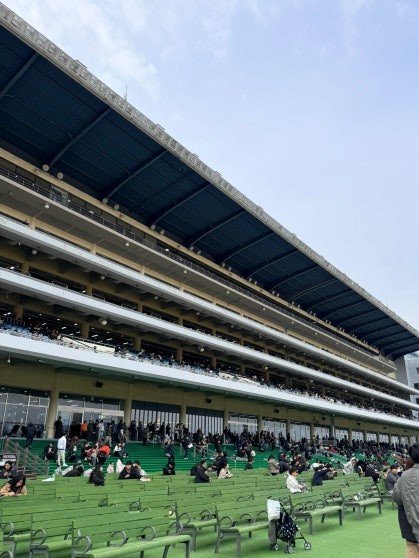
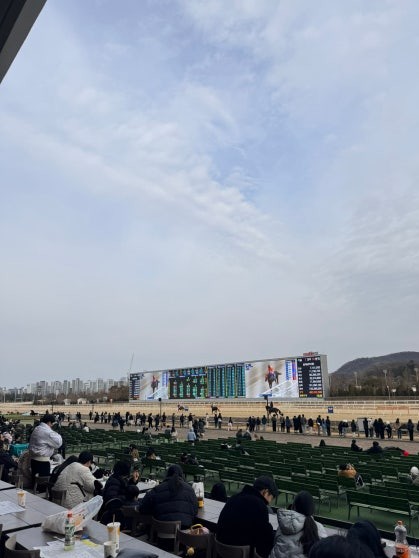
Ground floor: families, couples, food in hand. Tables face the track. People watch the odds boards and enjoy the afternoon without any particular urgency.
Second floor: different register entirely. Large odds boards run the length of the ceiling. Most people stand at counters with race programs spread flat, working through numbers with the kind of focus you’d find at a library during exam season.
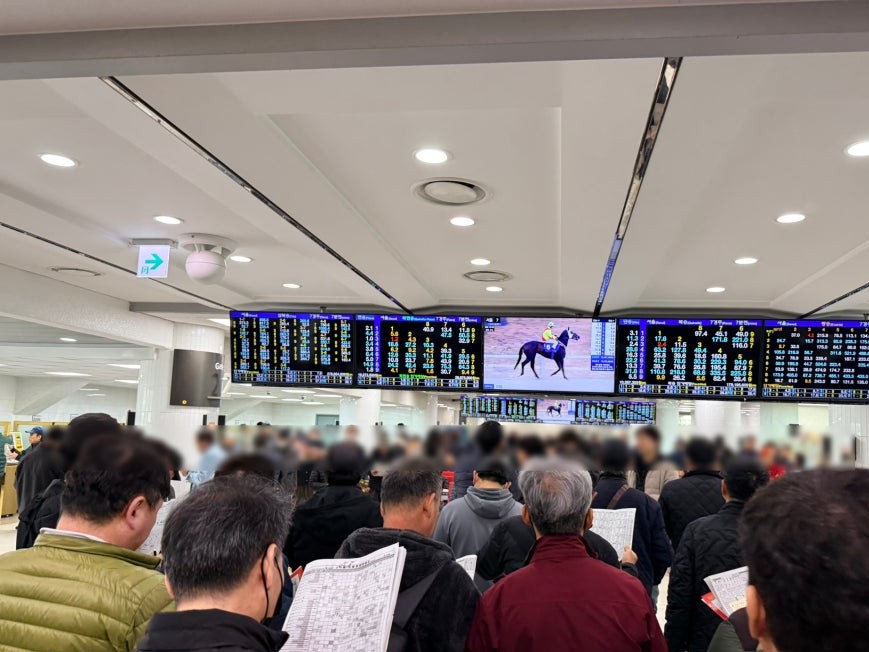
We pulled up to a second-floor counter, spread out the race program, and made picks.
The results: First bet — 복연승, picking two horses to both place in the top three. Lost. Four more bets across the afternoon. ₩20,000 each, all gone. The outing had its own logic by that point.
For the 1,800m race, step outside to the trackside standing area. The starting gates sit at the near end of the track — you can watch the horses load and the gates open from close range. Worth seeing from ground level.

Evening in Siheung: Outdoor BBQ
About an hour by car heading west — Siheung (시흥), a city on the way toward Incheon, well past the Han River.
The venue: Dosim Sok Grill (도심속그릴 Premium BBQ), a glamping-style outdoor BBQ spot sitting in the middle of a residential neighborhood.
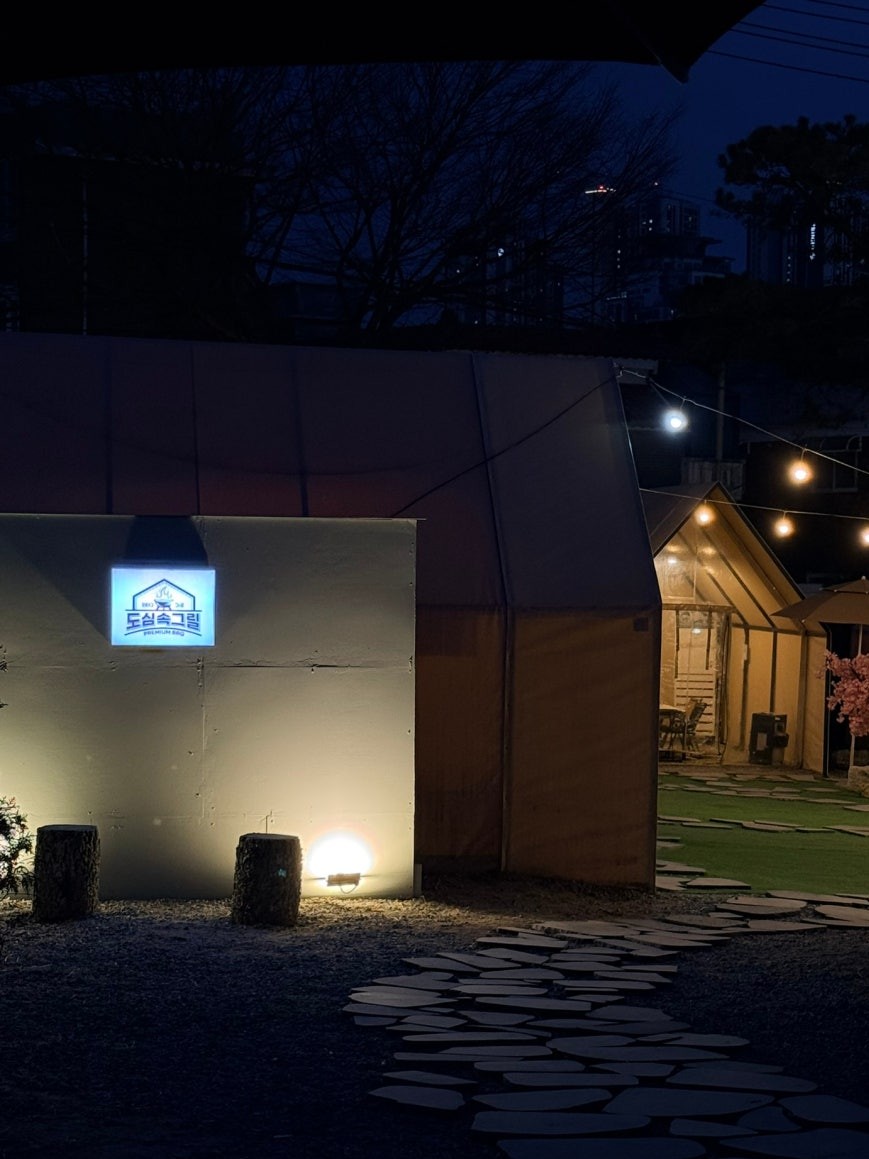
Break time is 18:00–19:00. Doors open at 19:00 sharp. Arrive on time — there’s nothing to gain by waiting outside early. Parking is directly in front of the venue, allocated one space per tent.
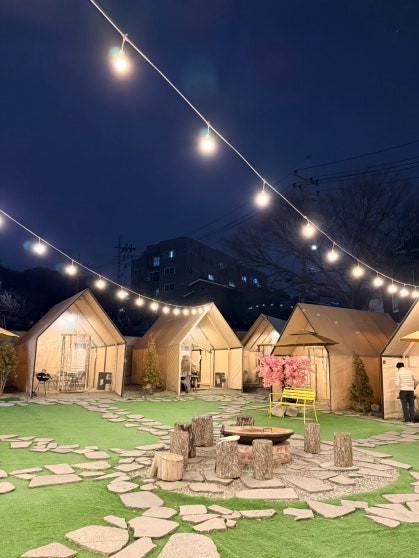
How it works:
Side dishes, sauces, and condiments are free-refill at the self-service bar — kimchi (김치), perilla leaves, pickled sides, assorted sauces.
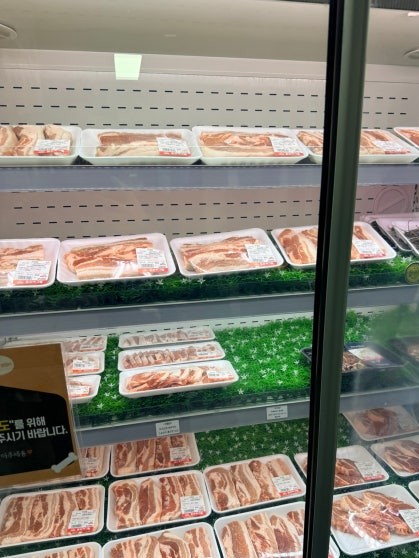
Meat, drinks, soju, ramen, and snacks come from a refrigerated display. Load a basket, pay at the counter, carry everything to your tent.
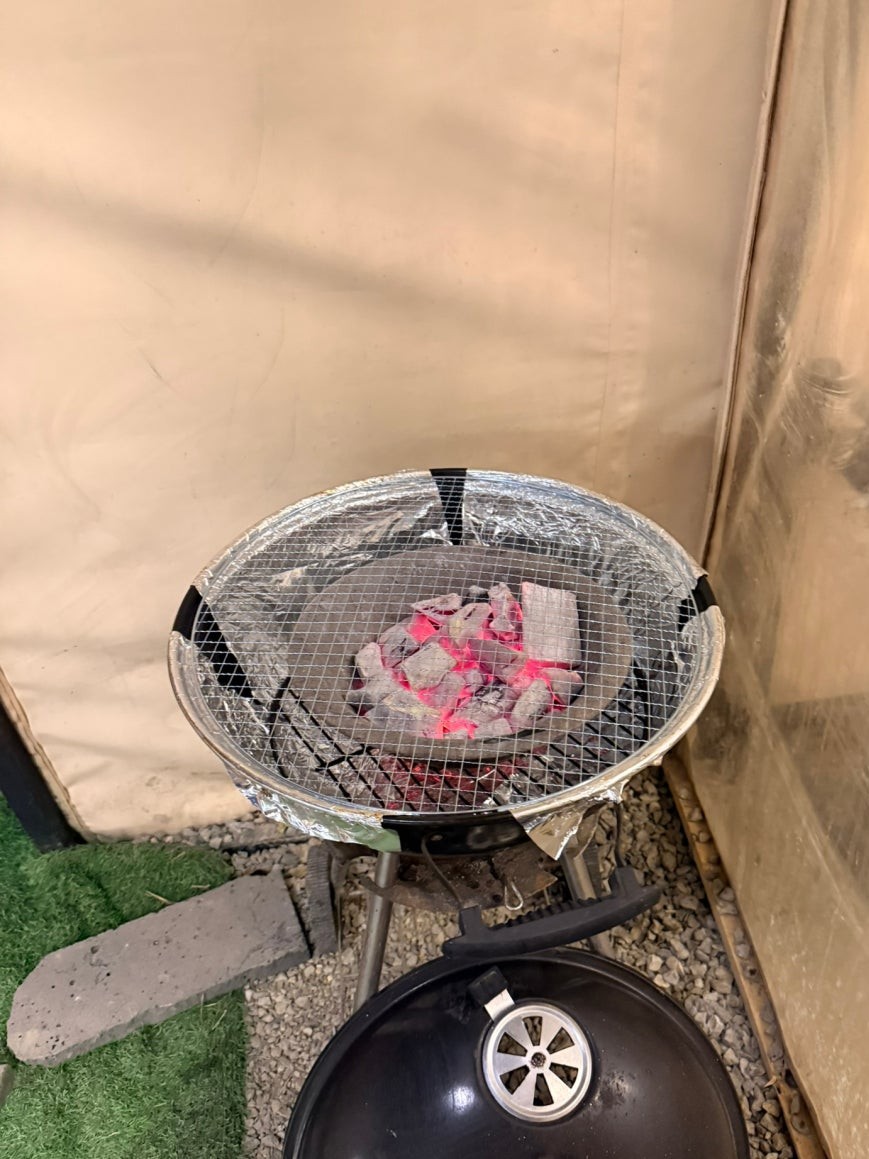
Charcoal is lit and ready at 19:00. No waiting for the coals.
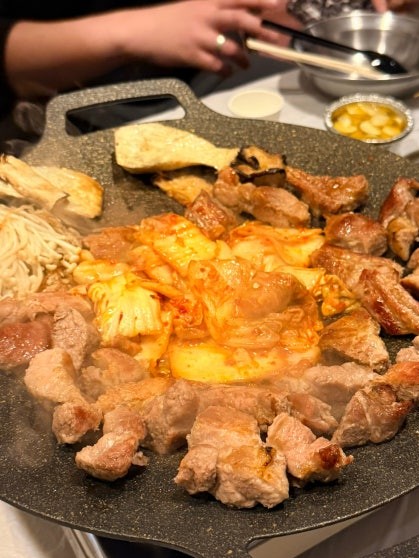
Each tent has a long table, camp chairs on both sides, and a cast-iron grill plate on a portable burner inside — side dishes laid out when you arrive.

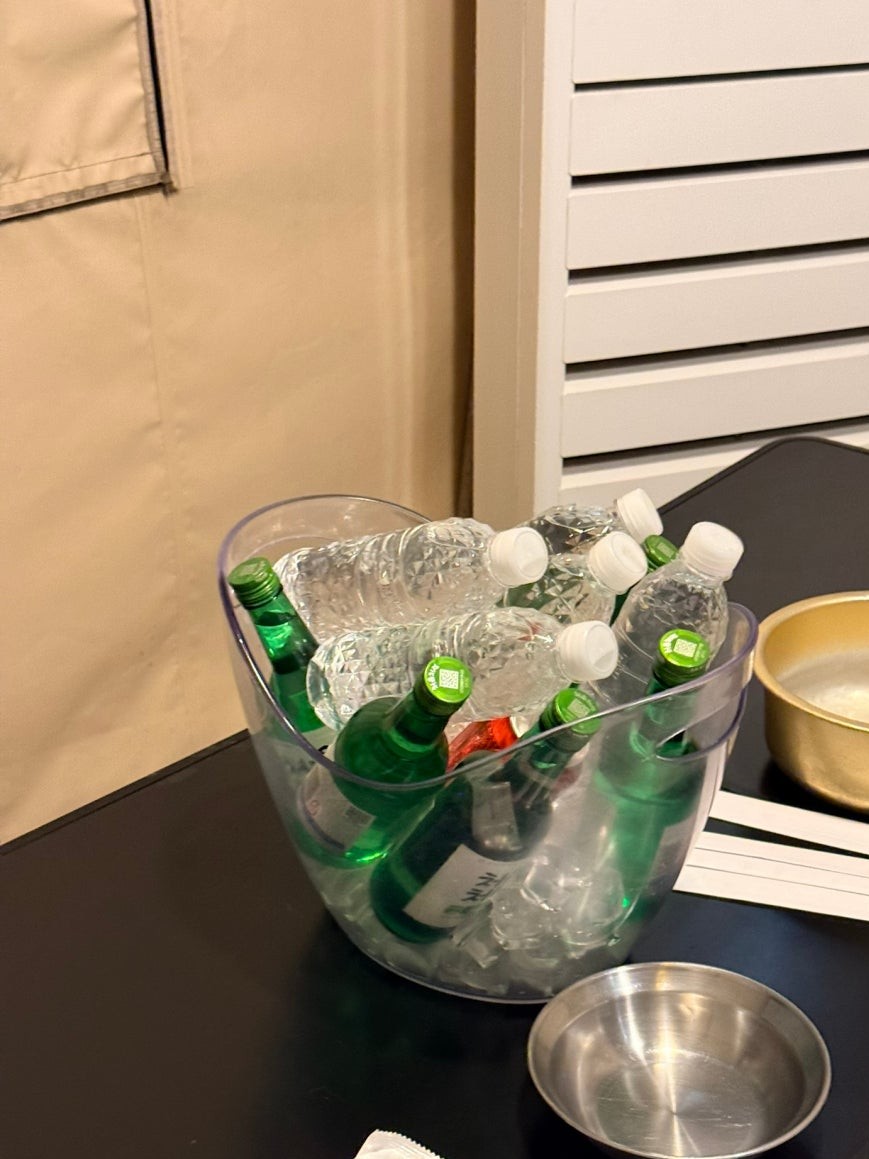
Drinks go into the ice bucket at the table. Cold for the full meal.
The method: first pass on the charcoal outside, second pass on the iron plate inside with kimchi. The kimchi reduces and chars slightly against the already-cooked pork. Skip neither stage — this is what the setup is for.
Price runs higher than a standard Korean BBQ restaurant. Individual tent, dedicated grill, glamping feel — it costs more. For a day that started at a racecourse and ended around charcoal, the combination landed well.
Have you been to Let’s Run Park Seoul, or pieced together a day trip around Gwacheon? Drop a note in the comments — curious what routes others have found.