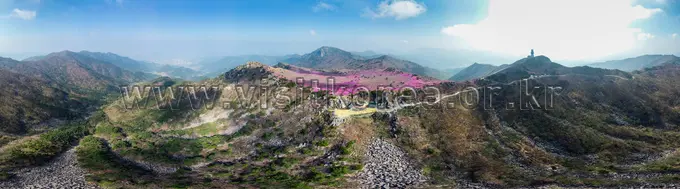
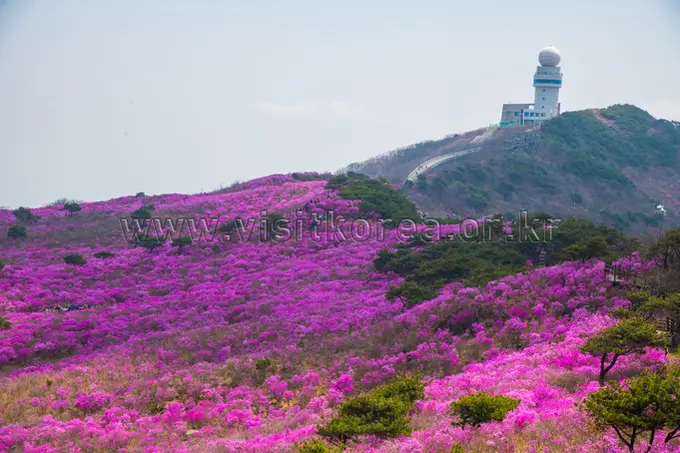
For a rewarding mountain adventure near Daegu, this Biseulsan hiking trail guide has everything you need to plan a confident, well-prepared trip. Rising to 1,083 metres at Cheonwangbong Peak, Biseulsan is one of Daegu’s most beloved mountains — and in late April, its famous Korean azalea fields turn the entire hillside a shade of pink.
Contents
Getting to Biseulsan from Daegu
The trailhead for the most popular Biseulsan route is Yugasa Temple (유가사), a traditional Buddhist temple that serves as the natural gateway to the mountain. Getting here from central Daegu is straightforward using public transport.
Take Daegu Subway Line 1 to Seolhwa-Myeonggok Station (설화명곡역) and transfer to Express Bus No. 8 or Dalseong No. 5 toward Yugasa Temple. Bus routes and schedules do change, so I recommend checking the current options on Naver Map or KakaoMap before you travel — these are the two apps that actually work reliably in Korea. Google Maps has limited public transport data here, so don’t rely on it for bus connections.
To search for directions, copy and paste the Korean name directly into Naver Map or KakaoMap: 유가사. This will pull up the temple location and give you live bus routing from wherever you’re starting in Daegu.
For more official route and access information, check the Dalseong-gun Cultural Tourism official page for Biseulsan, which covers trail details and local transport guidance.
Trail Guide: Yugasa Temple to Cheonwangbong Peak
Route Overview
The classic Biseulsan hiking route runs from Yugasa Temple up to Cheonwangbong Peak — the mountain’s highest point at 1,083 metres. The out-and-back total distance from Yugasa to Cheonwangbong is approximately 7-8 kilometres. Most hikers should budget around 3.5 to 4 hours for the full round trip.
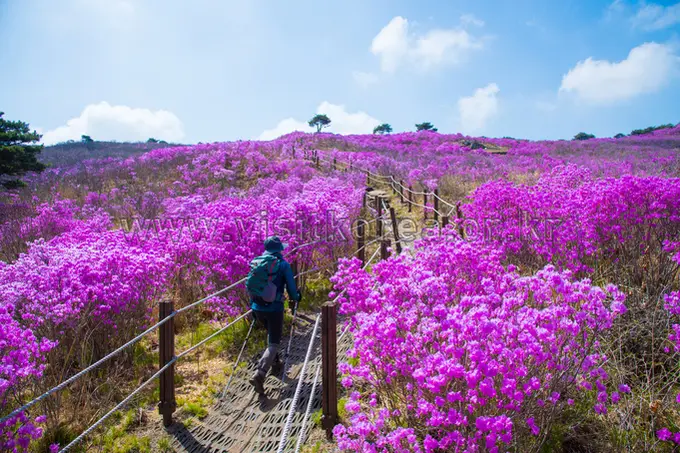
The trail is rated medium difficulty — it’s not a beginner’s stroll, but it’s manageable for anyone with a reasonable level of fitness and proper footwear. You don’t need technical climbing experience or specialist gear.
Azalea Season: The Best Time to Visit
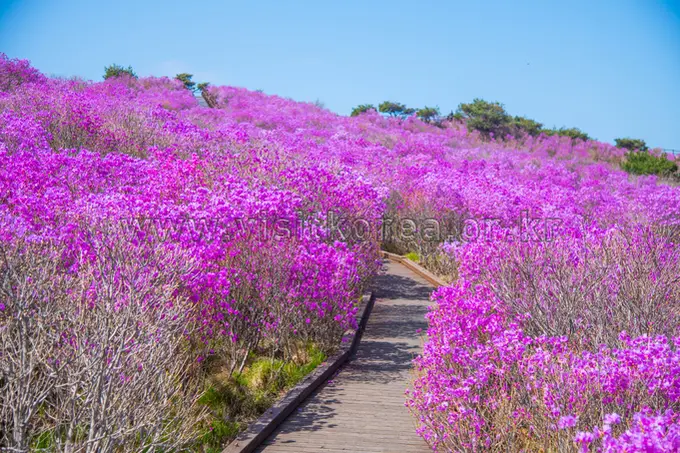
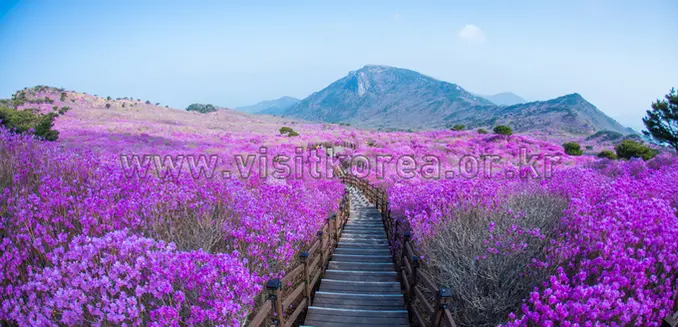
Biseulsan is famous across the Daegu region for its Korean azaleas (참꽃). These flowers typically bloom in late April to early May, blanketing the upper slopes in vivid pink. If you can time your visit to coincide with peak bloom, the visual reward is extraordinary — and it’s one of those experiences that makes the climb feel completely worth it. That said, bloom timing varies year to year depending on temperatures, so keep an eye on local forecasts as spring approaches.
Trail Rules to Know
Hiking on Biseulsan is restricted during nighttime hours — the trails are closed from sunset to sunrise. Plan your start time so you’ve a comfortable buffer to descend well before dark. I’d suggest arriving at the trailhead early in the morning, especially during azalea season when the mountain gets busy.
Seasonal Closures & Fire Prevention Periods
This is one of the most important things to check before you go. Like many Korean mountains, Biseulsan enforces fire prevention closures on certain trail sections during high-risk periods. Based on current information, these closures typically fall during:
- February 1 – May 15 (Spring)
- November 15. December 15 (Autumn)
- Note: The main trails to Cheonwangbong Peak, including the Yugasa route, are typically open even during these periods due to the Azalea Festival, but specific minor trails may be restricted.
During these windows, some sections of the trail may be off-limits. The exact sections affected can change from year to year, so always verify the current closure status before heading out. Check the official Dalseong-gun tourism website or call the local district office if you’re planning a trip during these dates. There’s nothing worse than driving out to a trailhead only to find a closure sign, a quick check in advance saves a lot of frustration.
Note that the spring closure period overlaps with azalea season. This doesn’t necessarily mean the entire mountain is closed, but specific trails may be restricted. Confirm the details close to your visit date.
Practical Tips for Hiking Biseulsan
What to pack before the trailhead
This is non-negotiable on Korean mountains: there are no water fountains or food stalls on the trail. Once you leave the trailhead area, you’re on your own for supplies. Before you head up, stock up at a convenience store near Hyeonpung Station or along the route to Yugasa Temple. Pick up:
- Enough water for the full 6-hour round trip (at least 1.5, 2 litres per person)
- Energy snacks, kimbap, triangle rice balls, energy bars, or whatever suits you
- A small pack of wet wipes or tissues (Korean mountain toilets can be basic)
No Trash Cans on the Mountain
Korean mountains have zero trash infrastructure on the trail, no bins, no collection points, nothing. Every wrapper, bottle, and banana peel you bring up comes back down with you. Pack a small zip-lock bag or reusable bag specifically for your rubbish, and carry everything out. This is standard practice among Korean hikers and it’s one of the reasons these mountains stay so clean and beautiful.
What to Wear & Bring
- Footwear: Proper hiking boots or trail shoes with ankle support, the trail is rated medium difficulty and terrain can be uneven
- Layers: Mountain temperatures drop significantly compared to the city, especially near the summit. Bring a light jacket even on warm days
- Sun protection: Hat, sunscreen, and sunglasses, the upper sections of the trail can be exposed
- Trekking poles: Optional but helpful for the descent, especially if your knees feel the strain on longer hikes
- Fully charged phone: For navigation on Naver Map and emergency contact
Entrance Fee
Great news, hiking on Biseulsan is completely free. There’s no entrance fee required to access the hiking trails on Biseulsan.
Navigation in Korea
As mentioned earlier, Google Maps isn’t reliable for public transport in Korea. Download Naver Map (네이버 지도) or KakaoMap before your trip, both apps are free and work excellently for transit, walking, and driving directions. To find the trailhead, search for 유가사 in either app.
Timing Your Visit
- Best season overall: Spring (late April. May) for azaleas, and autumn (October. November) for foliage, but check fire prevention closures for both periods
- Start time: Early morning is best, aim to be at the trailhead by 8, 9am to avoid crowds and give yourself plenty of daylight
- Weekdays vs weekends: Korean mountains get busy on weekends, especially during peak seasons. A weekday visit is noticeably quieter
Final Thoughts
Biseulsan is the kind of mountain that rewards preparation. It’s not the most famous peak in Korea, but that’s part of its charm, you get a genuine, crowd-free (outside of azalea season) mountain experience within easy reach of Daegu. The Yugasa Temple trailhead gives the hike a cultural dimension right from the start, and reaching Cheonwangbong Peak at 1,083 metres feels like a proper achievement for a day out.
Stock up on supplies before you leave the city, double-check the fire prevention closure calendar, download Naver Map, and you’re set. The mountain will take care of the rest.
Whether you’re a seasoned hiker based in Daegu or a traveller passing through looking for a memorable day trip, Biseulsan deserves a spot on your Korea itinerary, especially if you can catch those azaleas in bloom.
Have you hiked Biseulsan before, or are you planning your first visit? Drop a comment below. I’d love to know whether you’re targeting azalea season or going for the autumn colours, and if you’ve any questions about the trail I haven’t covered!
* Cover image source: ⓒ한국관광공사 포토코리아-라이브스튜디오