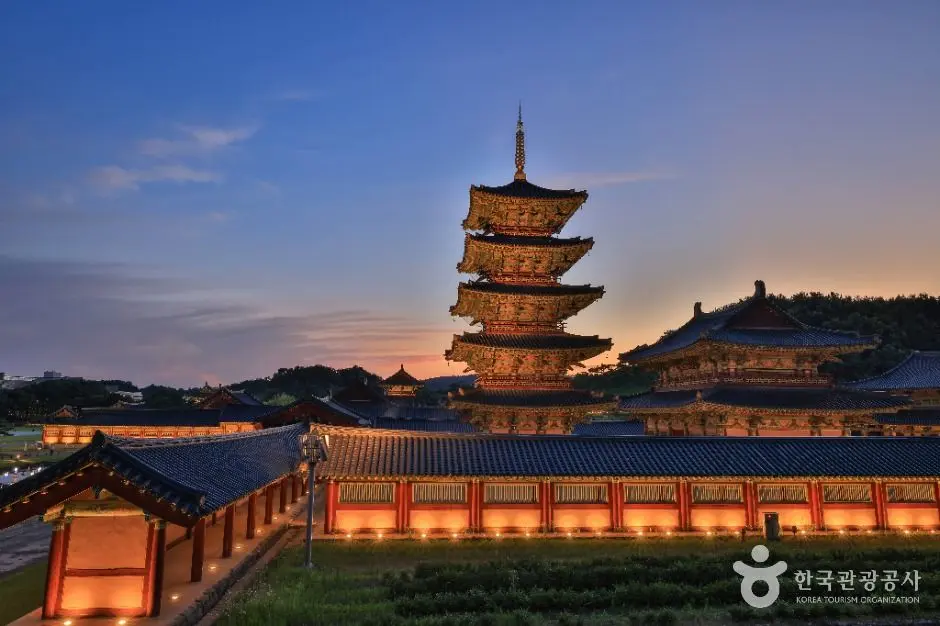
This Buyeo ancient capital walking guide covers the core UNESCO World Heritage sites of a city that served as the final capital of the Baekje Kingdom for 123 years, from 538 to 660 AD. The route is easy, the entrance fees are low, and the history is dense enough to reward a full day on foot.
Contents
Quick Facts
| Total Walking Distance | Approx. 6–7 km for a typical core route (Busosanseong, Jeongnimsa, Gungnamji) |
|---|---|
| Typical Walking Time | 3–4 hours including sightseeing at major sites |
| Best Season | Spring (April–May) and Autumn (October–November) |
| Difficulty Level | Easy — mostly flat paths with gentle slopes at Busosanseong |
| Budget Estimate | Approx. 5,000–15,000 KRW for entrance fees and local transport, excluding meals |
| Essential Gear | Comfortable walking shoes, hat, sunscreen, water bottle, small bag for trash |
| Key Warnings | No public trash cans on paths — carry out all waste. Sites have operating hours and may close around sunset. check individual schedules before you go. |
What You’re Walking Through
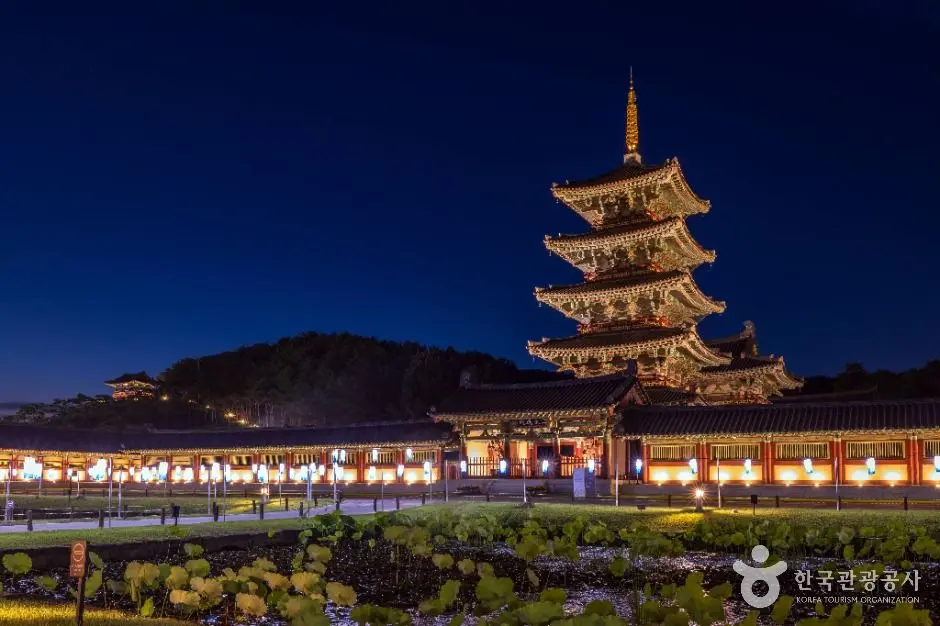
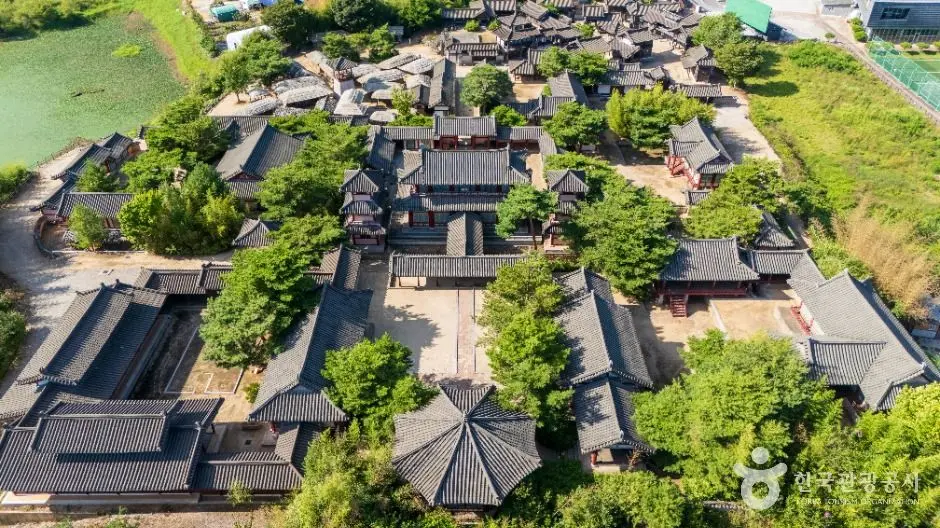
Buyeo doesn’t announce itself the way Seoul or Gyeongju do. It’s a small city in South Chungcheong Province, and its scale works in your favor on foot. The Baekje Historic Areas here — Busosanseong Fortress, Jeongnimsa Temple Site, and Gungnamji Pond, are collectively designated as a UNESCO World Heritage site, and they sit close enough together that a single day covers all three without rushing.
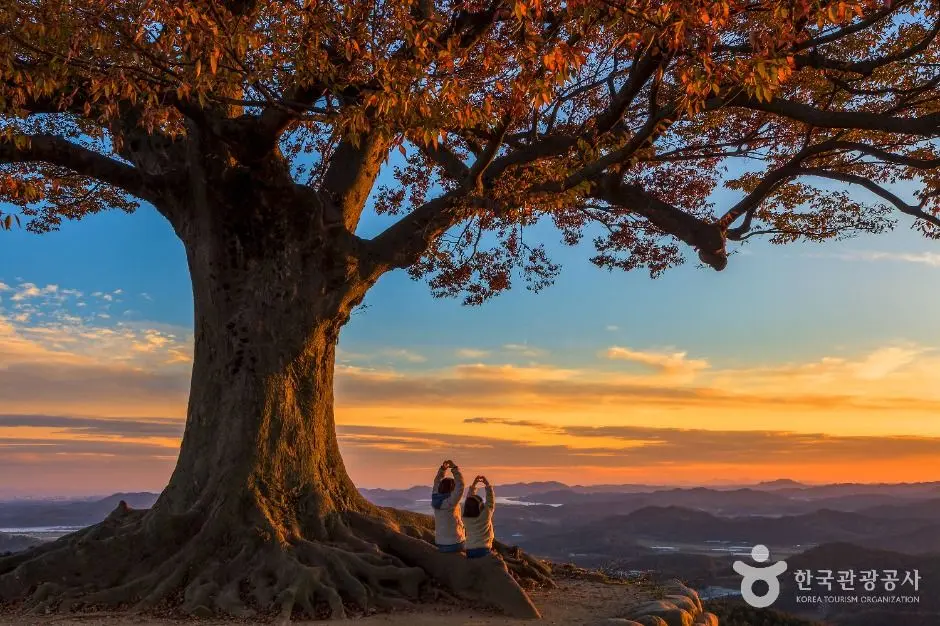
Baekje was one of Korea’s Three Kingdoms, and Buyeo was its capital during the kingdom’s final century before it fell to the Silla-Tang alliance in 660 AD. That history gives the sites a particular weight. These aren’t reconstructed theme-park ruins, they’re the actual ground where a kingdom ended.
The Three Core Sites
Busosanseong Fortress
Busosanseong is a mountain fortress with gentle slopes, so the walking is easy even if you’re not a regular hiker. It sits above the Geumgang River and is home to Nakhwaam Rock, one of the most referenced landmarks in Korean history. Entrance costs 2,000 KRW for adults. Plan to spend enough time here to walk the main circuit rather than just passing through the gate.
Jeongnimsa Temple Site
This is an archaeological site rather than an active temple. The main draw is the Five-story Stone Pagoda, one of the best-preserved examples of Baekje stonework, along with a seated stone Buddha statue. Entrance is free. It’s a quieter stop than Busosanseong, and that’s part of its appeal, there’s room to look at things carefully.
Gungnamji Pond
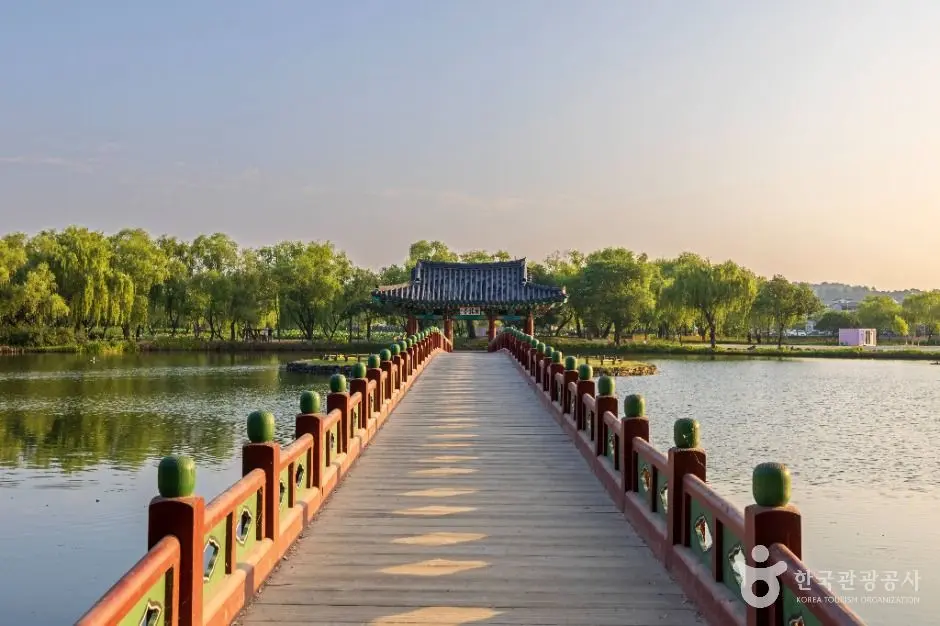
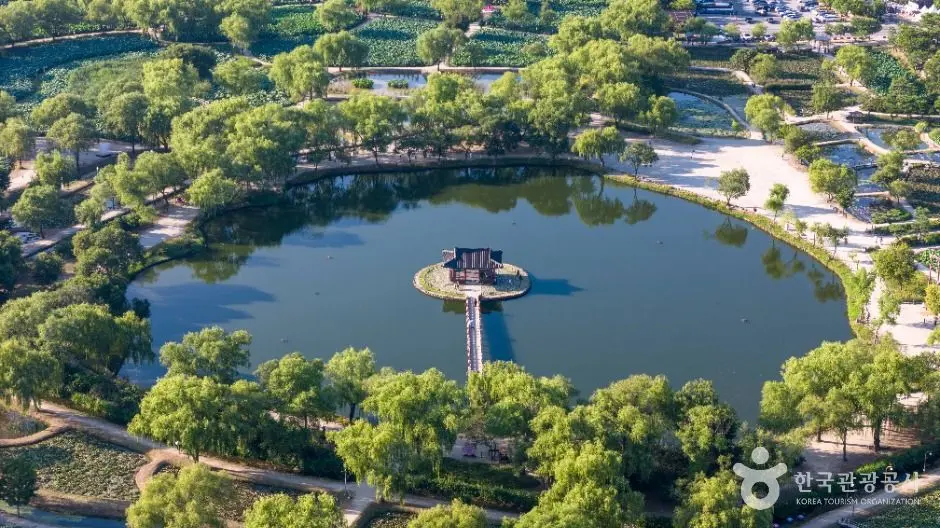
Gungnamji is considered Korea’s first artificial pond, and entry is free. If you’re visiting in summer, the lotus flowers are in full bloom and the pond looks its best. In spring and autumn the setting is still pleasant, just different. It’s a good place to end the day before the light goes.
Practical Logistics
All three sites are reachable from Buyeo Bus Terminal on foot or by short local bus ride. I’d suggest checking current bus routes on Naver Map or Kakao Map before you go, since specific route numbers can change. The official Korea Tourism Organization page for Buyeo has site overviews and can help with initial planning.
A few practical notes:
- Total entrance fees for all three sites come to 2,000 KRW, as you only need to pay at Busosanseong. Both Jeongnimsa and Gungnamji are free.
- Sites have operating hours and typically close around sunset. Check individual schedules on Naver Map before you set out, especially if you’re starting late in the day.
- There are no public trash cans on the walking paths. Bring a small bag and carry everything out.
- Water isn’t always available along the route, so bring a full bottle from town.
- Comfortable walking shoes are enough, this isn’t a trail that requires hiking boots.
Buyeo is a small city, so stock up on snacks or a packed lunch before heading out. Convenience stores near the bus terminal are the easiest option.
Common Mistakes Visitors Make
The most common one is underestimating how early the sites close. Historical sites in Buyeo typically have specific operating hours, often closing around sunset, and if you arrive in the afternoon without checking schedules, you may find gates closing before you’ve finished. Check operating hours the morning of your visit on Naver Map.
A second mistake is skipping Jeongnimsa because it looks small on a map. The Five-story Stone Pagoda is one of the more significant surviving Baekje structures, and the site is calm in a way that the more-visited Busosanseong isn’t. It is free of charge and well worth the time.
Finally, the trash situation catches people off guard. Korea’s outdoor sites generally don’t provide bins along walking paths. Pack a small zip-lock bag or a lightweight stuff sack and treat it as standard practice, not an inconvenience.
Best Time to Visit
Spring (April to May) and autumn (October to November) are the most reliable windows. The weather is mild, the walking is comfortable, and both seasons suit the open, low-key character of Buyeo’s sites. Summer works if you want to see Gungnamji’s lotus flowers in bloom, but humidity and heat make the walking less pleasant. Winter is quiet and cold, manageable, but not ideal for a full day on foot.
Before You Go
Based on available information, the core route covers roughly 6 to 7 km and takes 3 to 4 hours including time at each site. That’s a comfortable half-day, which leaves the afternoon free for the local market or a meal in town before heading back.
Buyeo doesn’t get the visitor numbers of Gyeongju or Jeonju, and that’s part of what makes it worth the trip. The sites are well-maintained, the crowds are thin, and the history is specific enough to feel like something you’ve actually learned rather than just walked past.
Check site hours the morning you visit, and carry your trash out.
* Cover image source: ⓒ한국관광공사 포토코리아-김석태