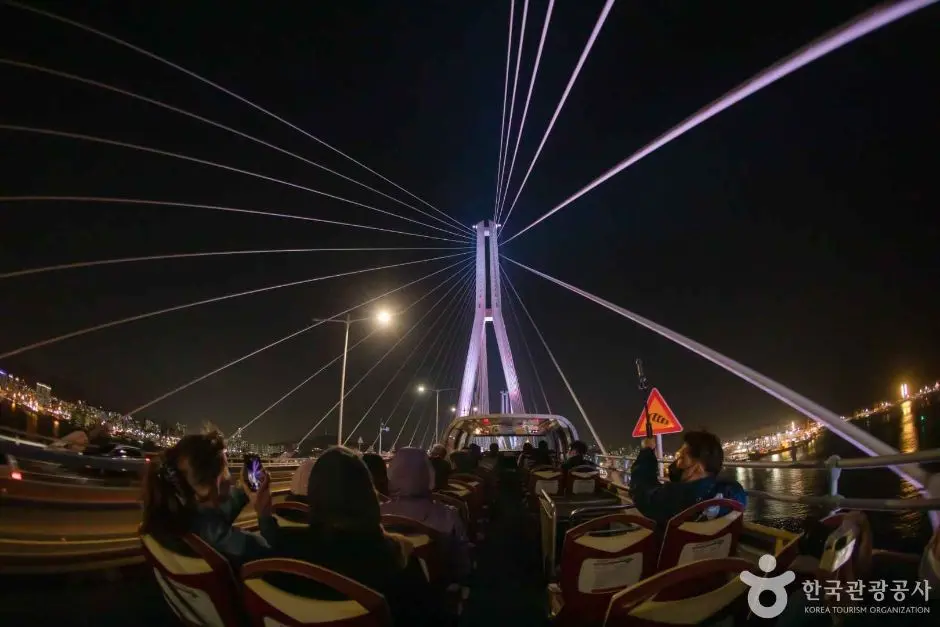
Whether the Busan open-top bus tour is worth ₩15,000 depends almost entirely on how you plan to use it. The ticket is a 1-day hop-on hop-off pass, and if you’re trying to cover several spread-out attractions without piecing together subway transfers and taxis, it can make a lot of sense. If you’re only heading to one or two spots, it probably won’t.
Contents
Quick Facts
| Ticket Price (Adult) | ₩15,000 |
|---|---|
| Ticket Validity | 1-day pass, Hop-on Hop-off |
| Main Departure Point | Busan Station (Red Line) |
| Operating Hours (Red Line) | 09:30 – 16:30 (Last departure from Busan Station at 16:30). |
| Frequency (Red Line) | Approx. 60 minutes (8 runs per day) |
| Routes Available | Red Line, Green Line, Orange Line (Note: Blue Line is currently suspended, and Yellow Line is not part of the standard loop routes.) |
What You Get for ₩15,000
The Busan City Tour Bus runs a hop-on hop-off system across three colour-coded routes. One adult ticket at ₩15,000 covers all of them for the day, so you’re not paying per route or per stop. That structure rewards visitors who want to move between multiple areas rather than those with a single destination in mind.
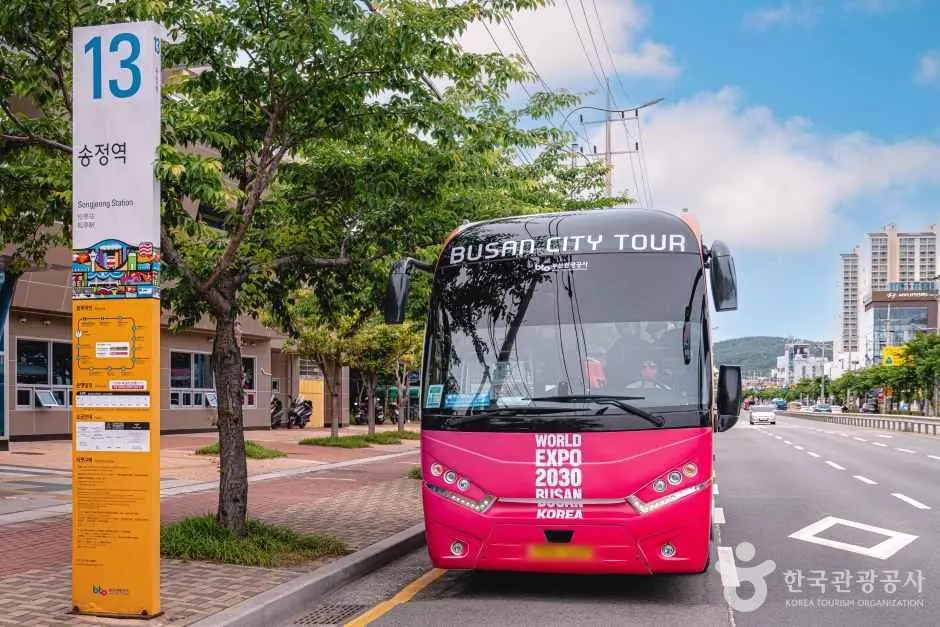
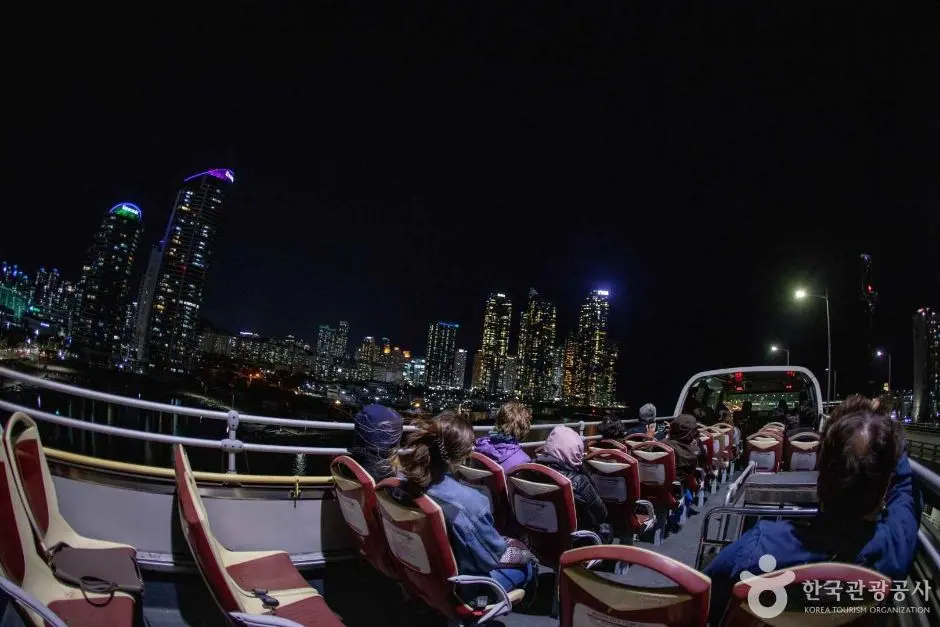
The open-top deck is the main draw for sightseeing, though it’s worth noting that weather in Busan can shift quickly, especially in spring and late autumn. Bring a light layer even on days that look clear in the morning.

The Four Routes
There are three main lines, each covering a different part of the city and coast.
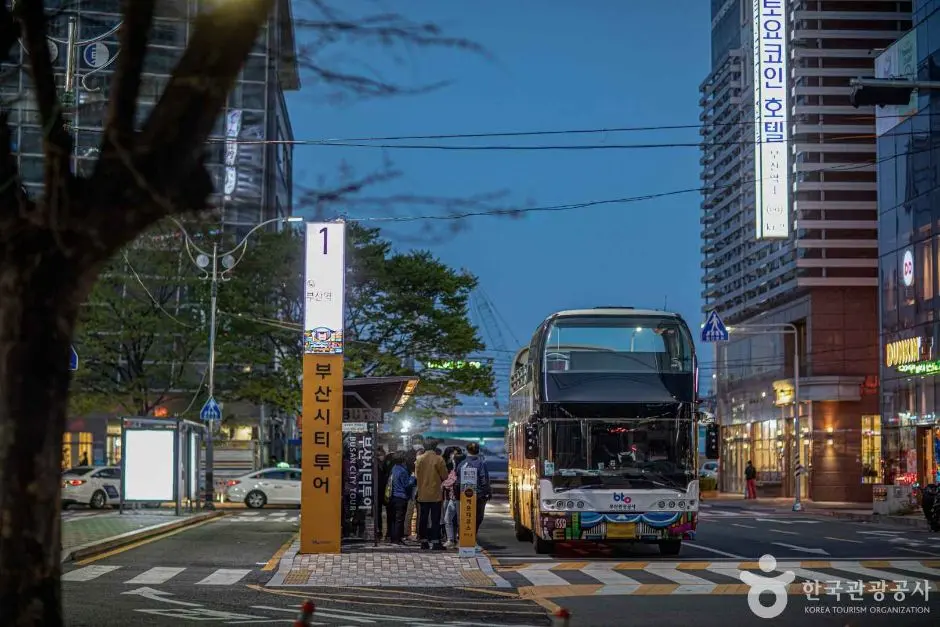
- Red Line: Runs from Busan Station to Haeundae. This is the core city route and the one most first-time visitors use. It departs from Busan Station, making it easy to connect if you’re arriving by KTX or intercity train.
- Green Line: Covers Busan Station to Taejongdae, including Huinnyeoul Culture Village and Taejongdae.
Timing and Frequency
The Red Line starts at 09:30 from Busan Station, with the last departure at 16:30. Buses run at intervals of approximately 60 minutes. That gap matters more than it sounds. If you just miss a bus at a stop, you’re waiting the better part of an hour, which cuts into the time you’ve to actually explore each location.
I’d suggest arriving at Busan Station by 09:15 on the day you plan to use the pass. Starting with the first or second departure gives you the most flexibility before the last bus window closes at 16:30. Trying to squeeze in multiple stops when you start after noon is where it stops being efficient in your favour.
For current schedules on the Orange and Green lines, check the official Busan City Tour Bus route and schedule page before your visit, as operating hours can vary by season.
Common Mistakes Visitors Make
A few patterns come up repeatedly with this kind of pass.
- Buying the ticket without a plan. The hop-on hop-off format sounds flexible, but the 60 minute frequency means unplanned stops eat time fast. Decide in advance which stops you want and in what order.
- Starting too late. With a last Red Line departure at 16:30, visitors who start after lunch often find themselves rushing or missing stops entirely. The pass works best as a full-day commitment, not an afternoon activity.
- Assuming all lines run the same hours. The 09:30 to 16:30 window is confirmed for the Red Line. Other lines may differ. Check the official site for the specific route you’re planning to use.
- Not accounting for time at each stop. The bus gets you there, but popular spots like Haedong Yonggungsa or Haeundae need at least an hour to explore properly. Factor that into how many stops you realistically plan.
- Skipping food prep. There are no guarantees about food options at every stop. Buying snacks or a meal near Busan Station before boarding is a practical move, especially if you’re heading to less commercial stops on the Green or Orange lines.
Who Should Actually Buy It
The pass makes the most sense for visitors who want to cover Haeundae, Taejongdae, and Dadaepo in a single day without managing multiple transit options. It also suits travellers who are unfamiliar with Busan’s bus and subway network and want a simpler way to move around.
It’s less useful if you’re staying near Haeundae and only plan to explore that area on foot, or if you’ve already been to Busan and have a short, specific itinerary. In those cases, the subway and local buses will likely be cheaper and faster for your actual needs.
Families with young children or older travellers who find subway navigation tiring tend to get good value from the pass, since the route structure removes a lot of the logistical friction.
Practical Notes Before You Go
- The main boarding point for the Red Line is Busan Station, which is well-connected by subway and is the arrival point for KTX trains from Seoul.
- Bring cash or a card. Check the official site for current payment options at the boarding point, as these can change.
- Wear sunscreen if you plan to sit on the open upper deck. The coastal sections of the route have little shade.
- Korea’s public spaces, including bus stops and tourist sites, expect visitors to pack out their own trash. Bins aren’t always available at stops.
- Naver Map is more reliable than Google Maps for real-time Korean transit information if you need to cross-reference stop locations or walking times from a drop-off point.
- Schedules and fares can change seasonally. Confirm details on the official site before your visit rather than relying on third-party booking platforms, which sometimes carry outdated information.
At ₩15,000, the Busan City Tour Bus is a reasonable option for a full day of sightseeing across the city’s spread-out coastal attractions. Plan the day in advance, start early, and it holds up well. Treat it as a casual backup plan and it probably won’t.
* Cover image source: ⓒ한국관광공사 포토코리아-디자인글꼴