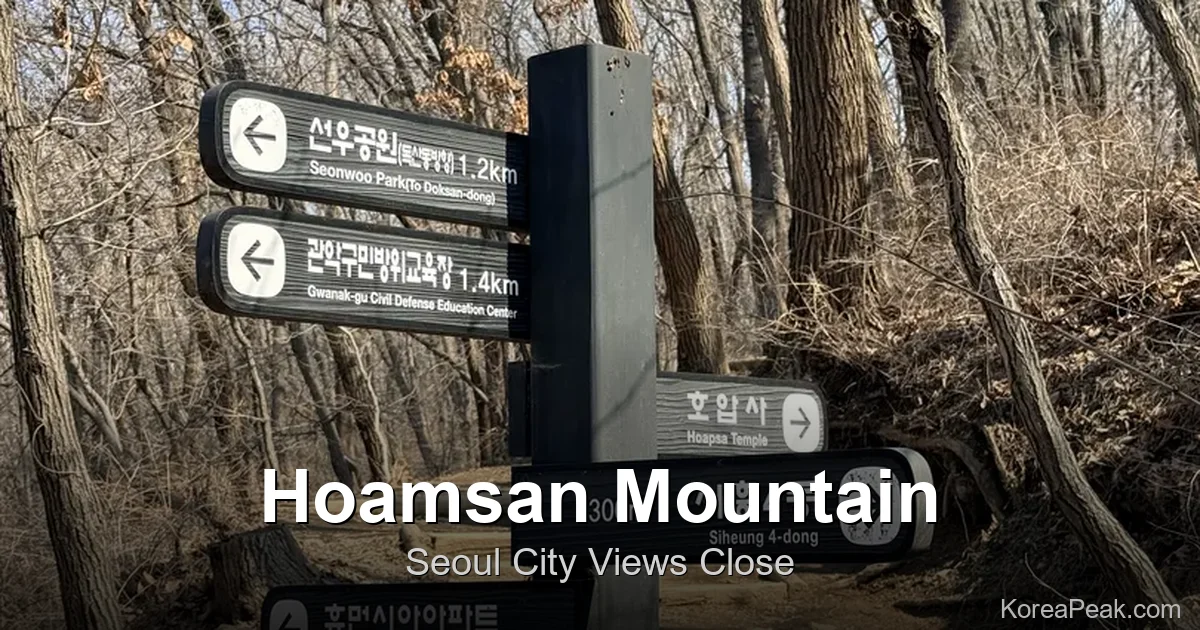
Looking for an easy Hoamsan Mountain Seoul hiking experience that delivers panoramic city views without the crowds? This 393-meter peak in Gwanak-gu offers one of Seoul’s most accessible summit trails, perfect for beginners, weekday warriors, and anyone wanting a quick nature fix without leaving the capital. Part of the Gwanaksan mountain range, Hoamsan provides a surprisingly rewarding hike just minutes from residential neighborhoods.
Contents
Trail Overview & Quick Facts
Hoamsan might not feature on international bucket lists like Bukhansan or Seoraksan, but this modest peak punches well above its weight for accessibility and reward ratio. The mountain is a popular warm-up for locals tackling the Black Yak 100 Famous Mountains Challenge—a massive hiking trend in Korea where participants aim to summit 100 designated peaks across the country, collecting stamps and building a personal mountain portfolio.
- Elevation: 393 meters (1,289 feet)
- Difficulty: Easy—suitable for beginners and families
- Total Time: Approximately 2 hours round trip
- Trailhead: Opposite Dangun Kindergarten (단군 어린이집), Gwanak-gu
- Trail Route: Dangun Park Trail → Doksan Jarakgil → Hoamsa Temple → Summit
- Best For: Quick workouts, weekday escapes, testing gear before bigger hikes
Getting There & Navigation Tips
Hoamsan sits in Seoul’s Gwanak-gu district, making it extremely accessible by public transport. Take Subway Line 2 to Sillim Station (신림역), then either catch a local bus or walk 15-20 minutes toward the trailhead near Dangun Kindergarten. The mountain rises directly from residential neighborhoods, so you’ll transition from apartment buildings to forest within minutes.
Critical navigation tip for foreigners: Google Maps doesn’t work well in Korea for pedestrian navigation. Instead, download Naver Map or KakaoMap apps and search using these Korean terms:
- 호암산 등산로 입구 (Hoamsan trailhead entrance)
- 단군 어린이집 관악구 (Dangun Kindergarten, Gwanak-gu)
- 관악구 신림동 산57-13 (exact address)
Parking is available in the surrounding residential area, though spaces can fill quickly on weekends. The trailhead is unmarked by Western standards—look for a small path entrance opposite the kindergarten, where you’ll see locals in full hiking gear (Koreans take their mountain fashion seriously, even on short hikes).
From Trailhead to Hoamsa Temple
The trail begins with a gentle warm-up through what feels like a neighborhood backyard mountain—locals call these dongne dwisan (동네 뒷산), or “village back mountains.” You’ll pass a small park area with basic exercise equipment before entering proper forest.
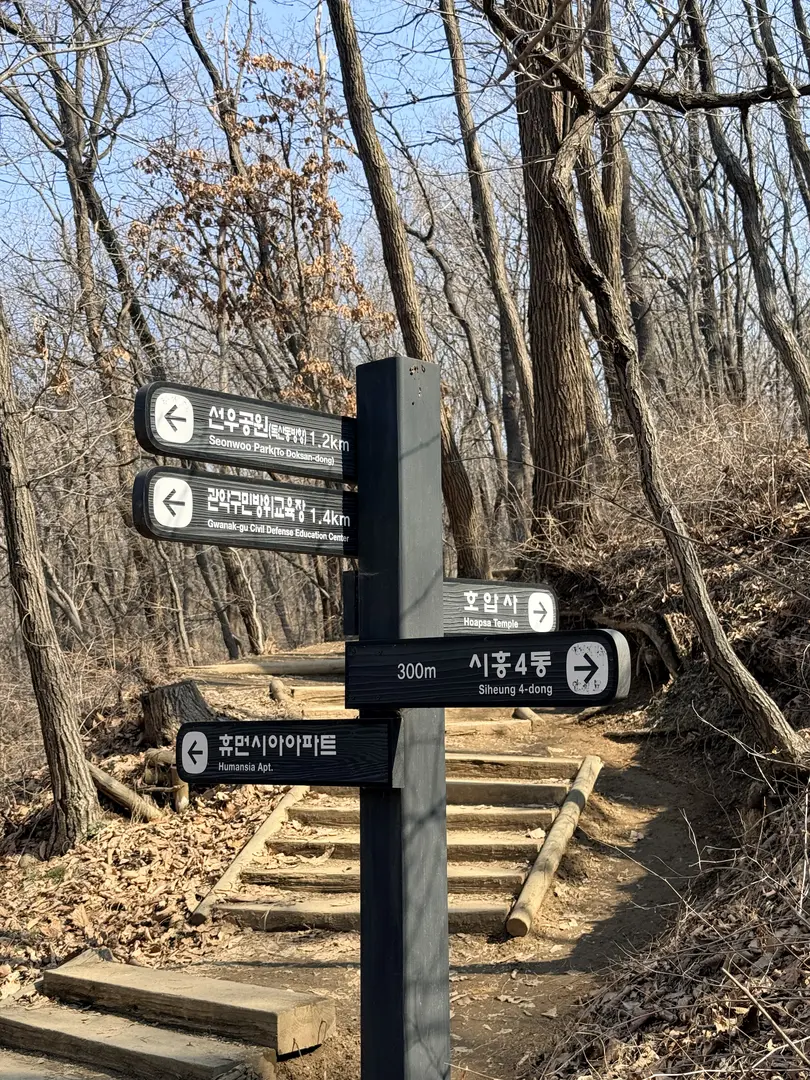
Follow the Dangun Park Trail upward, transitioning onto Doksan Jarakgil (독산자락길), a well-maintained ridge path. Korean hiking trails excel at signage—you’ll encounter numerous trail markers, making navigation straightforward even for first-timers. Watch for oak trees (sangsurinamu) along this section; these forests turn spectacular during autumn.
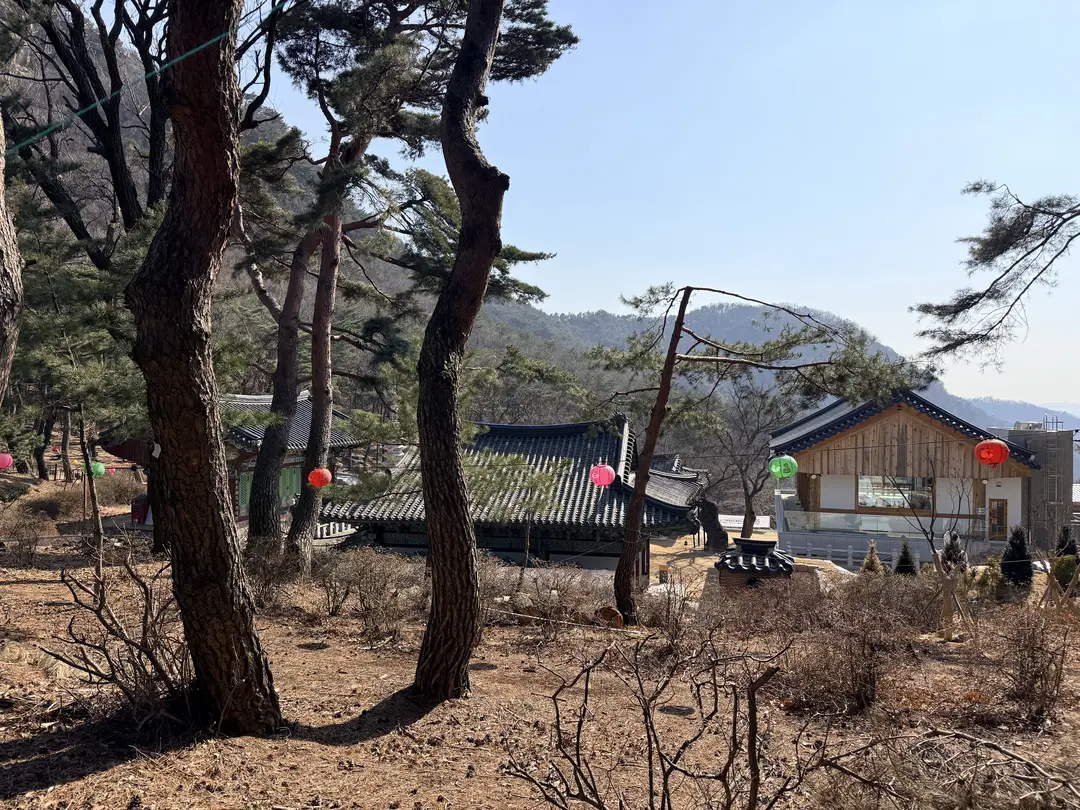
After 30-40 minutes of moderate climbing, you’ll reach Hoamsa Temple (호압사), a small Buddhist temple that serves as the trail’s midpoint rest stop. The temple offers basic facilities and a chance to catch your breath before the final summit push. On weekends, this area buzzes with street vendors selling hiking gloves, walking sticks, and other gear—a uniquely Korean trail feature you won’t find on most international hikes.
The Final Push: Stairs to Summit
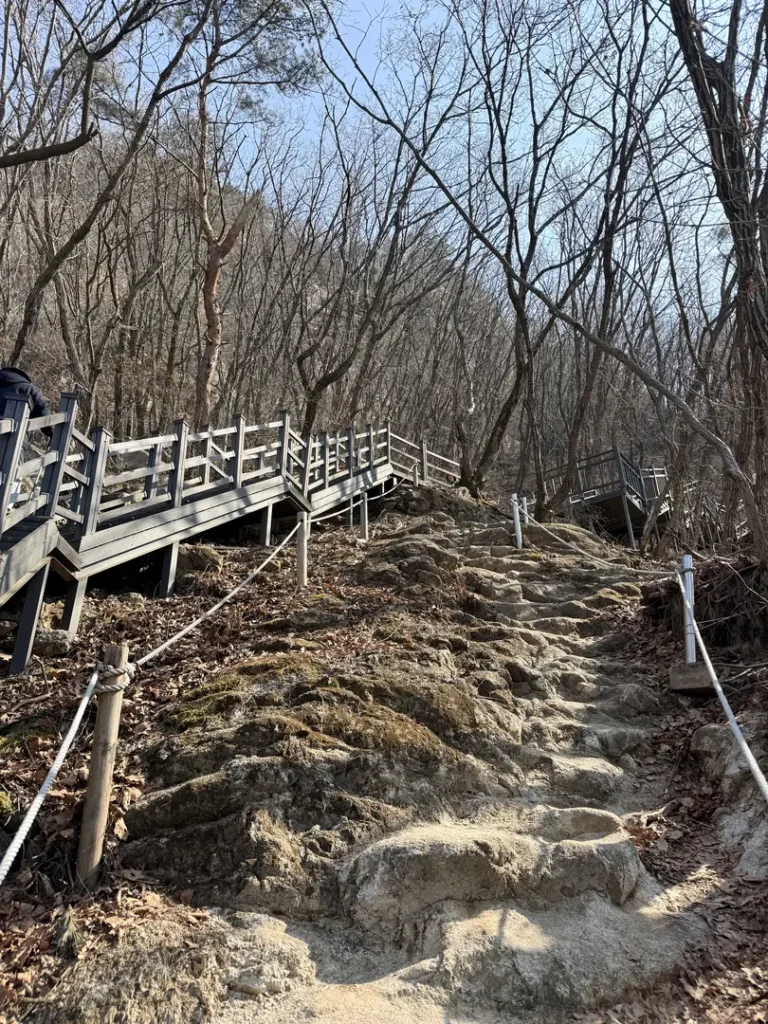
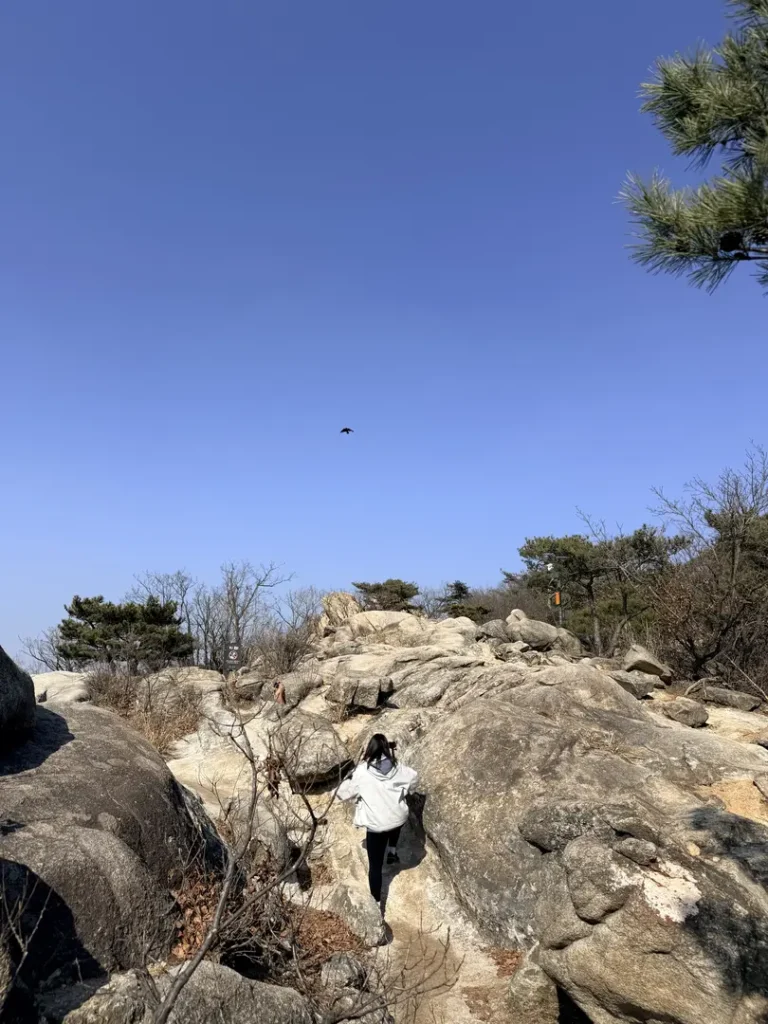
Here’s where Hoamsan reveals its secret weapon: well-maintained stone stairs leading nearly to the summit. Korean trail crews have mastered the art of staircase construction, and this 10-15 minute stairway makes the final ascent remarkably accessible. One local noted the stairs are so well-built that “you could climb them in Crocs”—though I highly recommend proper footwear for safety and ankle support.
What to Expect at the Top
The summit area features several interesting rock formations, including what locals believe is a “rocking stone” (흔들바위)—a balanced boulder that appears precariously perched. The actual highest point sits slightly inland from the first viewpoint; look for the helipad and Korean flag (태극기) to find the true summit.
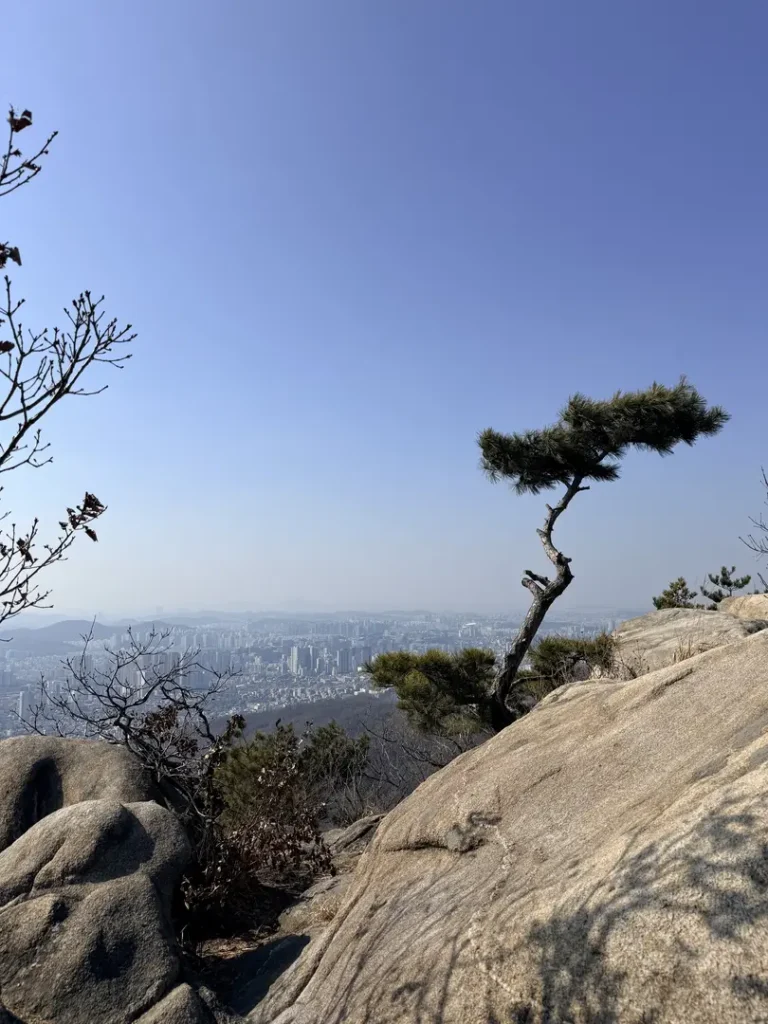
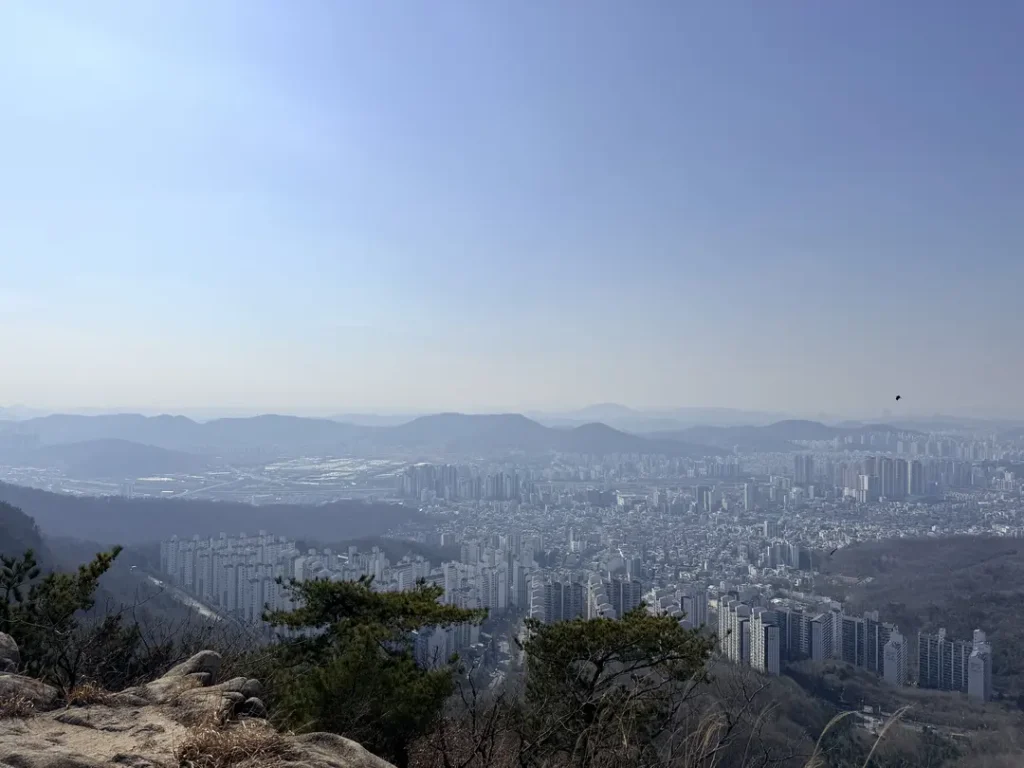
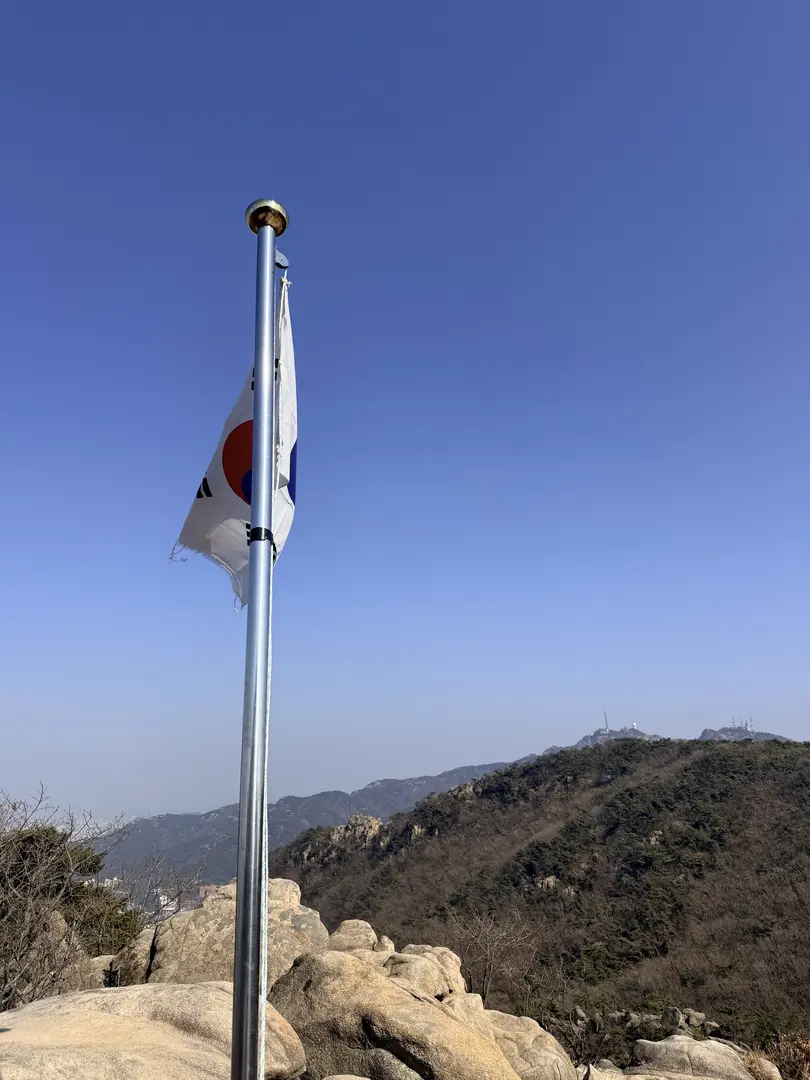
Unlike many Korean peaks, Hoamsan lacks a traditional summit stone marker (jeongsangseok), which confuses even local hikers. But what it lacks in ceremonial markers, it makes up for in 360-degree views of Seoul and the surrounding Gwanak mountain range. On clear days, you can spot Gwanaksan Mountain—another Black Yak Challenge peak—rising prominently to the southeast.
The summit rewards you with that addictive Korean hiking payoff: trakt’win jeonmang (탁 트인 전망), or “wide-open views” that make the climb worthwhile. At 393 meters, you’re surprised how expansive the cityscape appears.
Essential Hiking Tips for Foreigners
Buy supplies before the trailhead: Unlike hiking trails in Western countries, Korean mountains have virtually zero on-trail shops or water fountains. Stop at a convenience store (CU, GS25, 7-Eleven) near Sillim Station to buy water, snacks, and a triangle kimbap (삼각김밥)—Korea’s portable rice snack wrapped in seaweed, perfect trail food.
Pack out all trash: Korean trails have no trash cans whatsoever. Bring a small plastic bag to carry your waste back down. This “leave no trace” system keeps trails remarkably clean but surprises unprepared foreigners.
Fire prevention closures: Some Korean mountain areas restrict access during spring and fall dry seasons to prevent wildfires. While Hoamsan rarely closes, check local notices if hiking during March-May or November-December.
Weekday vs. weekend: Korean mountains transform on weekends, filling with families and serious hiking clubs. Visit on weekday afternoons for a peaceful, almost private experience. Weekend mornings bring the street vendors near Hoamsa Temple—a cultural experience worth catching if you don’t mind company.
Final Thoughts
Hoamsan Mountain Seoul hiking delivers exactly what urban adventurers need: a legitimate summit experience without the time commitment or technical difficulty of Korea’s famous peaks. The two-hour round trip fits easily into a half-day schedule, making it ideal for testing new hiking boots, building cardio fitness, or simply escaping apartment walls for a few hours.
The well-maintained trails, clear signage, and accessibility from central Seoul make this an excellent introduction to Korean hiking culture. You’ll experience the characteristic elements—enthusiastic ajummas (Korean aunties) in full technical gear, immaculate trails, summit flags, and that satisfying sense of achievement when city views unfold at the top.
Whether you’re warming up for the Black Yak 100 Famous Mountains Challenge like many locals, or just want a quick nature fix in Seoul, Hoamsan proves that great hikes don’t require massive elevation or remote locations. Sometimes the best adventures hide in plain sight, rising from residential neighborhoods into forest canopy within minutes.
Have you hiked any of Seoul’s neighborhood mountains, or are you planning to tackle the Black Yak Challenge? Share your favorite easy Seoul summit in the comments below!