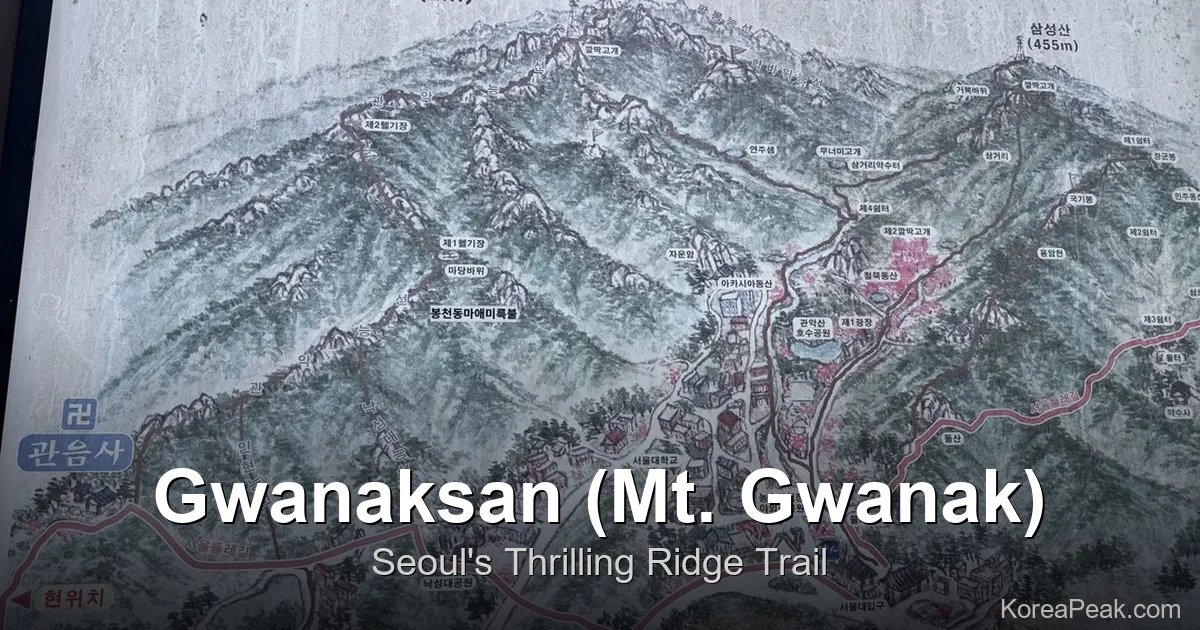
The Gwanaksan hiking trail from Sadang Station offers one of Seoul’s most rewarding urban mountain experiences—dramatic rocky ridges, sweeping city views, and adrenaline-pumping rope sections—all accessible via subway. Standing at 632 meters, Gwanaksan (관악산) has exploded in popularity after being featured on the hit Korean TV show ‘You Quiz on the Block,’ but this mountain has always been a beloved challenge for locals and increasingly, savvy international hikers tackling Korea’s Black Yak 100 Famous Mountains Challenge—a massive hiking trend sweeping Korea where participants summit 100 designated peaks.
Contents
Trail Overview & Quick Facts
This route follows part of Seoul Dulle-gil Trail Course 11, ascending through Gwaneumsa Temple before tackling exposed ridge sections with spectacular drop-offs and arriving at Yeonjudae Peak (연주대), the official summit. The trail rewards you with continuous Seoul cityscape panoramas—locals joke it’s “hope torture” because you can see the summit transmission towers from far away, making the climb feel longer than it is.
- Elevation: 632m (Yeonjudae Peak)
- Difficulty: Moderate (requires some scrambling and rope use)
- Duration: 4.5 hours round trip (including breaks)
- Trailhead: GS25 Namhyeon Eutteum Branch (near Sadang Station)
- Best For: Hikers comfortable with heights and basic rock scrambling
- Trail Conditions: Well-maintained with stairs, ropes, and handholds on steep sections
Getting There & Navigation
One of Gwanaksan’s biggest advantages is its accessibility. Take Seoul Metro Line 2 or 4 to Sadang Station (사당역). From the station exit, navigate to the trailhead at GS25 Namhyeon Eutteum Branch—about a 10-15 minute walk through a residential neighborhood.
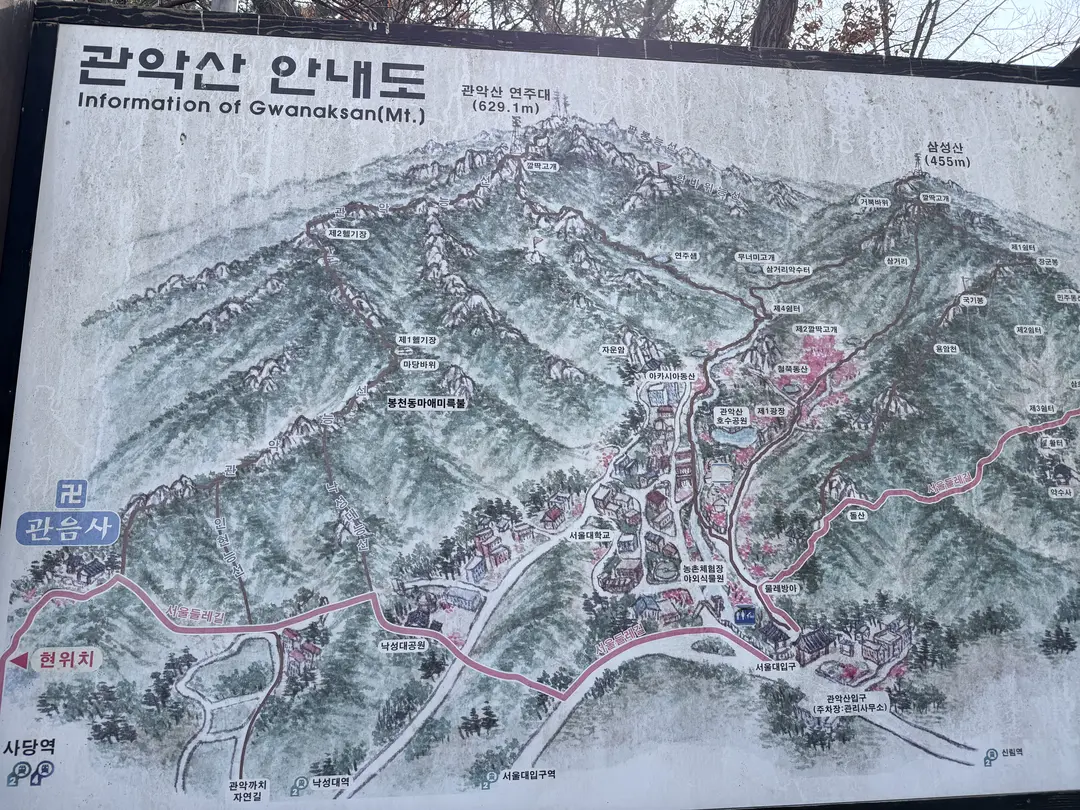
Critical navigation tip for foreigners: Google Maps doesn’t work reliably in Korea due to local mapping restrictions. Download Naver Map or KakaoMap apps and copy-paste these Korean search terms:
- Trailhead: GS25 남현으뜸점
- Summit: 관악산 연주대
- Temple: 연주암 (Yeonjuam Temple)
Before you start: Korean mountain trails typically have NO trash cans and limited facilities. Stock up on water and snacks at the GS25 convenience store at the trailhead—you’ll carry everything up and back down. Bring at least 1.5 liters of water per person. Also note that some Korean hiking trails close during spring (typically late February to mid-May) and fall fire prevention seasons, though Gwanaksan’s main routes usually remain open.
The Trail Guide: What to Expect
Initial Ascent: Gwaneumsa Temple Section (0-90 minutes)
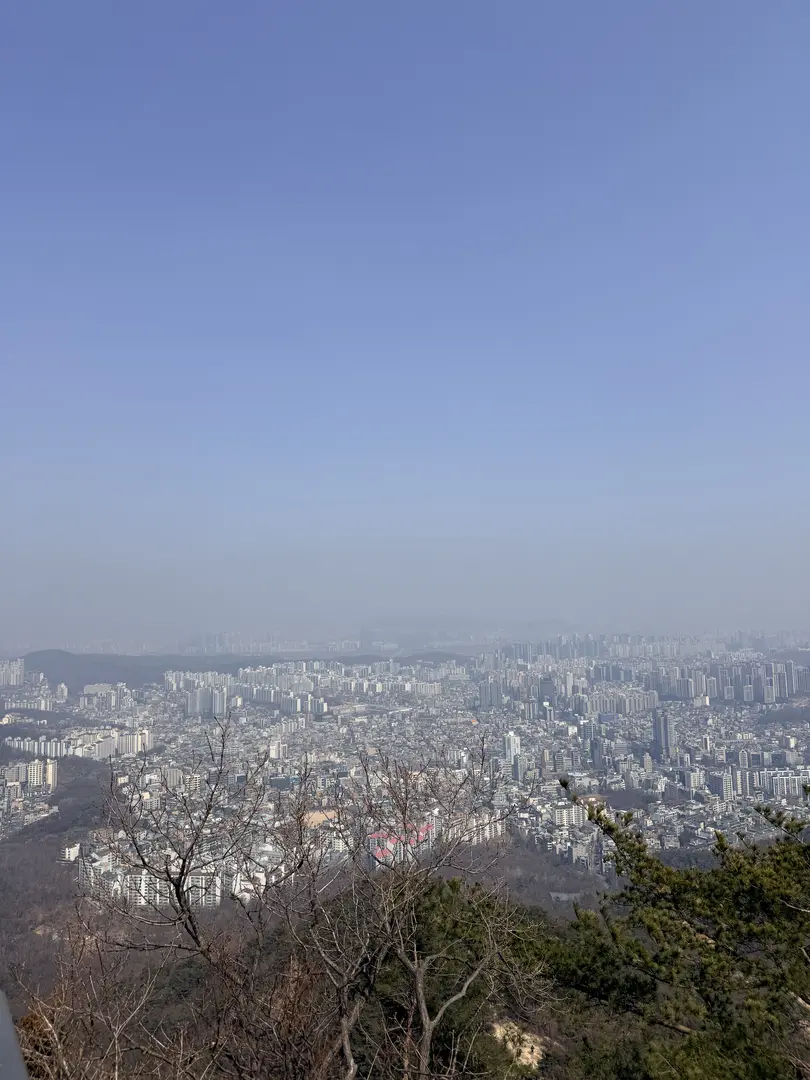
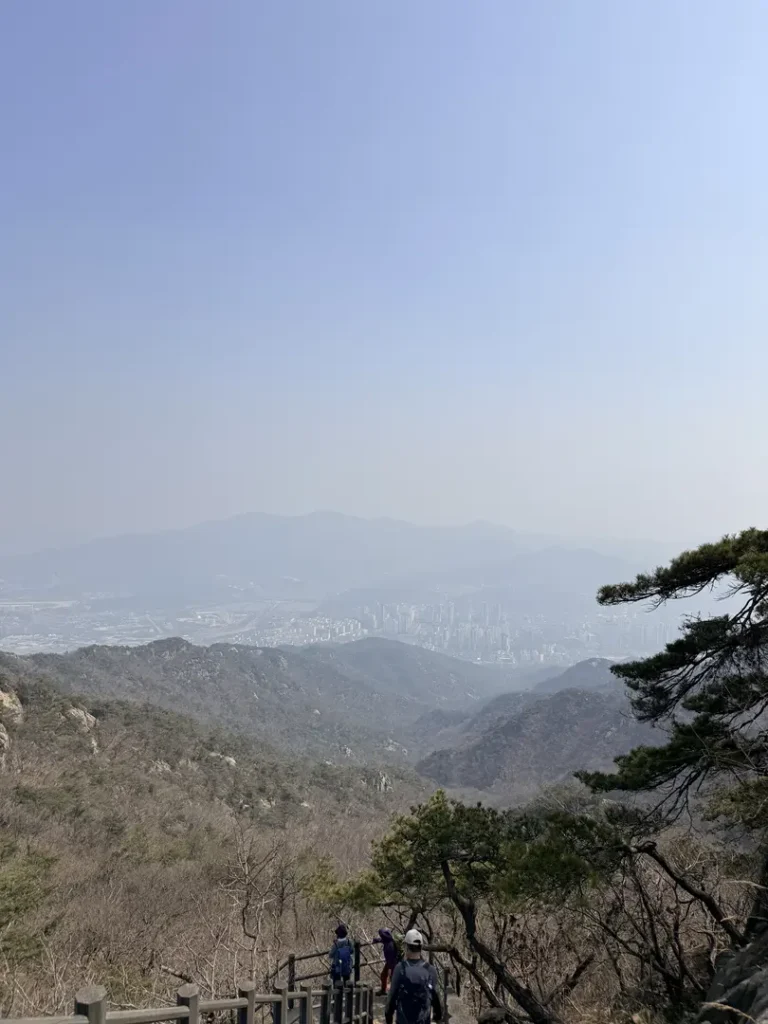
From the GS25, follow Seoul Dulle-gil Trail markers through the residential area until you reach the official Gwanaksan trail sign. The climb begins immediately with steady uphill sections, but within 30 minutes, Seoul’s urban sprawl unfolds behind you—this is why the Sadang route is considered the most scenic approach.
You’ll pass outdoor fitness equipment (pull-up bars and workout stations) popular with locals, then reach the first distance marker showing 3.2km remaining to Yeonjudae. The trail is well-shaded with mixed forest and stone staircases.
The Ridge Sections: Where Things Get Exciting (90-180 minutes)
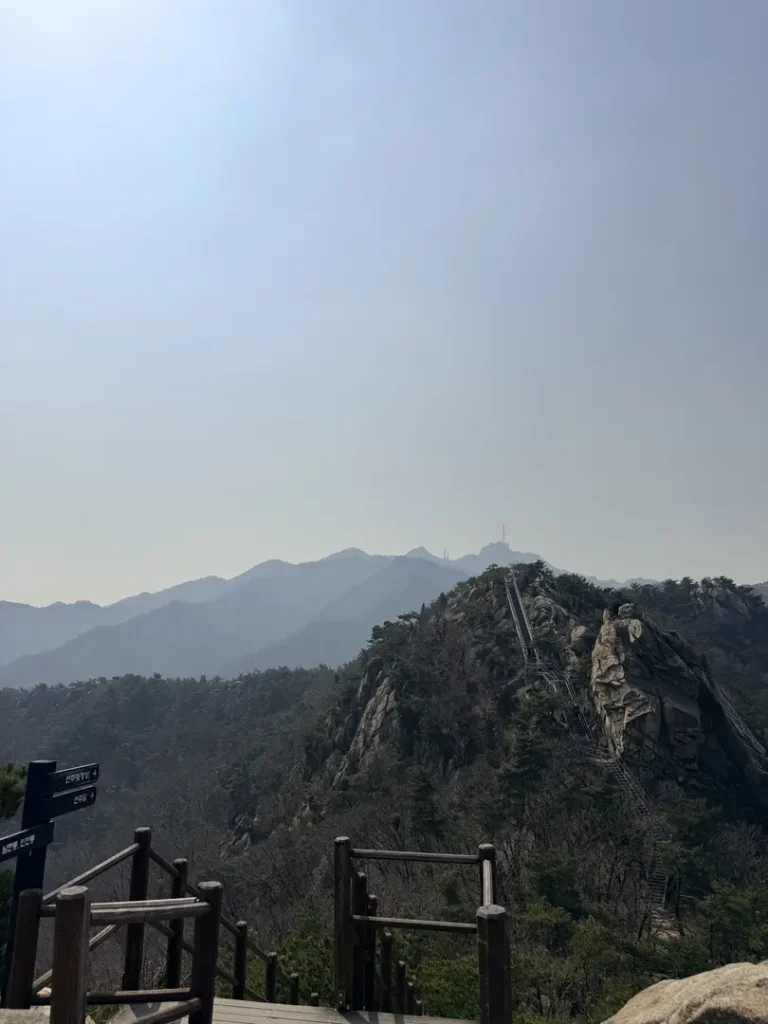
After passing the first helipad (Heliport #1), the trail character changes dramatically. You’ll transition onto exposed rocky ridges with steep drop-offs on both sides. This is where gloves become essential—you’ll need to grip rocks, metal handholds, and ropes to navigate steep sections safely.
The views are spectacular but can feel like “hope torture” as mentioned earlier—the summit transmission tower is visible for the entire ridge walk, seemingly never getting closer. Many hikers stop on flat rock sections to eat packed lunches with the Seoul skyline as a backdrop. The final 20 minutes involve steep scrambling with rope assistance, including one memorable section where you descend a near-vertical rock face using a fixed rope.
Summit Area: Yeonjudae Peak (180-210 minutes)
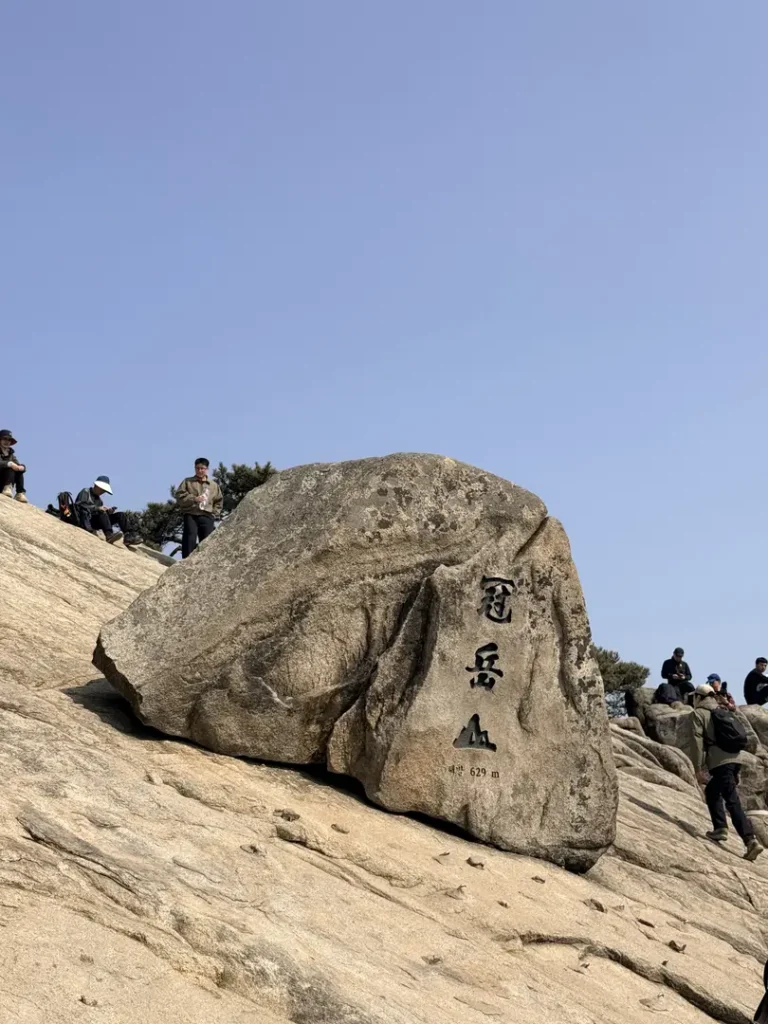
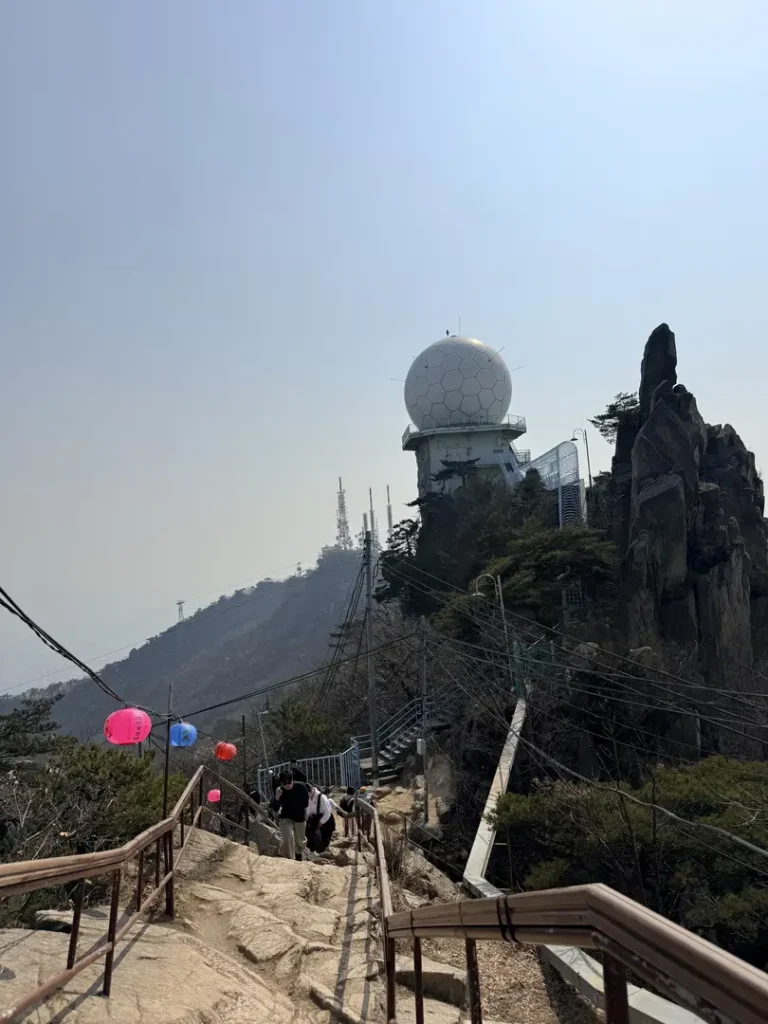
The official summit marker at Yeonjudae is extremely popular—expect lines for photos even on weekdays, a testament to the TV show’s influence and the Black Yak Challenge craze. The summit area features a distinctive geodesic dome structure (soccer ball-shaped building) and vendors selling drinks and snacks at premium prices (bottled water: 3,000 KRW, sports drinks: 6,000 KRW).
Summit Facilities & Temple Food
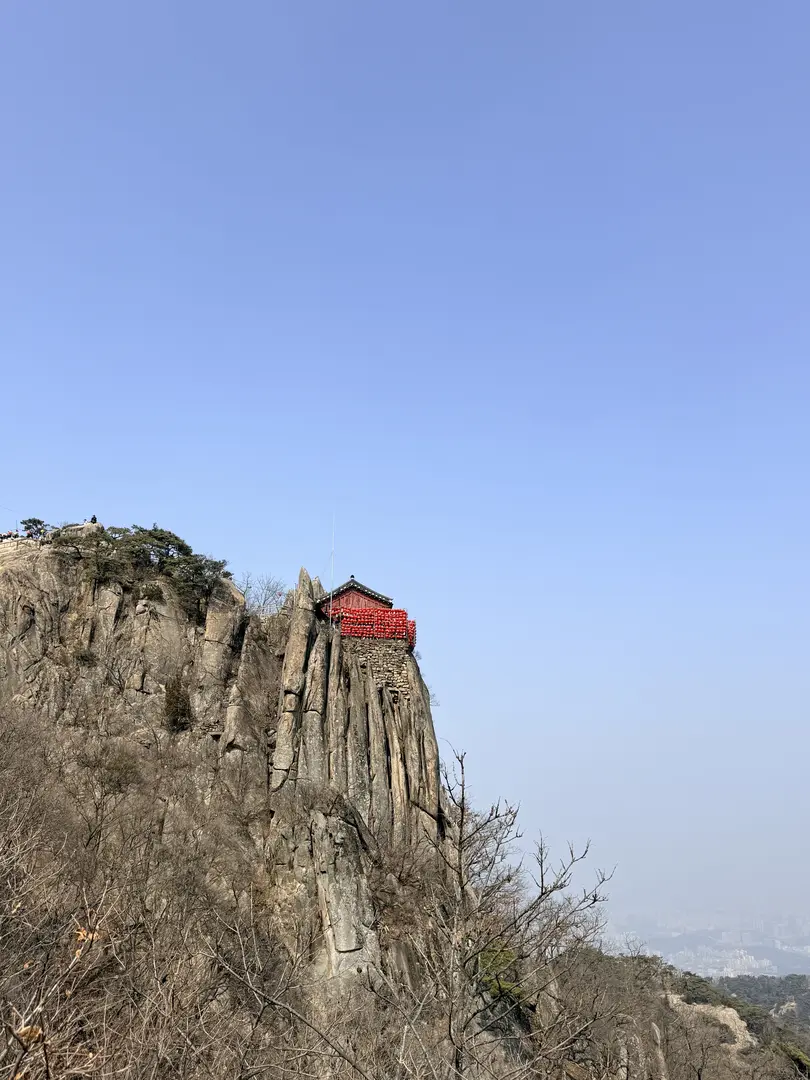
Just 5 minutes below the summit sits Yeonjuam Temple (연주암), a dramatically positioned Buddhist temple built into the cliff face—the architecture alone is worth the descent. Here’s where savvy hikers get their reward:
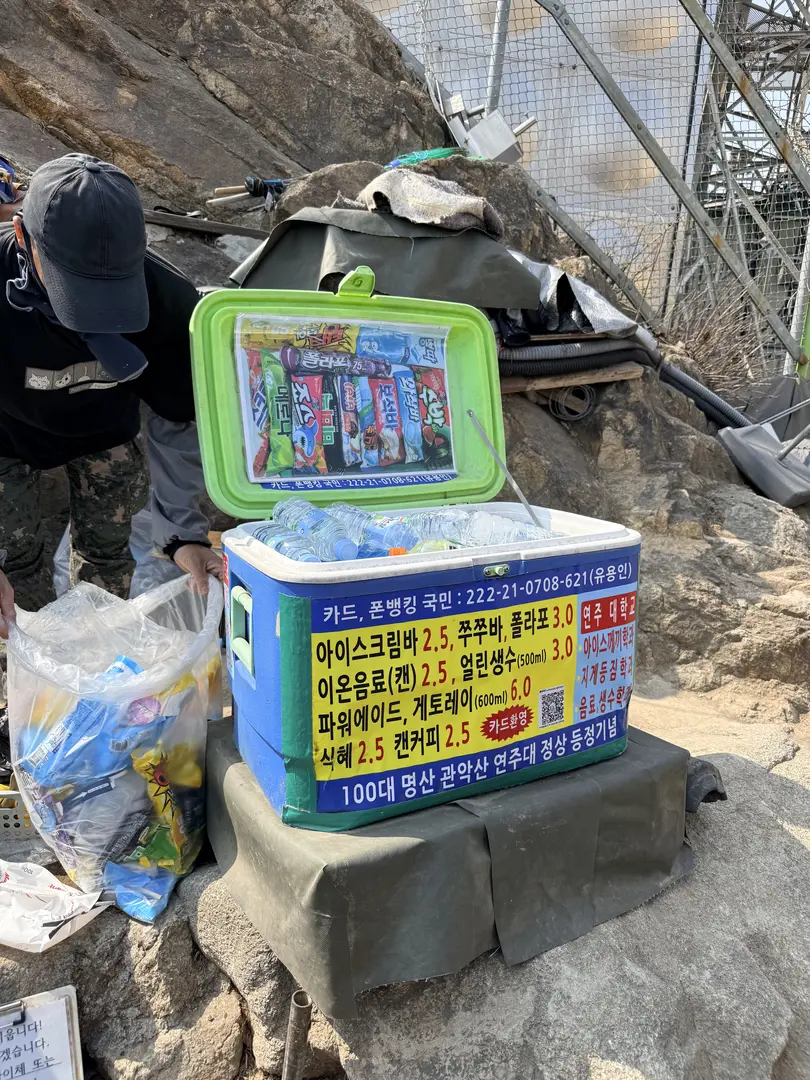
- Ramyeon (instant noodles): 3,000 KRW at the temple vs. not available at summit
- Bottled water: 1,000 KRW at temple vs. 3,000 KRW at summit
- Basic restroom facilities available
Ramyeon—Korea’s beloved instant noodles—tastes extraordinary after a 3-hour climb. The temple provides hot water, and you can enjoy your meal with views over the valley. Many hikers bring rice balls (jumeokbap) or kimbap from convenience stores to pair with the noodles.
Post-Hike Tips
The descent via Seoul National University (관악산역 direction) is significantly easier—well-maintained stairs and less dramatic terrain, though with fewer views. This makes it ideal for tired legs but less exciting photographically.
Track your hike: If you’re participating in the Black Yak 100 Famous Mountains Challenge, download the Black Yak Alpine Club app before your hike to log your summit. Approval typically takes 1-2 hours. The Trangle app is also popular among Korean hikers for route tracking and logging.
Footwear considerations: While serious hiking boots aren’t mandatory for this trail, the rocky scrambling sections demand shoes with good grip and ankle support. Trail runners work if you’re experienced, but this isn’t the place for casual sneakers.
Night hiking: While the Seoul cityscape would offer spectacular night views, confirm current regulations before attempting a night hike—Korean mountain access policies can change seasonally.
The Gwanaksan hiking trail delivers an impressive amount of variety and challenge for a mountain so close to Seoul’s city center. The combination of accessibility, thrilling terrain, and genuine summit satisfaction makes it clear why this peak ranks among Korea’s 100 most famous mountains. Whether you’re chasing the Black Yak Challenge or simply want Seoul’s best urban hiking experience, Gwanaksan won’t disappoint.
Have you tackled any of Korea’s famous mountain ridges, or would Gwanaksan be your first scrambling experience? Drop a comment below—I’d love to hear which Seoul-area hike you’re planning next!